Final thoughts

I am now sitting in Kigali airport on a very warm tropical evening and reflecting on my 15 days in Uganda, mainly at Itambira Island Seeds if Hope but also with some long lasting travelling memories of places visited and people encountered.

What has stood out for me?

In no particular order-

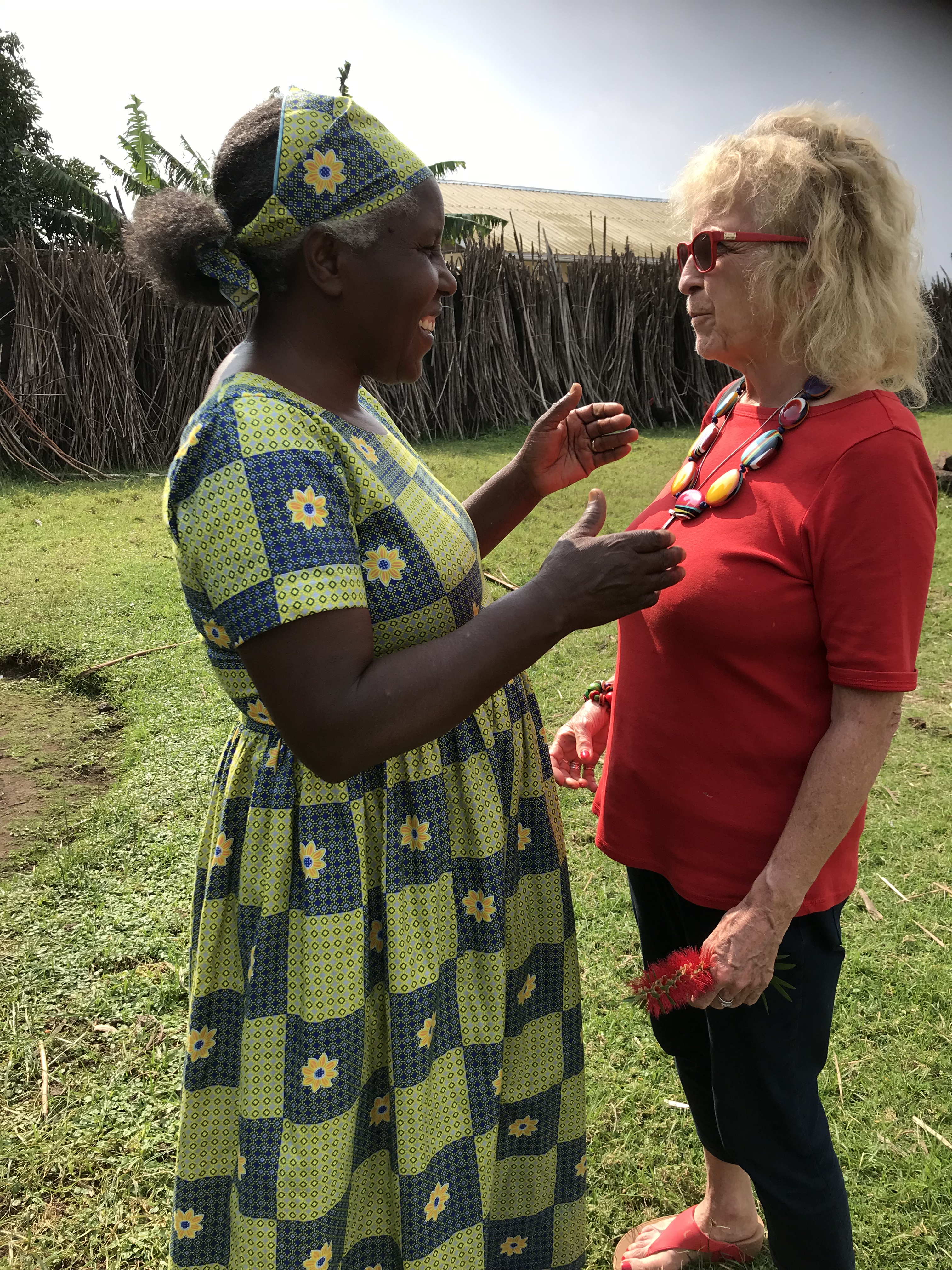
I have been enormously impressed with work done by IISOH in their local communities and the impact it is having both in practical terms and in the way in which women in these poor communities, who have been disadvantaged from birth and had none of the advantages of a decent education are becoming empowered to change their lives for the better, slowly, slowly, step by step. It is a privilege to see the way in which Sally, Naris, Diana and the team put their needs as a top priority and work tirelessly to continue the improvements.
The children of Itambira are now well known to me – they greet me now as well as Sally and I know them by name and personality – Simon the naughty one, Kevin the toddler, shy at first but then rather disruptive during the colouring activity, little Jordan so expertly tended by the only slightly older Edinah and the serious older girls – Anna, Ruth and Charlotte who are responsible beyond their years. These children have no toys, only barely enough food, are often dirty except on Sundays but they have the whole island as their playground and Sally to care about them, which she emphatically does.
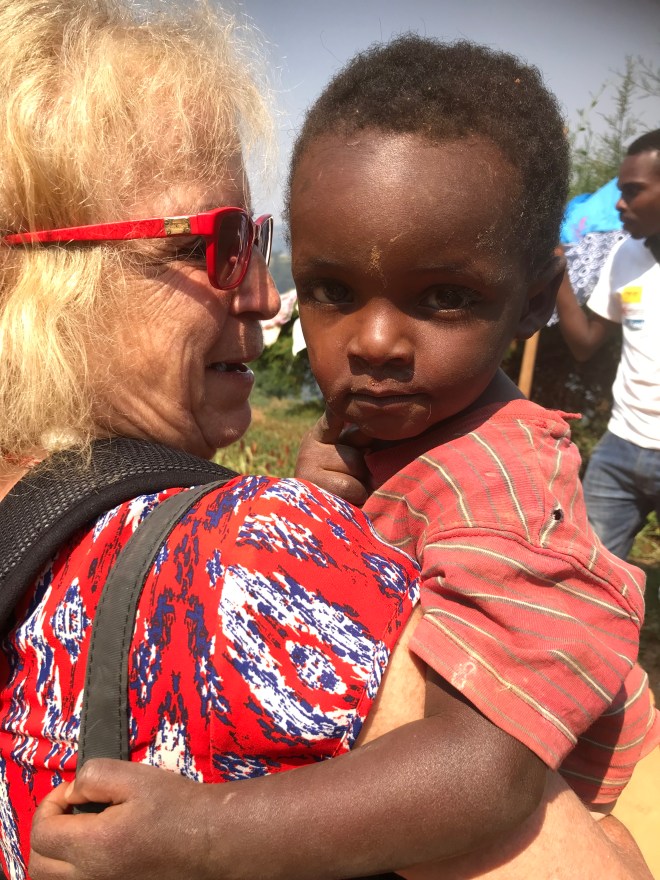
We had some magic moments – not least Sally and my attempt to paddle the dugout canoe. We went round and round in circles, despite both our efforts to claim competency, and had to be rescued and taken in hand

I became adept at managing s shower and hare ash with a very small amount of hot water, making sure. But to waste Ny and collecting it all in a plastic bowl so thAt I could then wash my underwear in it.

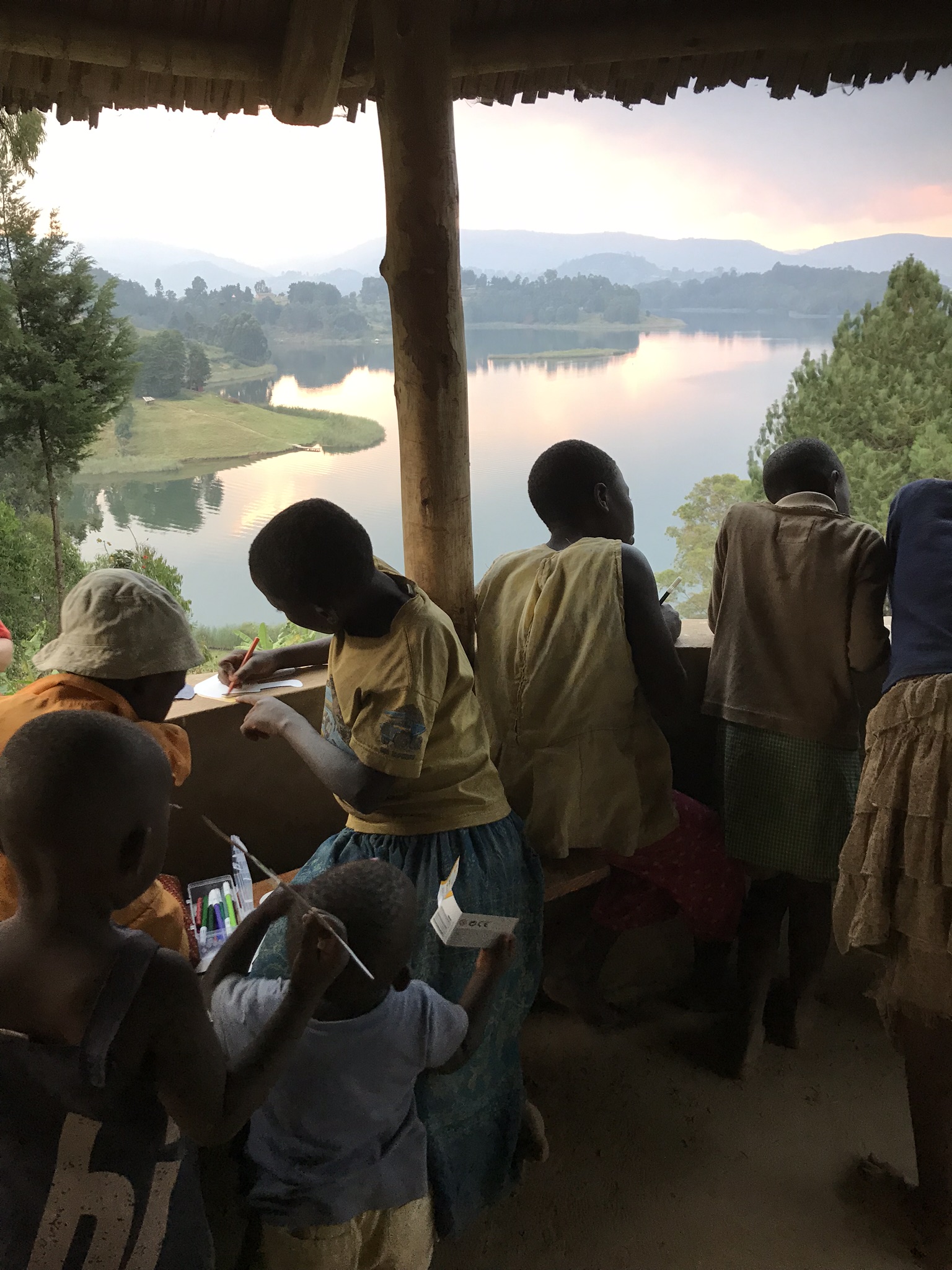
We had some magic evenings on Sally’s verandah watching the sunset from the top of the island and drinking red juice before heading down the footpath to the restaurant with a torch.
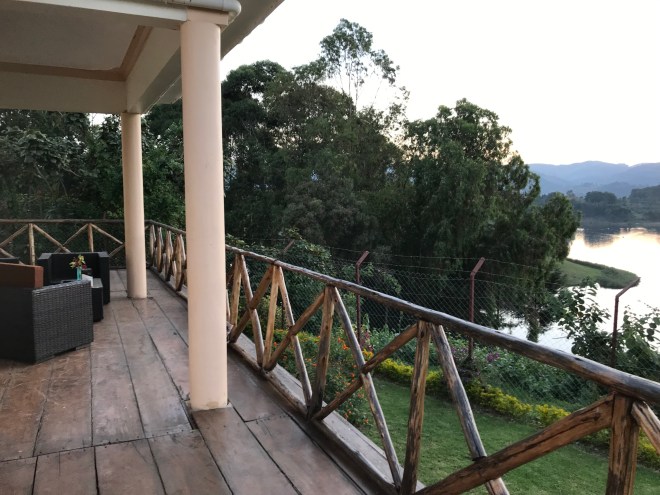
The team on Itambira made a lasting impression on me. They were charming, helpful, full of honour and fun. We had a very memorable moment when s bird somehow got trapped in my tree house.

It took five of us twenty minutes to encourage it out with a large bendy stick.

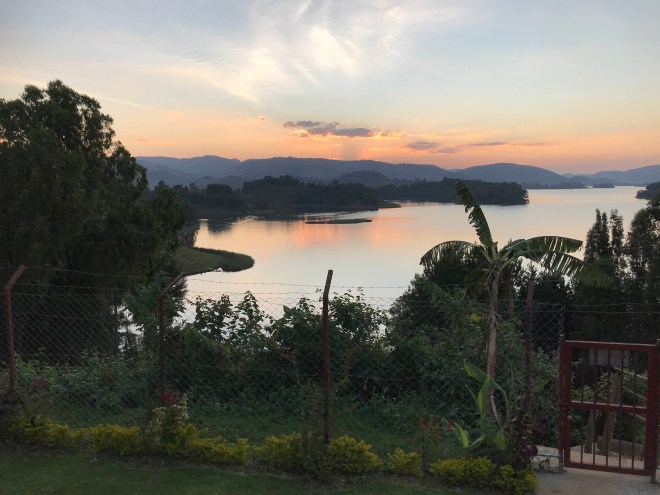
I will remember the extraordinary sounds of Lake Bunyonyi and the lack of other intrusive noise. I could here insects all night long and birds from early morning, the sound of the Seeds of Hope outboard motor launch as it headed across the lake and my favourite of all, the swish and slap of the paddles on the dug-out canoes going past my little house. I heard the chatter of the children going over to their school on their boat every morning. No car noises and no car sightings. The lake was so quiet you could hear conversations and people singing over on the mainland opposite.
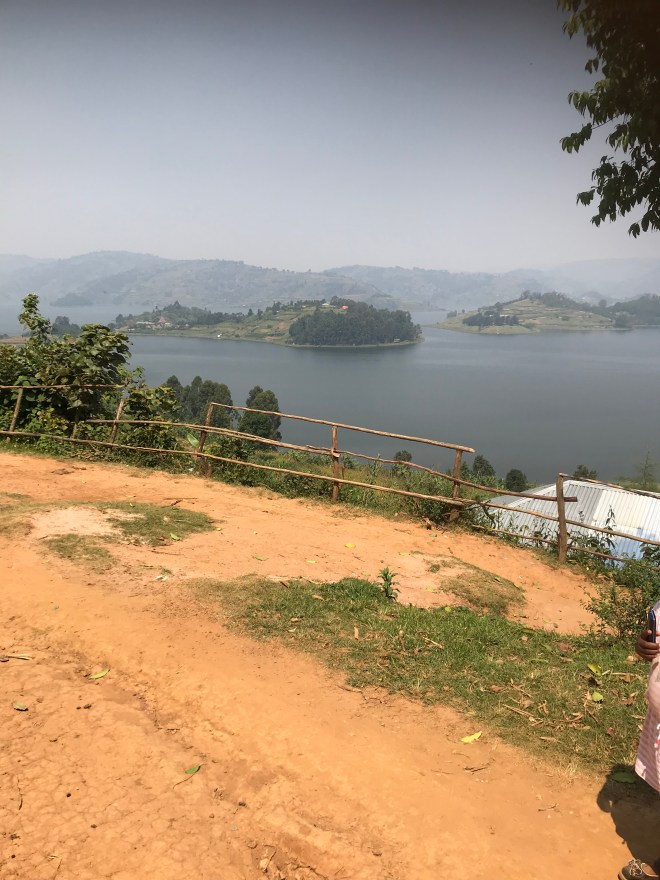
Being here at Lake Bunyonyi has reminded me of the things we have which we take for granted and how those who have the least are the best at sharing what they have. It has been a privilege and a joy.
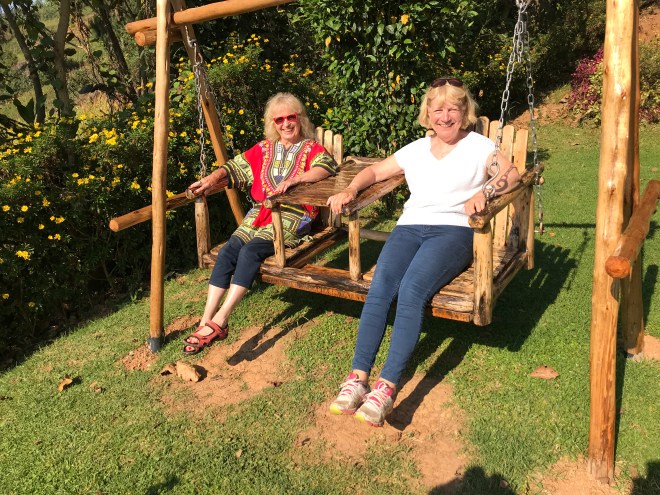
The pearl of Africa

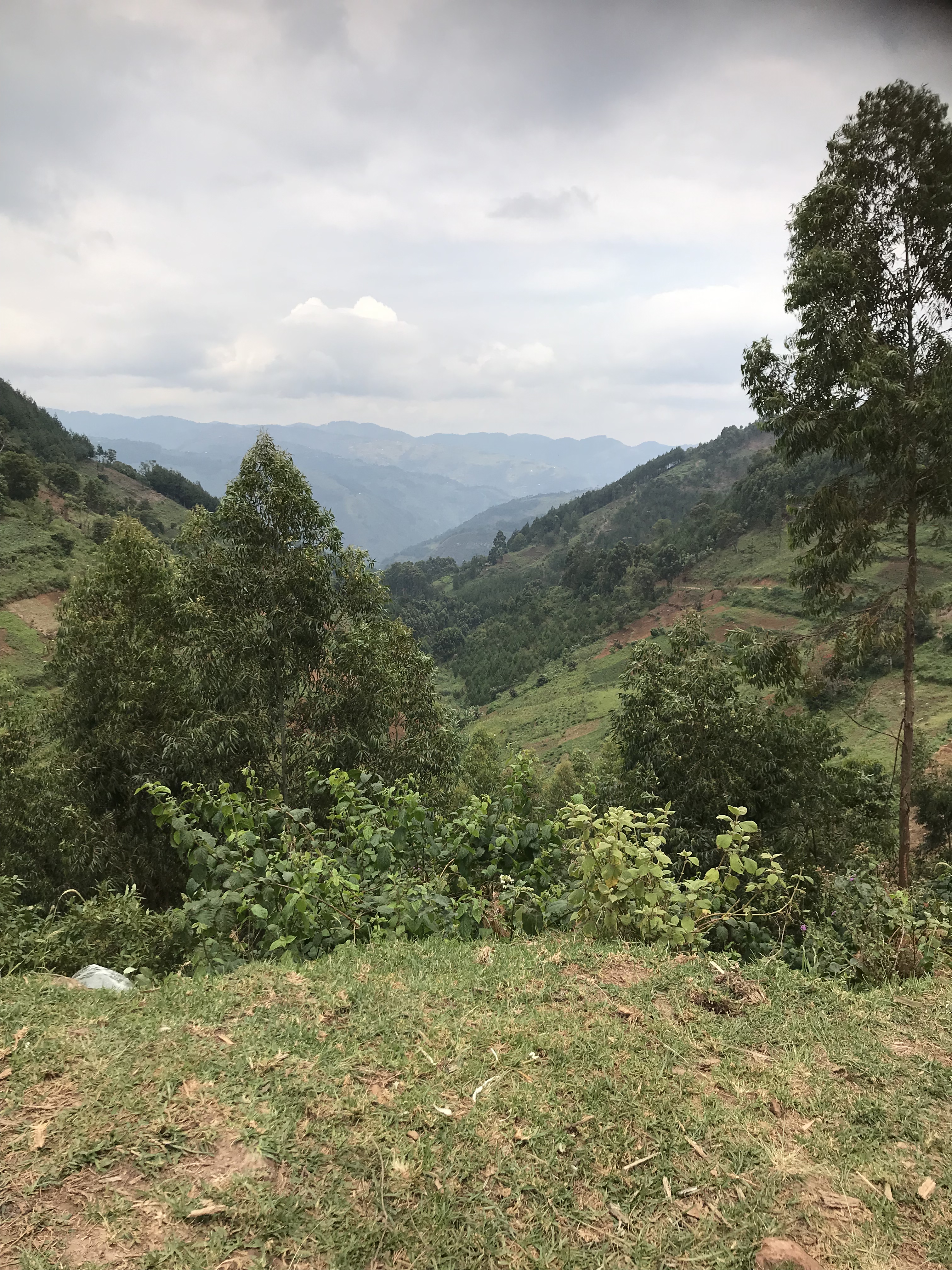
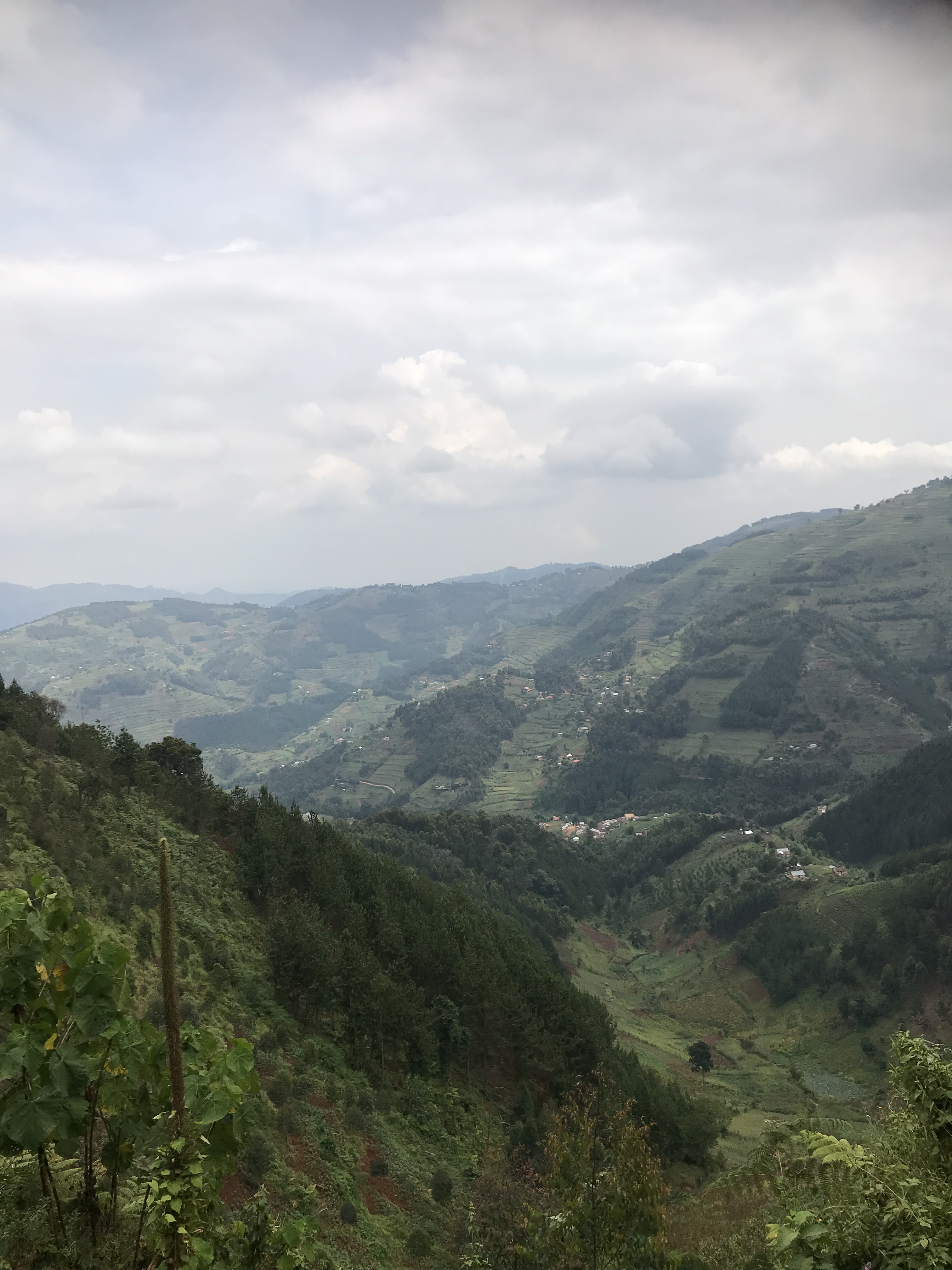
Over the last five days we have travelled long distances around this small South West corner of Uganda. What an extraordinarily beautiful country it is; it is easy to see how it acquired its title the Pearl of Africa. Neither did it feel that small a corner – we clocked up long distances on a very wide variety of roads, from really well designed and constructed highways to very bumpy, dusty and unsurfaced tracks.Some of the highlights have been crossing the very high hills to get over to the Rift Valley. These hills have been planted with Cyprus trees and eucalyptus in much the same way the Forestry Commission plant forests at home. I guess that much of the land here is too high to grow many crops though we did see a few plots of Irish potatoes The views from these high ridges were spectacular.
At one point we crossed a really narrow watershed between two very deep valleys which is named God’s Bridge due to the dramatic slopes falling away on either side.

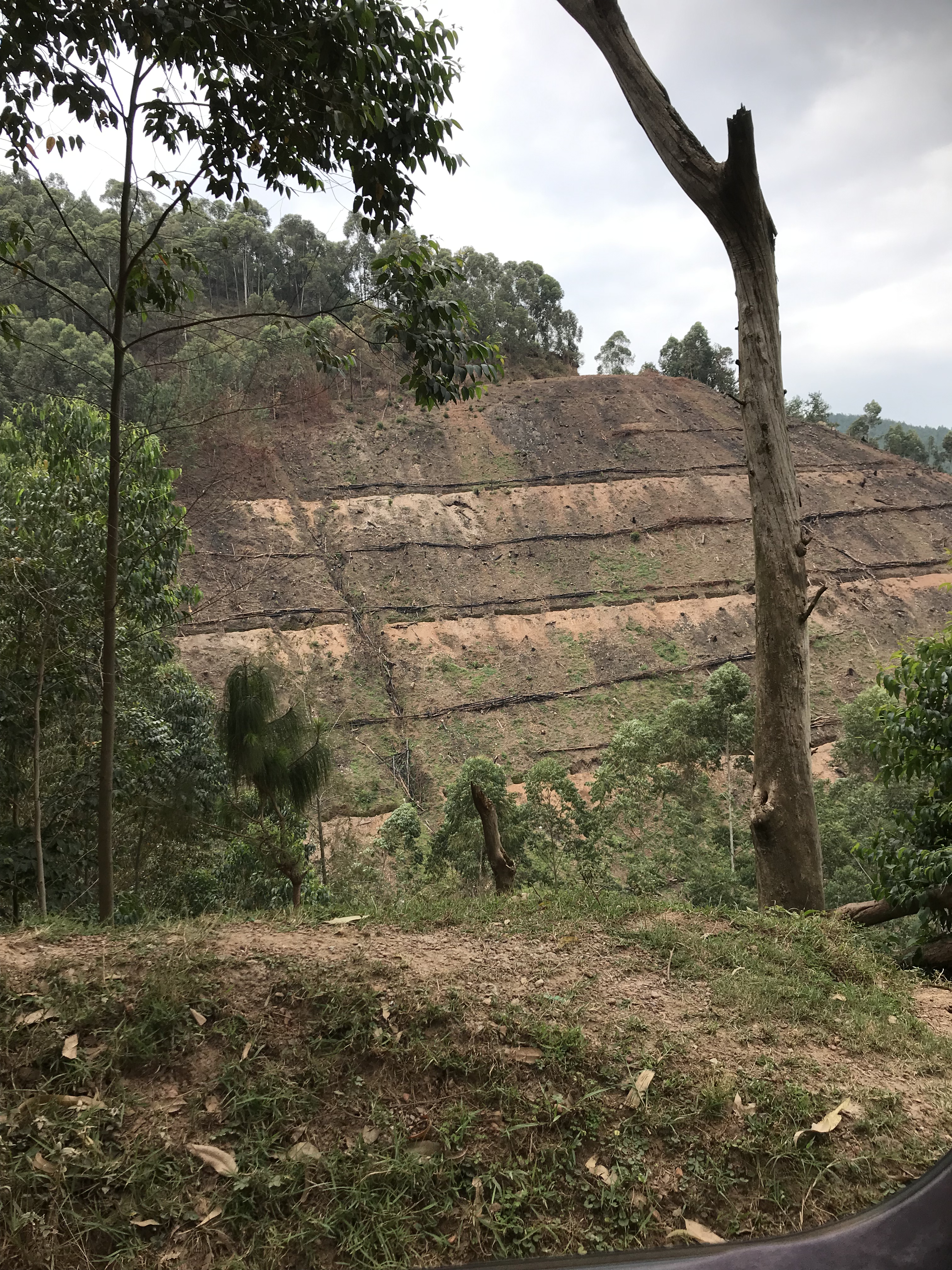
A bit further on were amazed to see an almost vertical slope which had been cleared of its trees ready for planting. We couldn’t work out how they could possibly have done it but there were lots of tree remains in the bottom of the valley.

After all this magnificence for several hours we came to the town of Kanungu made infamous in the year 2000 as the scene of the world’s worst cult mass execution when between 300 and 500 people were burned alive in a locked church by the leaders of a cult. Today it is a peaceful town.

Once beyond Kanungu, having lost loads of height, we drove for several miles along a massive road construction project at least partly funded by the Chinese. Throughout our travels new roads were being very well constructed and also well designed on any steep slopes. They are already making a difference to the livelihoods of people close to them. It is clear that road building is a priority in Uganda at present.

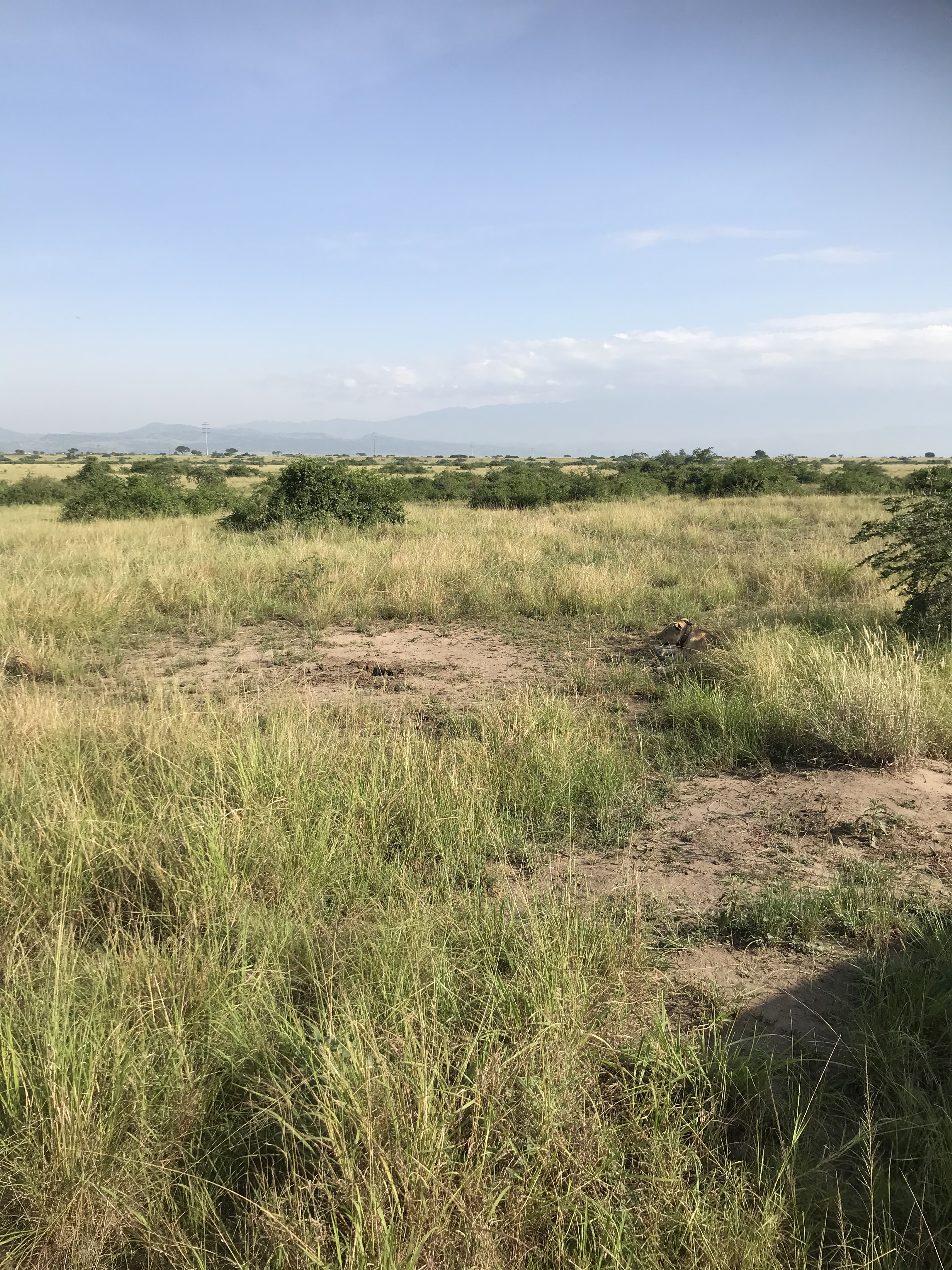
The next three days we spent in the heart of the Rift Valley where the savanna grassland is exactly as one imagines it to be. I absolutely loved it. If course we were looking for the big game but I loved driving along, standing up in the vehicle and watching the landscape go past, sometimes mainly grass with thorn bushes ( fearsome 3-4 cm thorns), sometimes more wooded ( elephant like these areas) and sometimes drier with a lot of cactus type trees; but always flat, flat, flat.

As the weather improved while we were there we could also see the Rwenzori – the mountains of the moon, which are rarely clear so we were very lucky.

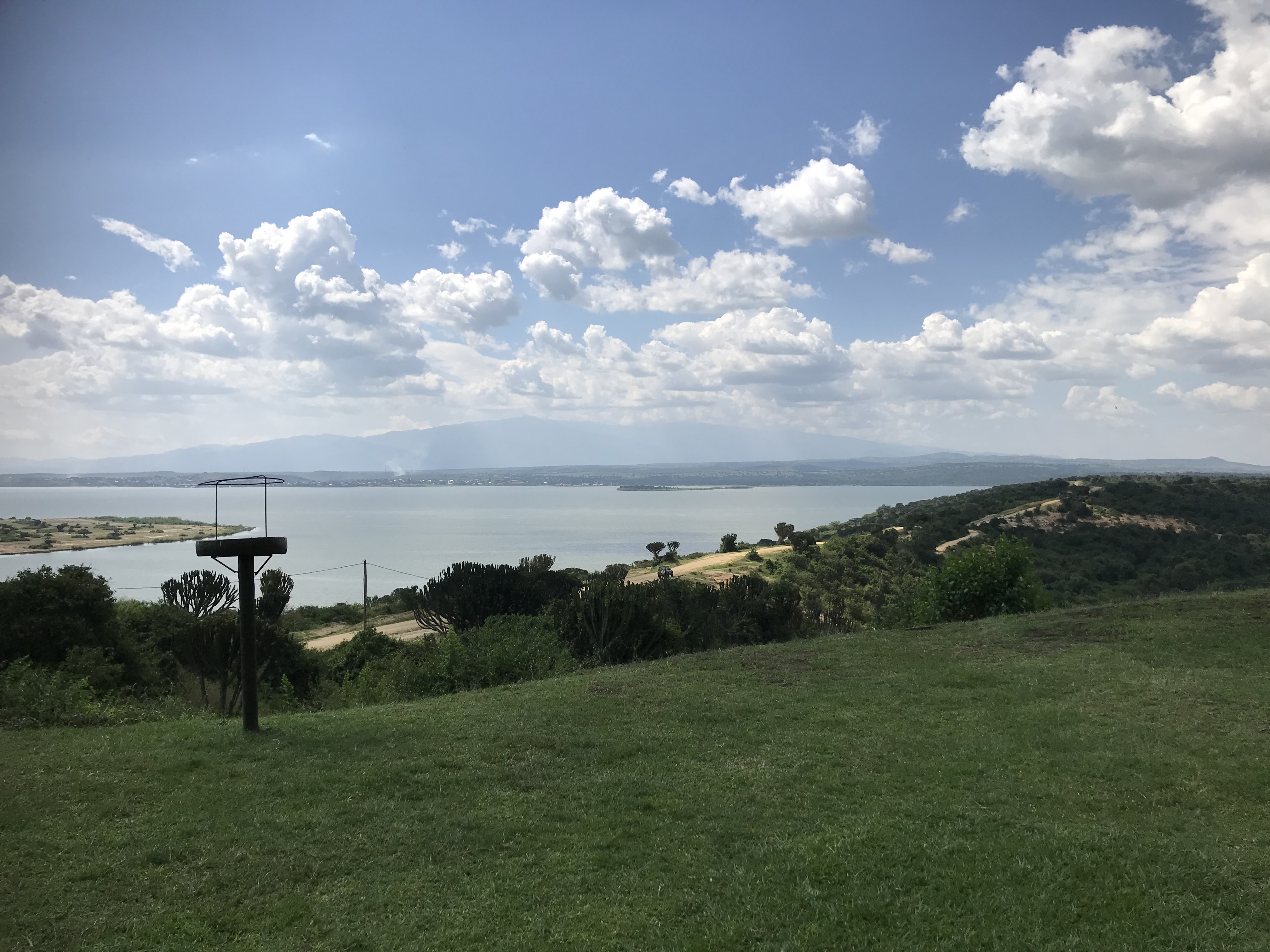
Rwenzori from the edge of the Kazinga Channel

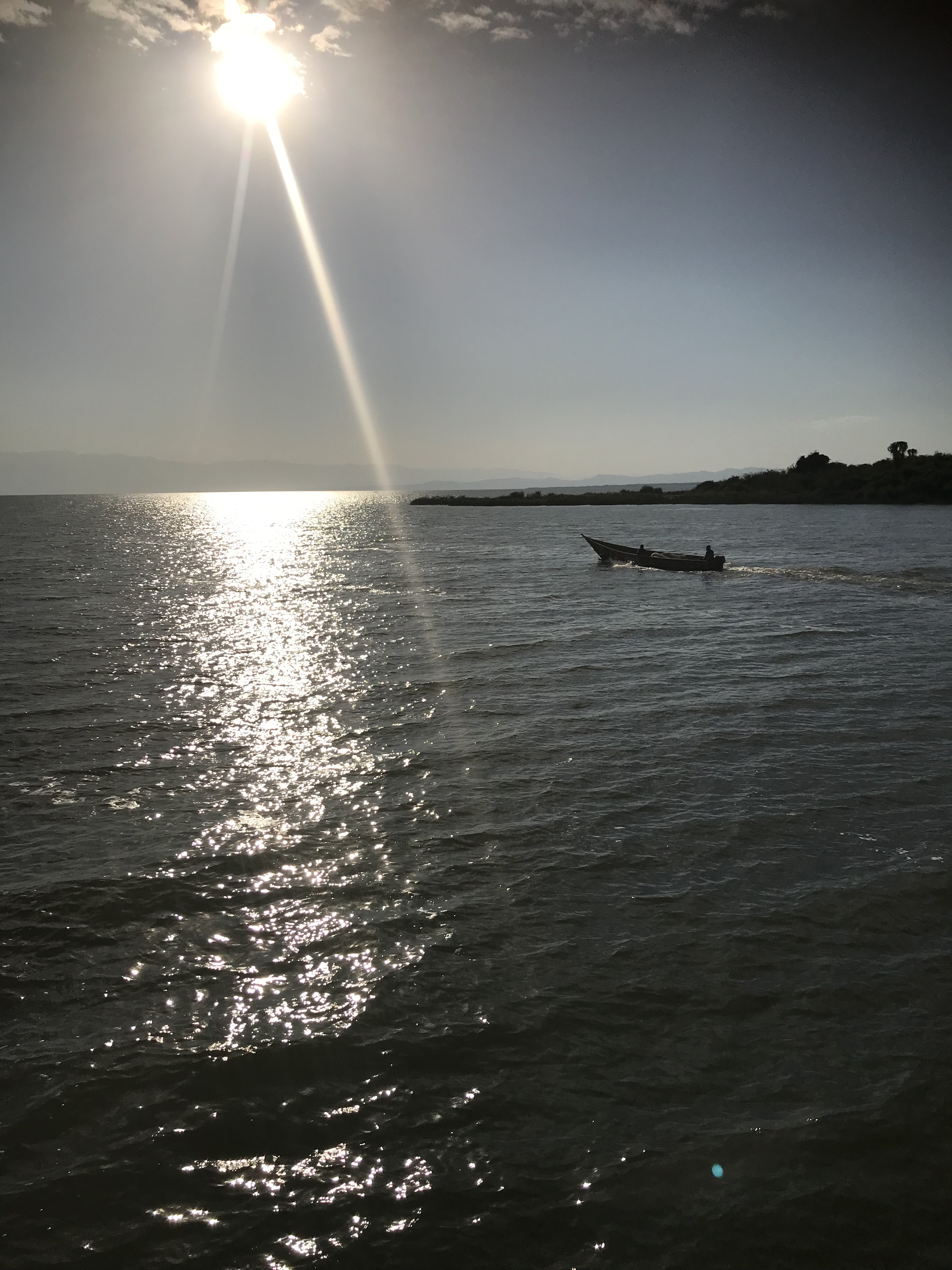
The Kazinga channel joins the two lakes and provided some wonderful watery shots as we headed out towards Lake Edward ( which looks as large as the sea) just as the light was beginning to fade.

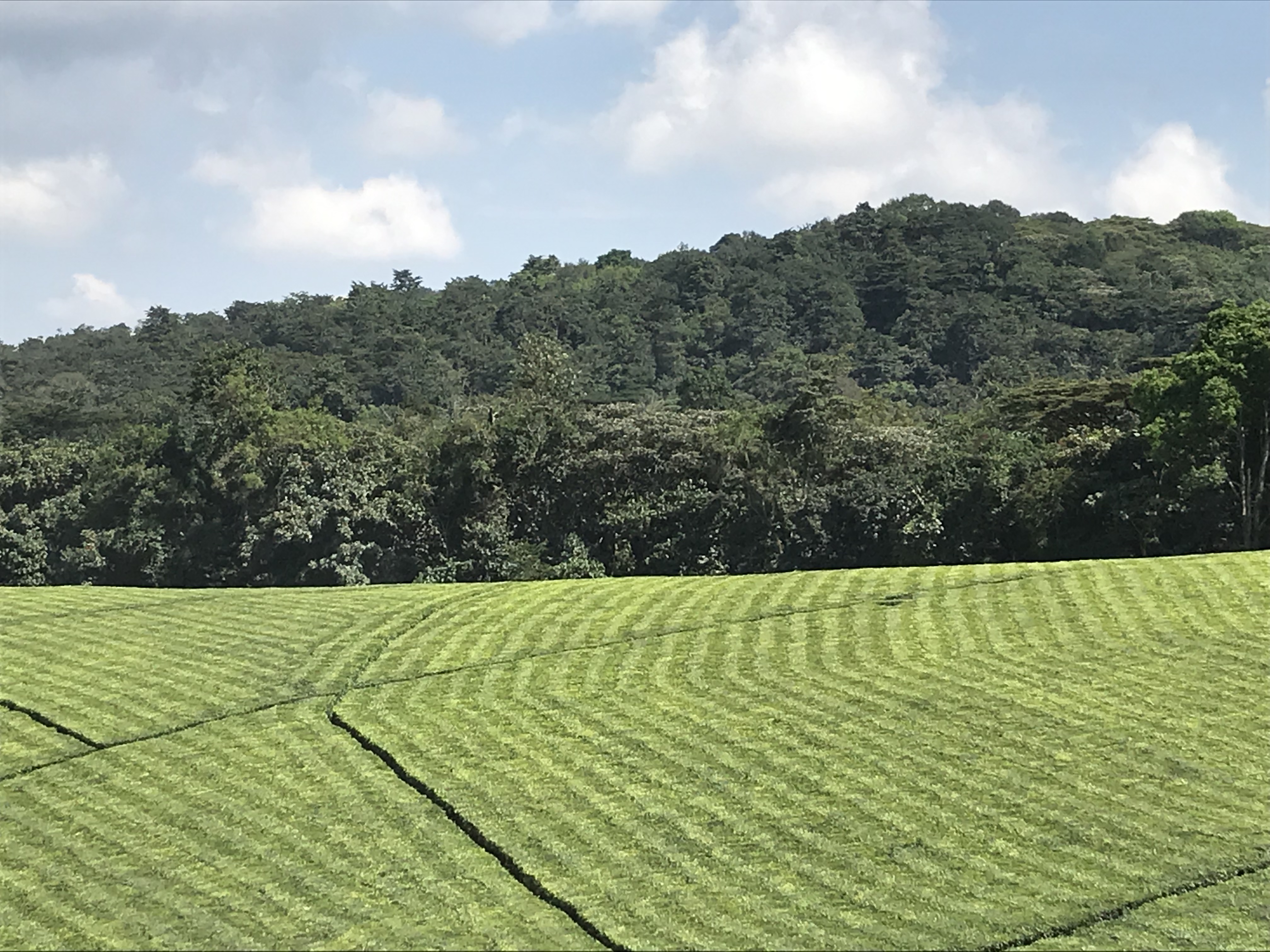
Driving home from here to Kabale we were mainly on the main roads heading for Kampala and here we travelled through large trees and banana estates which provided another new landscape – bright green tea in front of tropical forest: man-made and natural side by side.

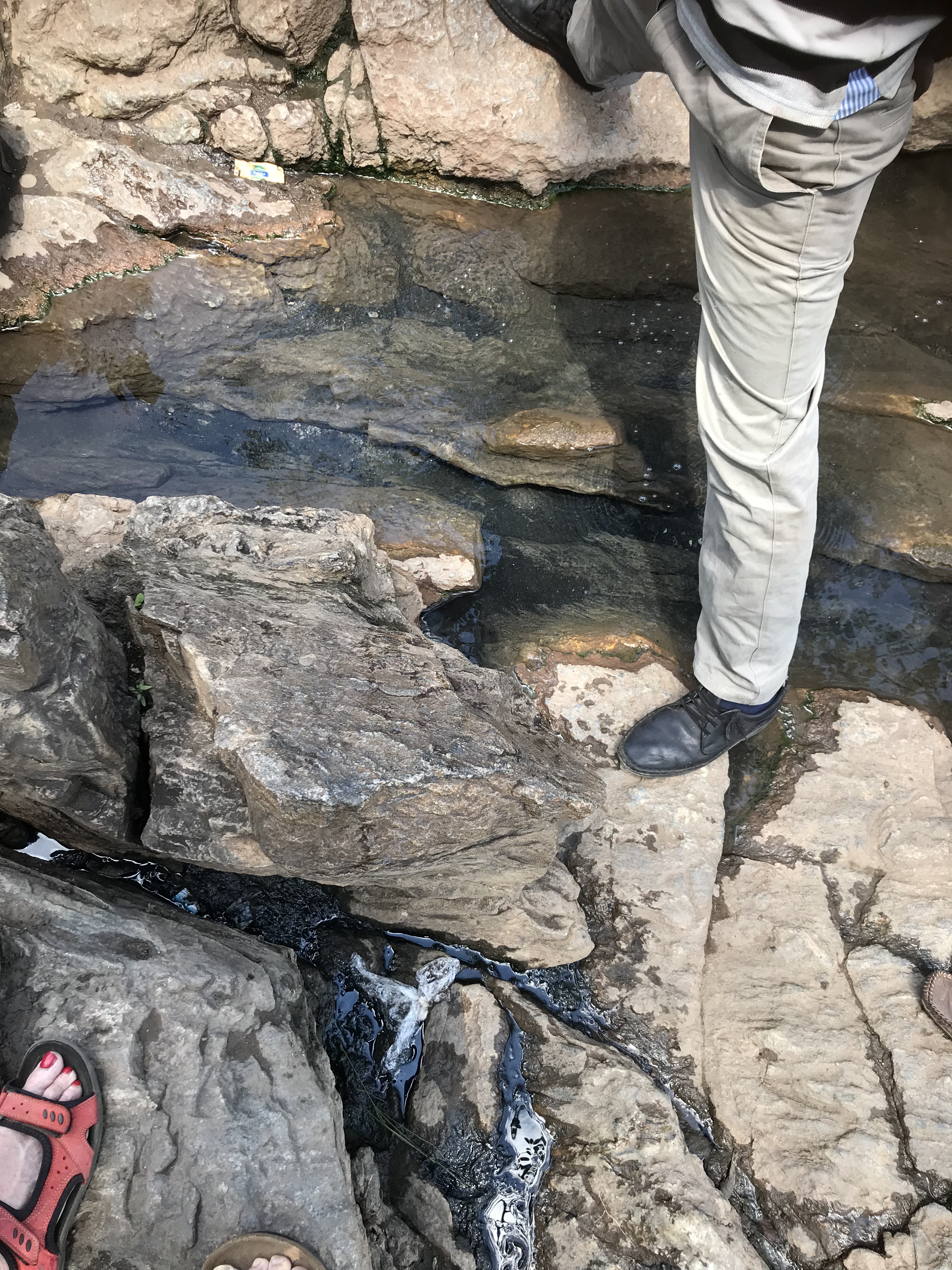
This are has a long history of volcanic activity due to its position in the rift so we also saw crater lakes and hot springs en route. The water here where it bubbles up from underground was too hot to bear but close by in the pools it was a little cooler and there were lots of people bathing in it.

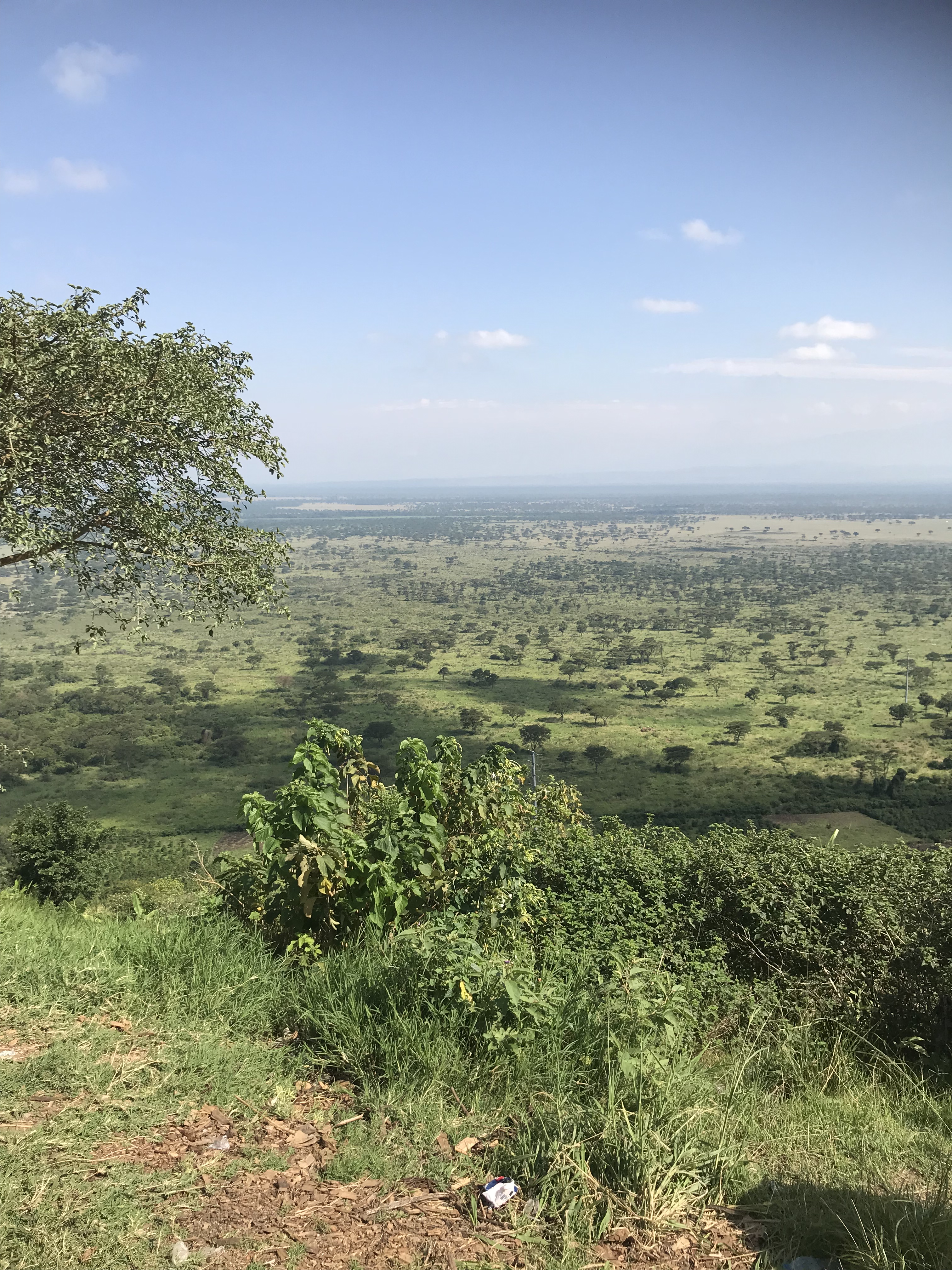
The view across the Rift Valley from the escarpment was everything you would expect – a true African vista.

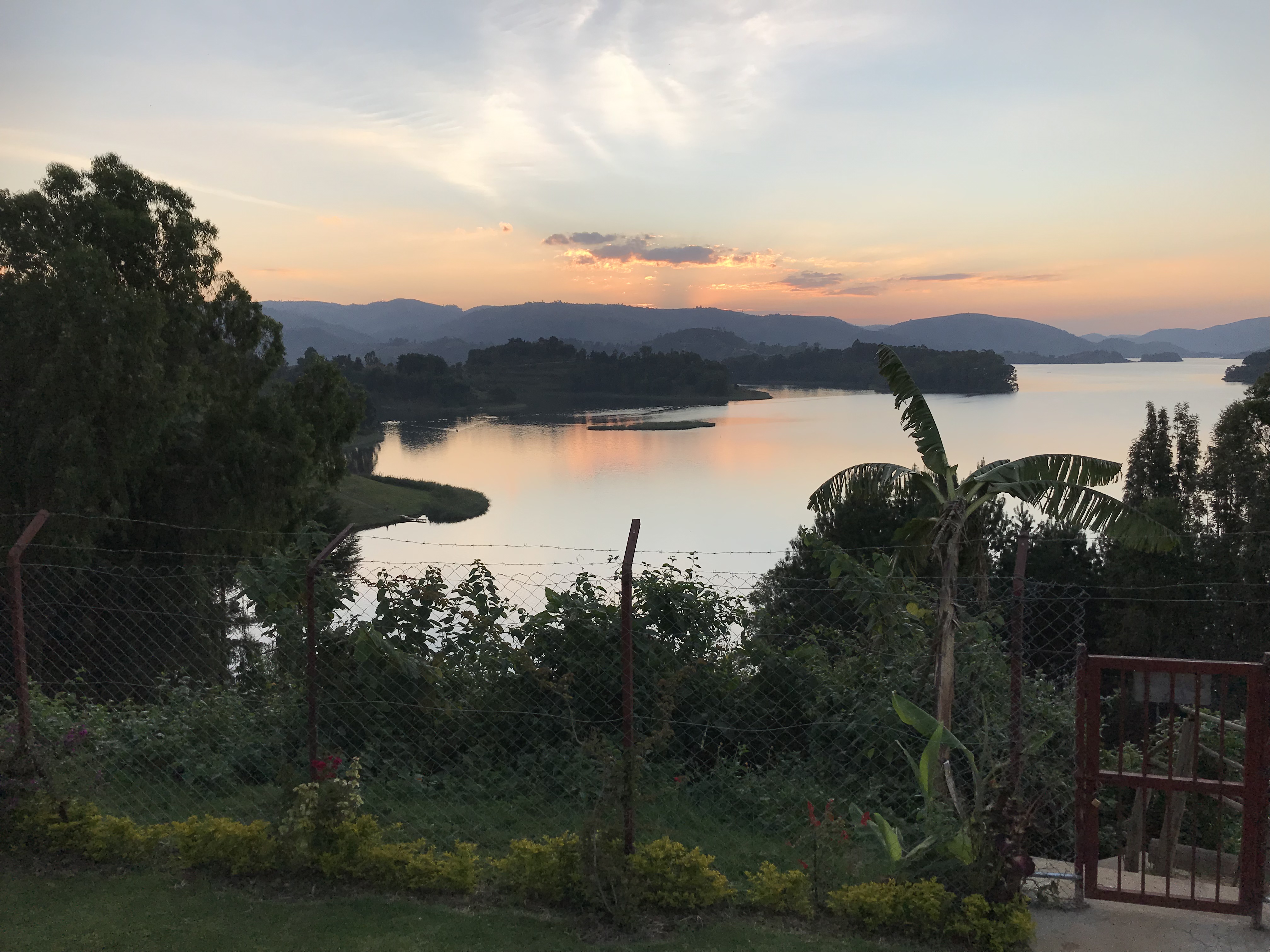
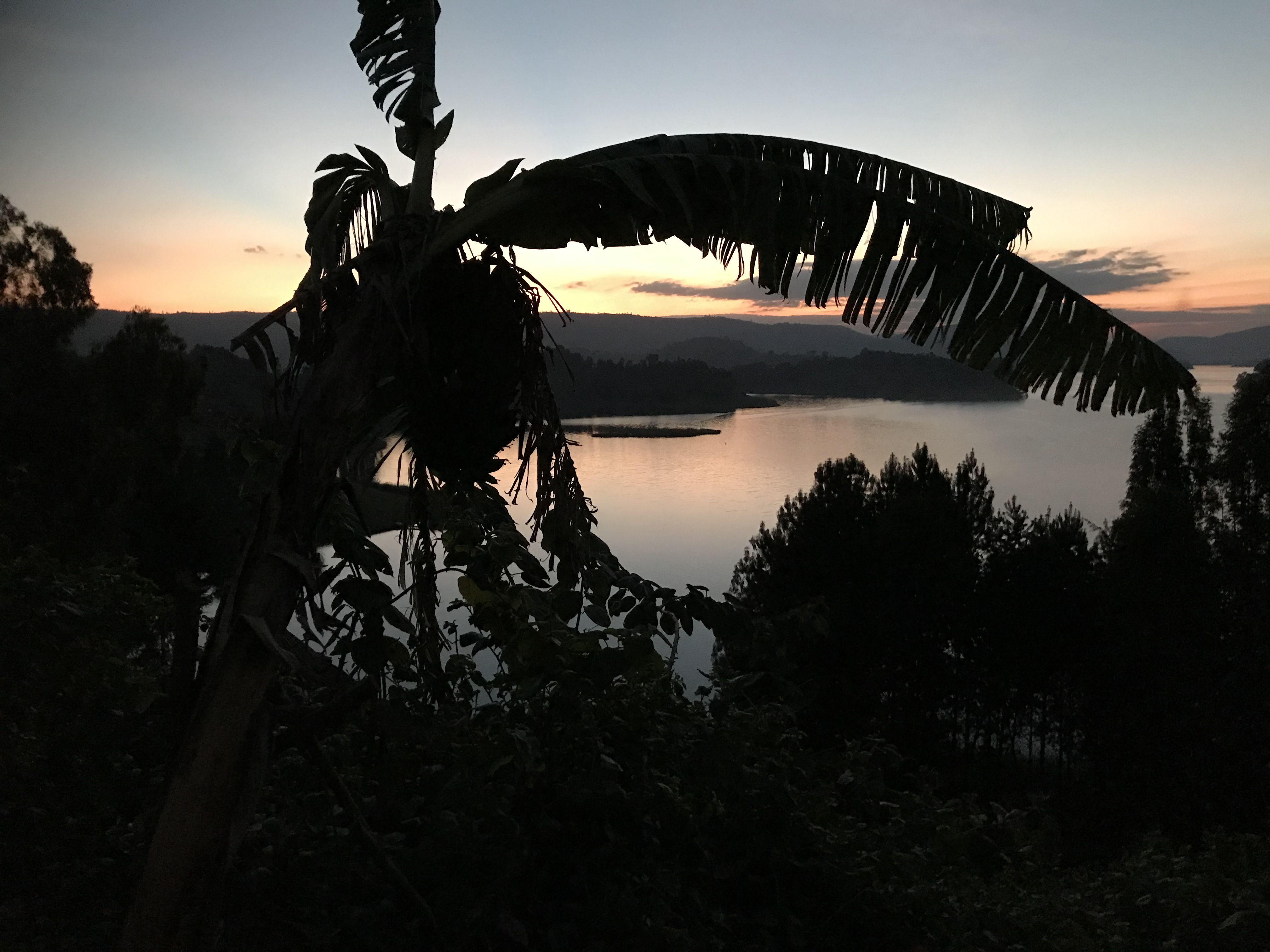
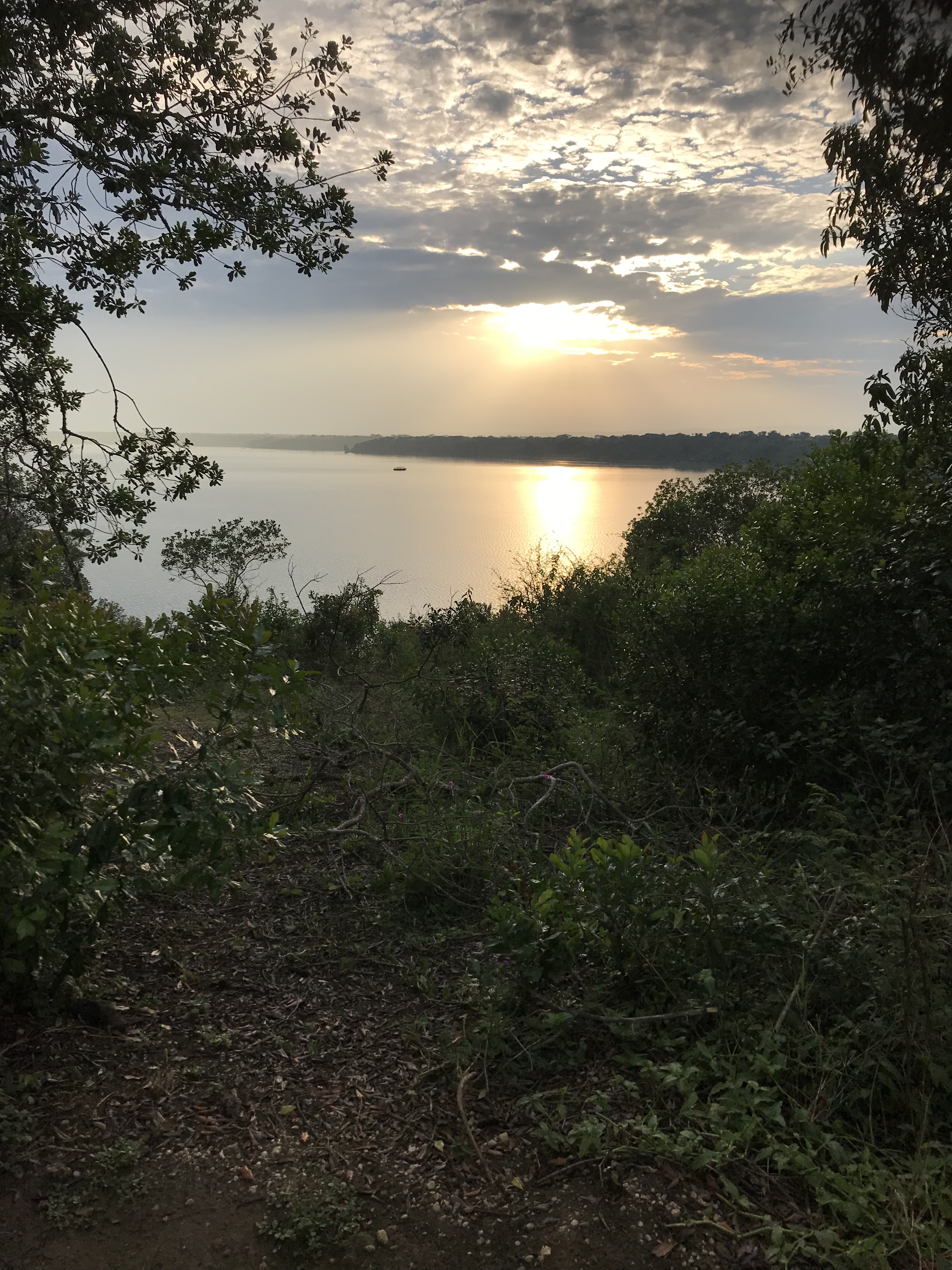
In the end we returned to our beloved lake Bunyonyi in the glorious late afternoon sunshine and it felt like coming home. We were treated to a magnificent sunset on this , our last evening.

Safari

After leaving Kisoro on Friday morning we headed north towards Ishasha and the Queen Elizabeth Game Park for a safari break. Our first stop was Ishasha,very close to the Congo birder and the home if the unique tree climbing lions . No-one knows why they do this here but they do. When we arrived we had no expectation of seeing them – there are only 20 in the whole vast park – but then our driver Uvan received a phone call to say they had been sited.

In the late afternoon we set off to see them. It was a mixed experience as they were so far away as to be only visible through binoculars or Sally’s relecohiti lens – my phone was certainly not going to do it. Sally dies have pictures that I will get eventually – there were four them with less and rails dangling from the branches. Nevertheless we were very happy to have seen’ them.

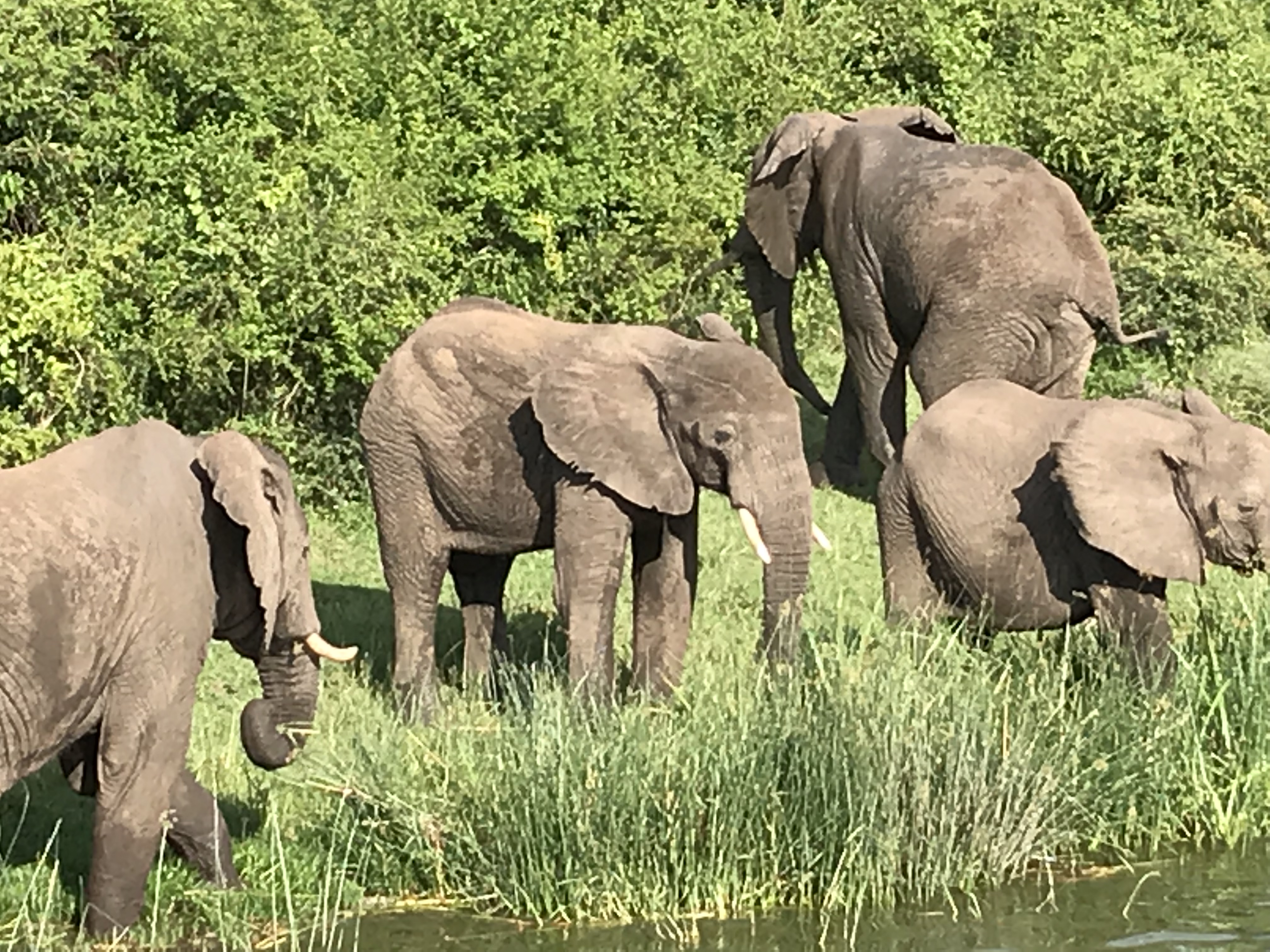
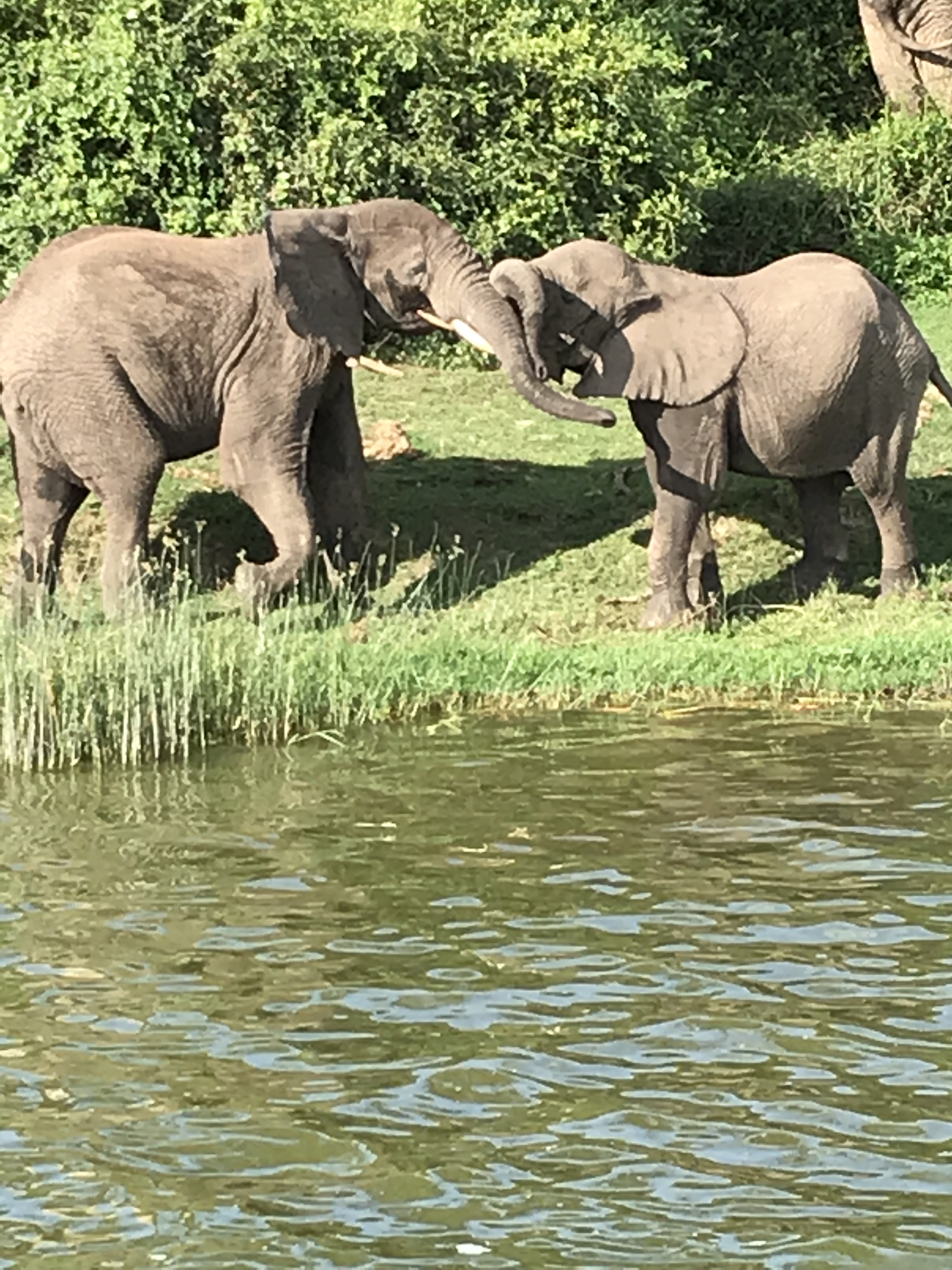
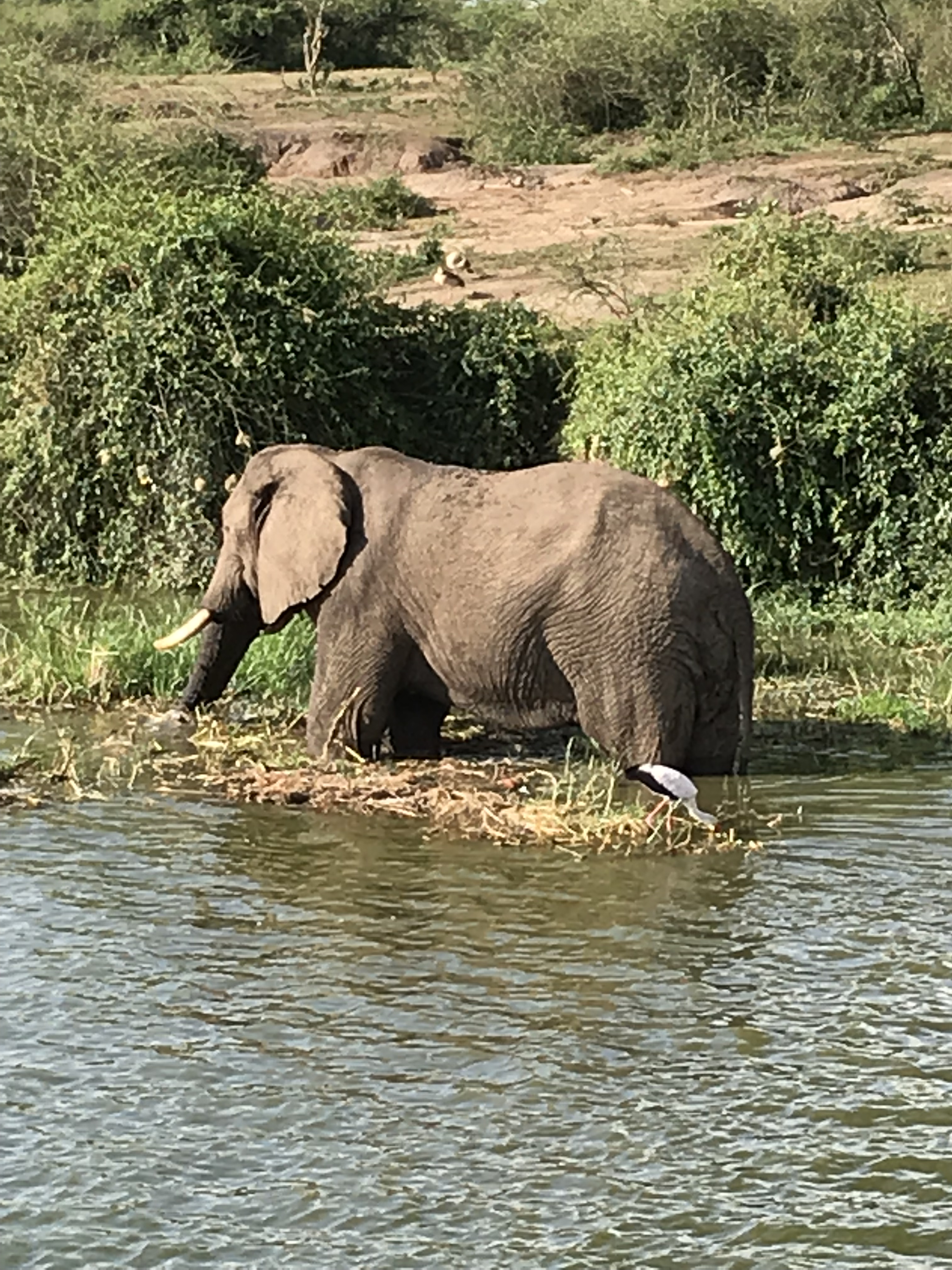
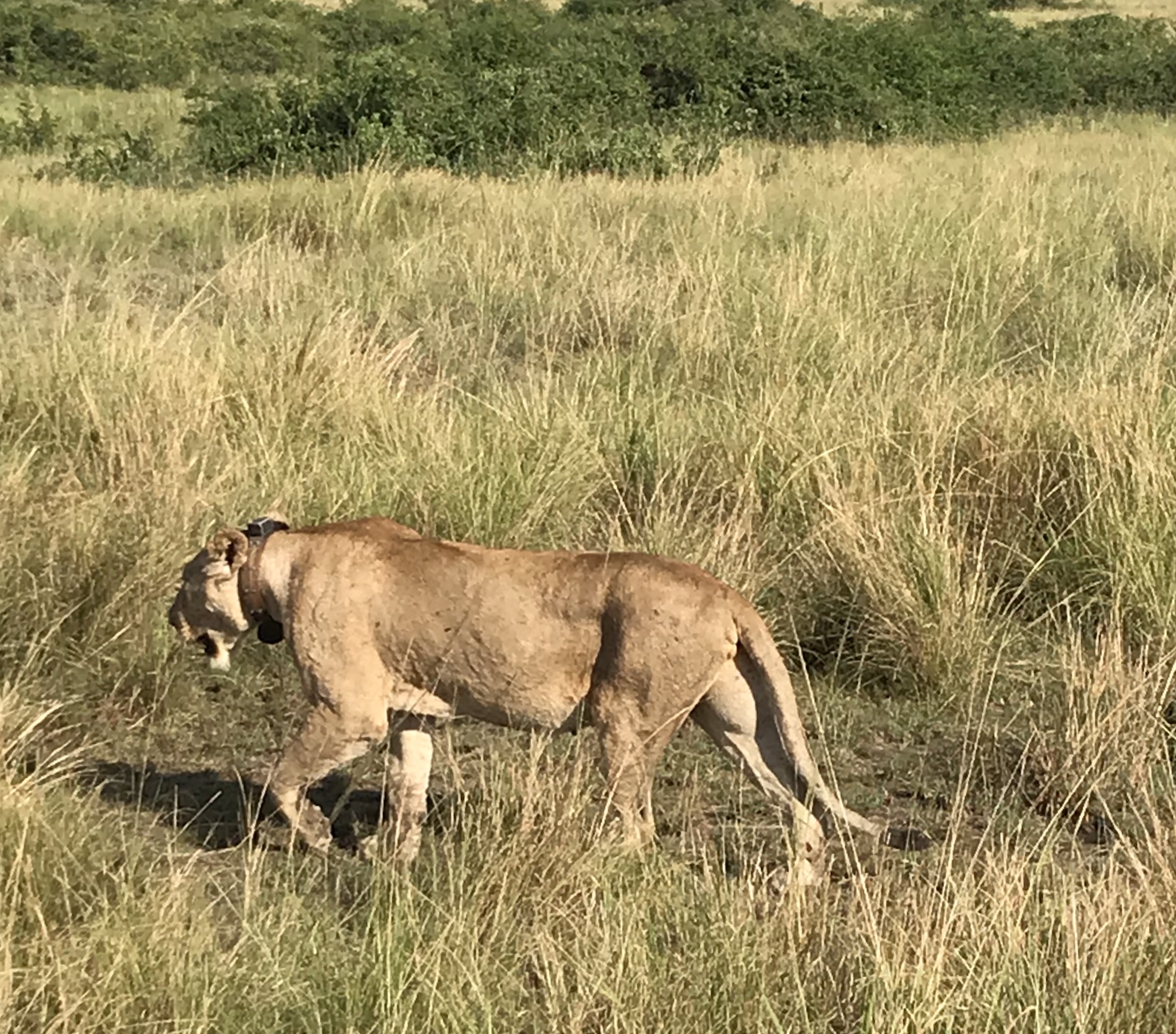
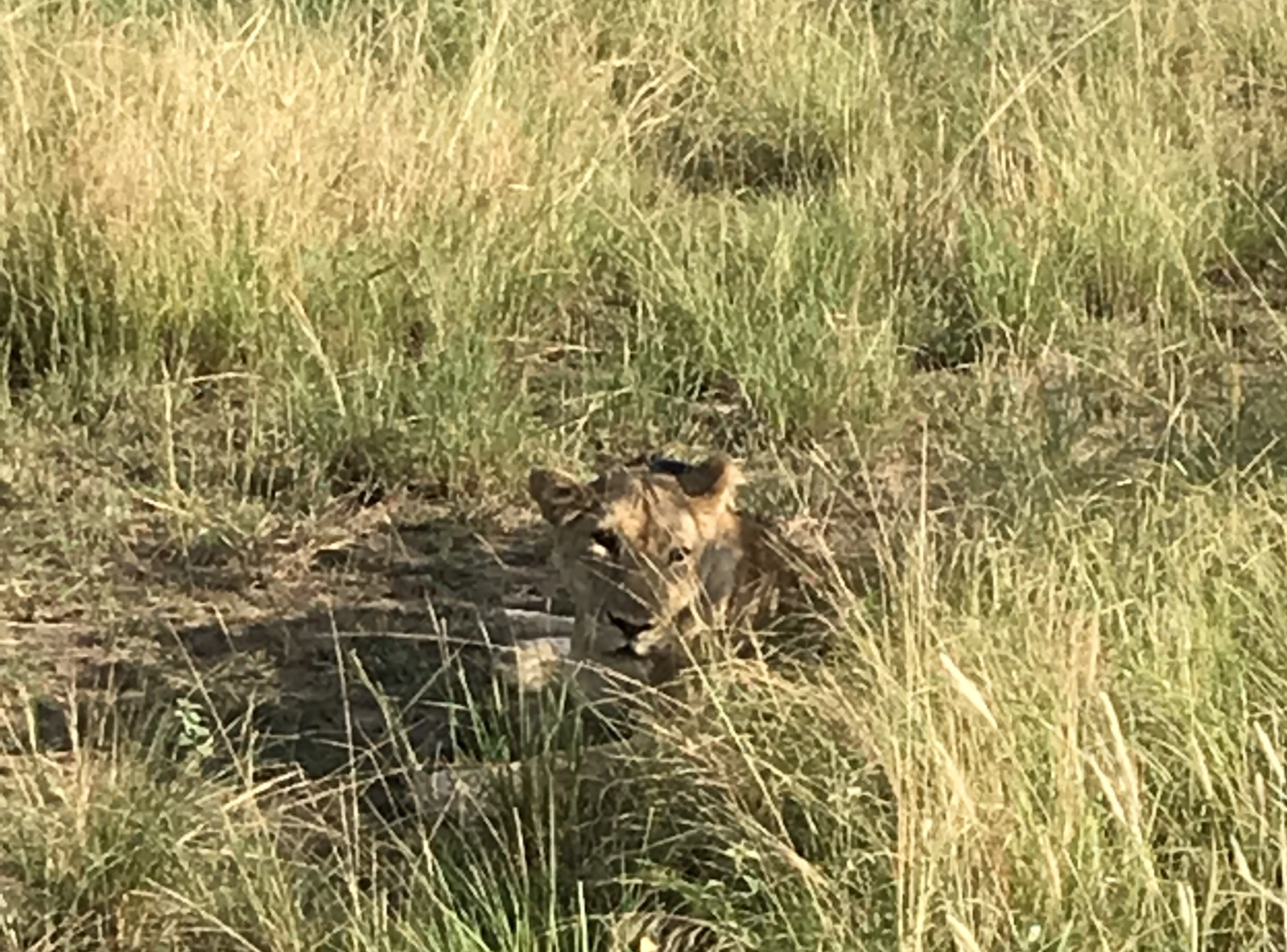
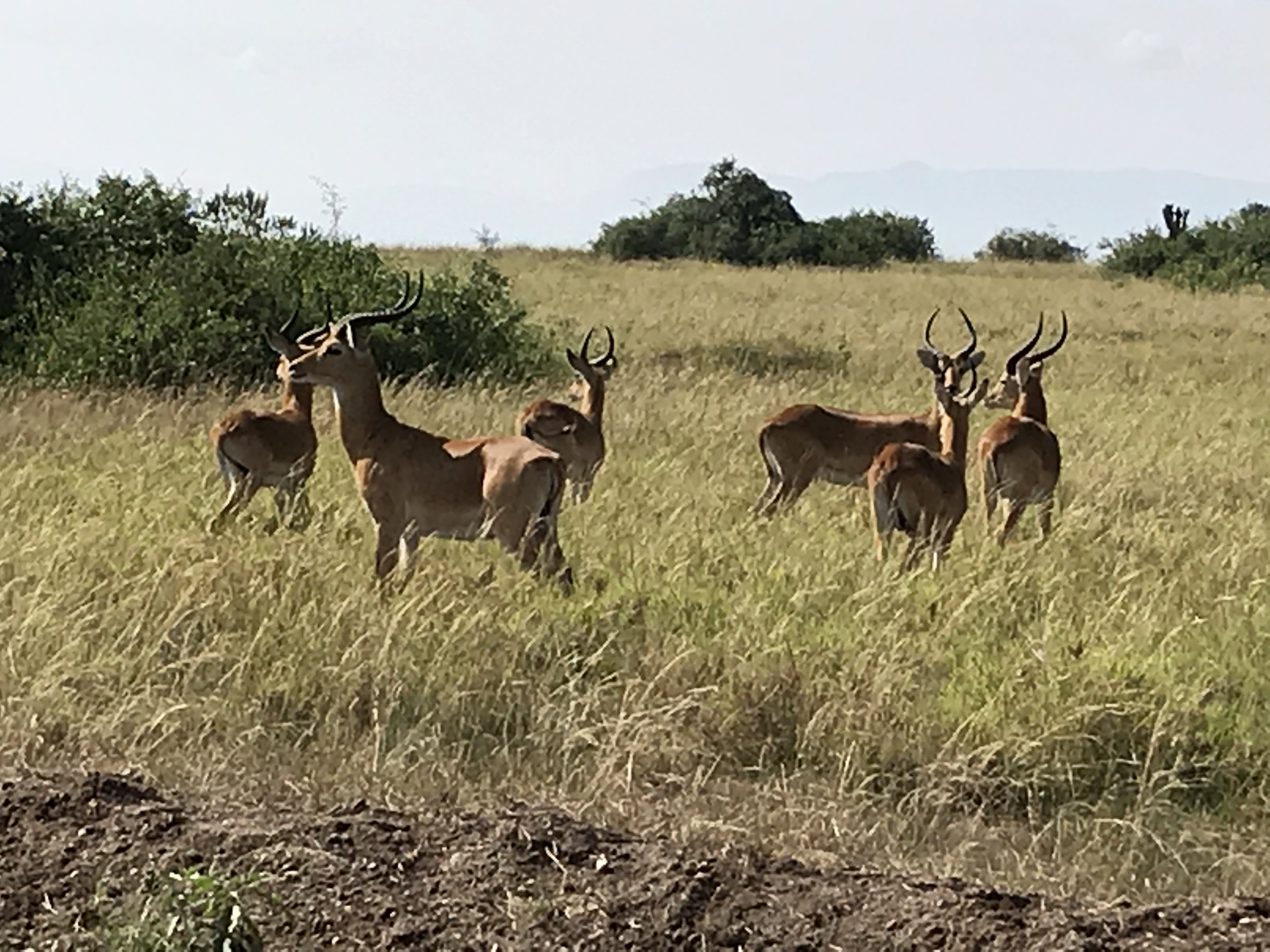
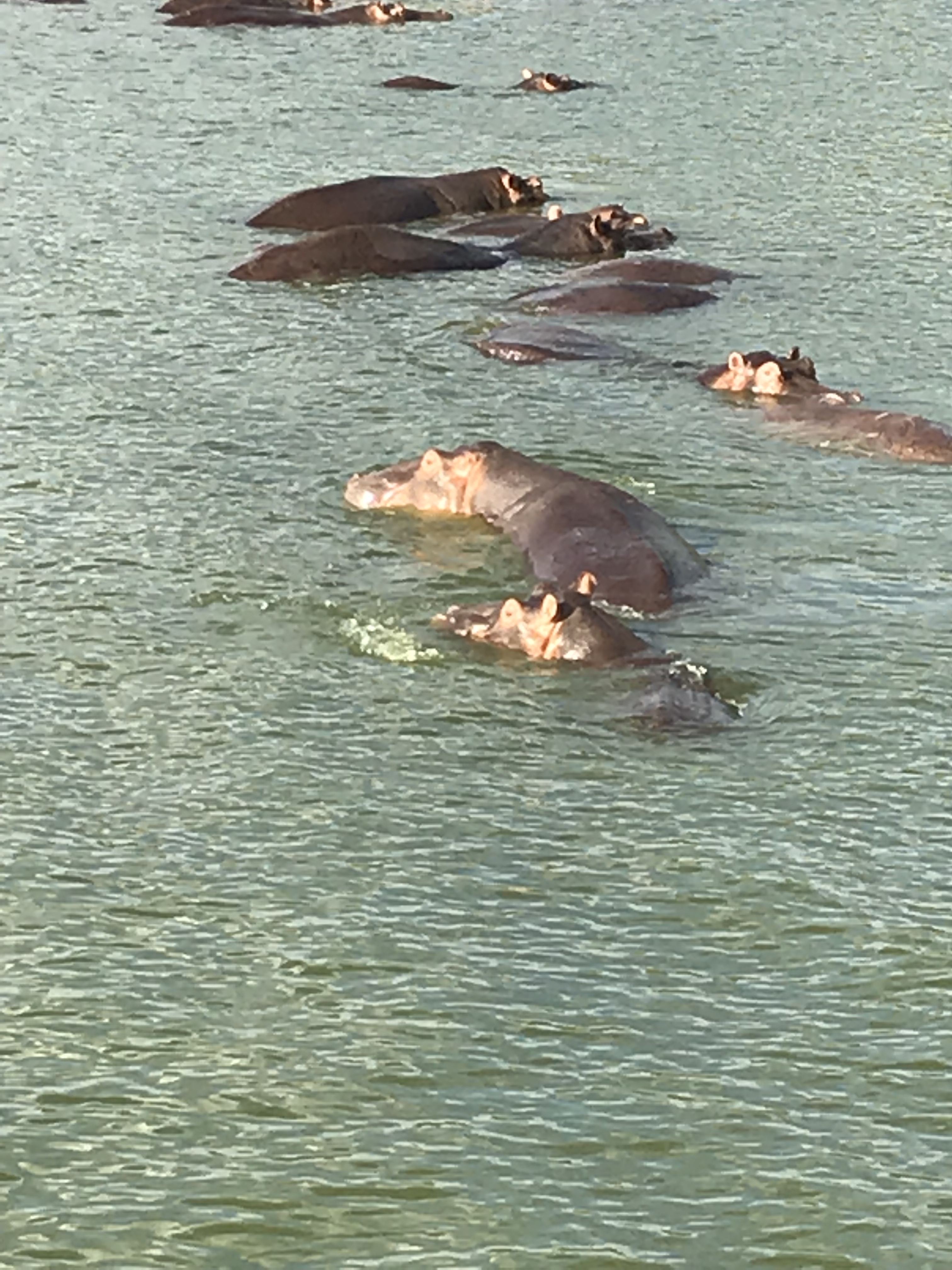
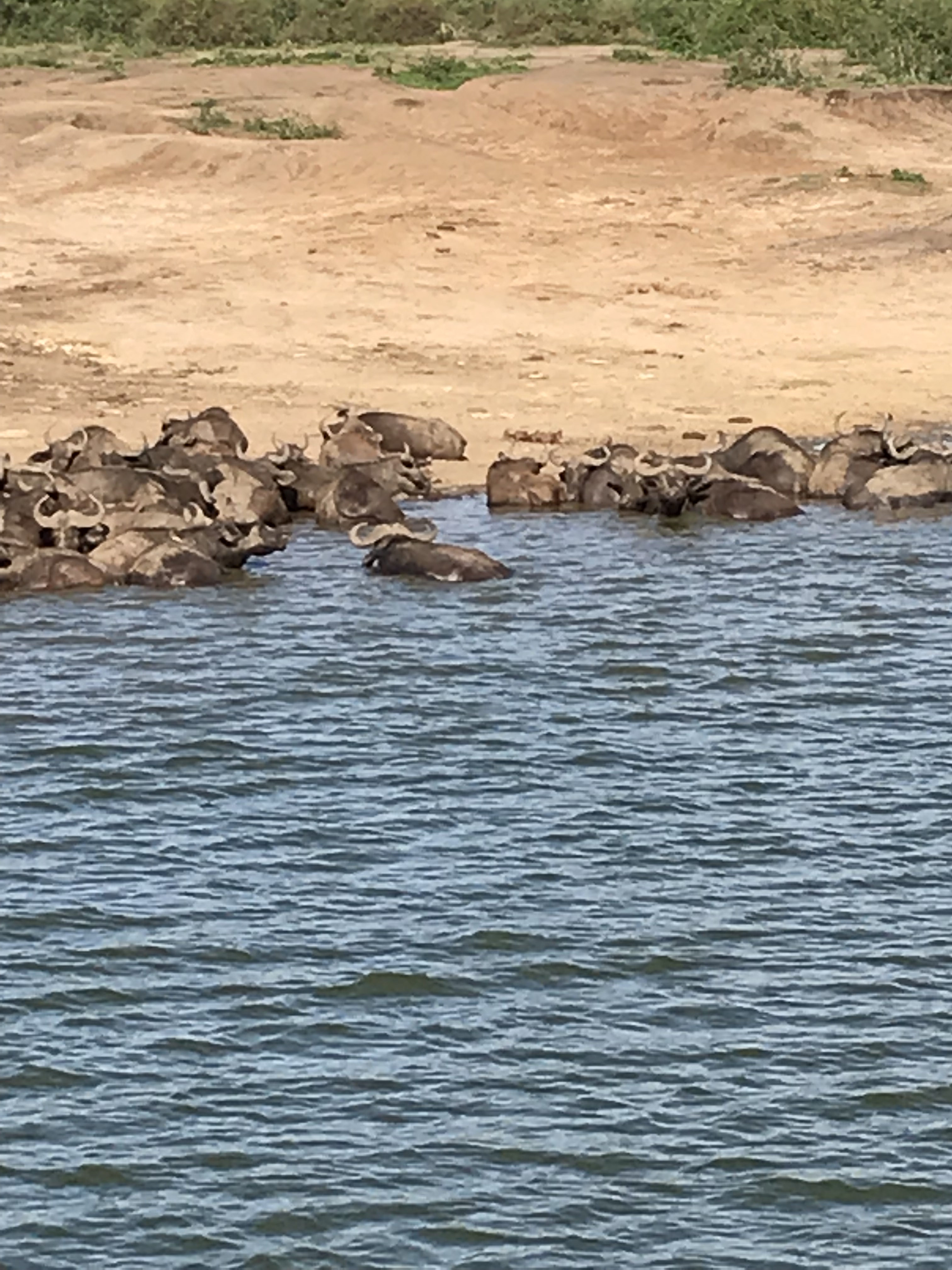
Over the next two days in the game park we were lucky enough to see a wide variety of game including a lion very close up, loads of elephants especially along the channel between the Lakes Edward and George, buffalo,Uganda kob, crocodiles, hippos, buffalo and topi.

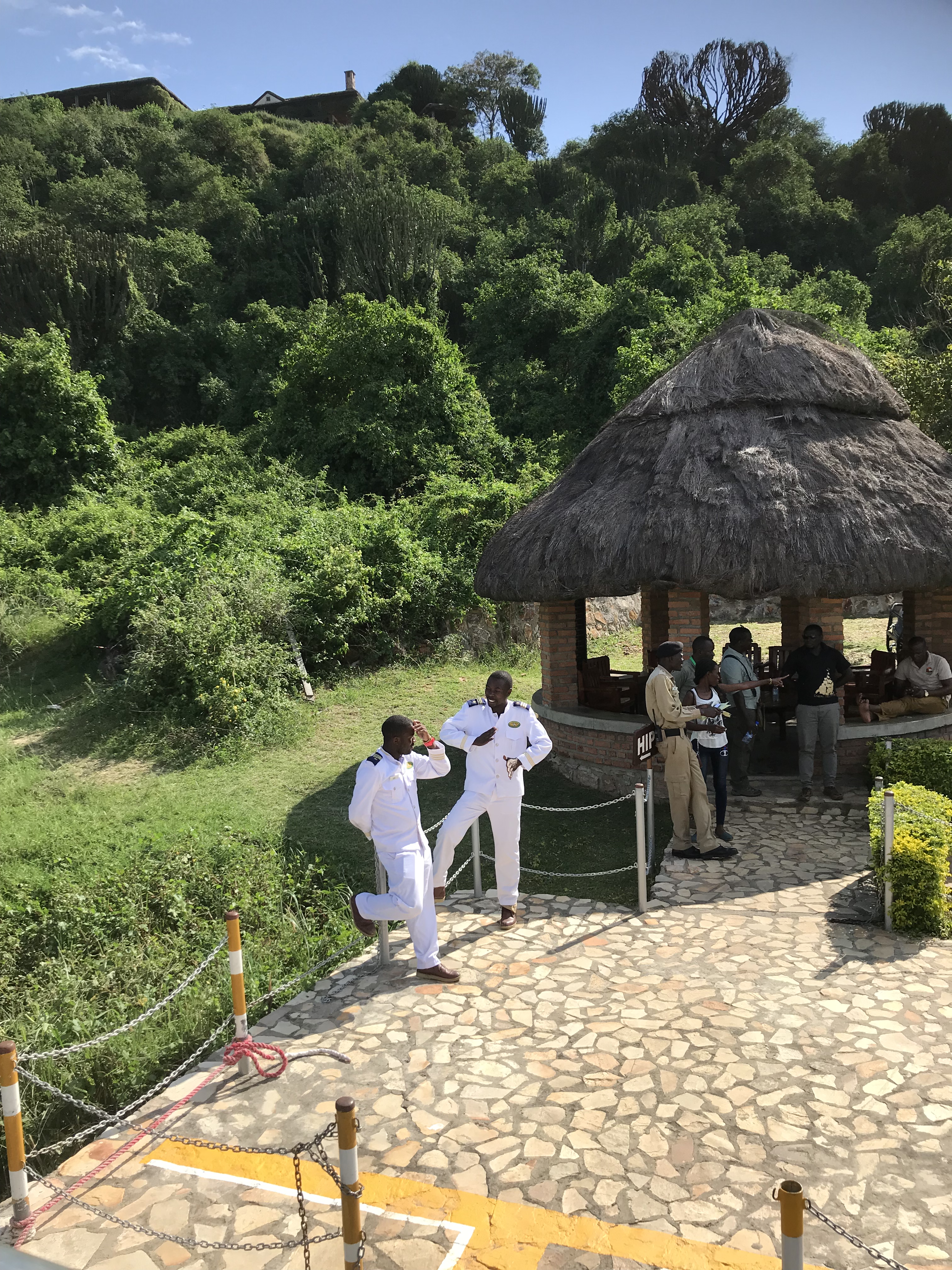
Suddenly we were in the land of tourists which did seem a bit strange. When we went on the boat trip in the channel there were very smart staff!

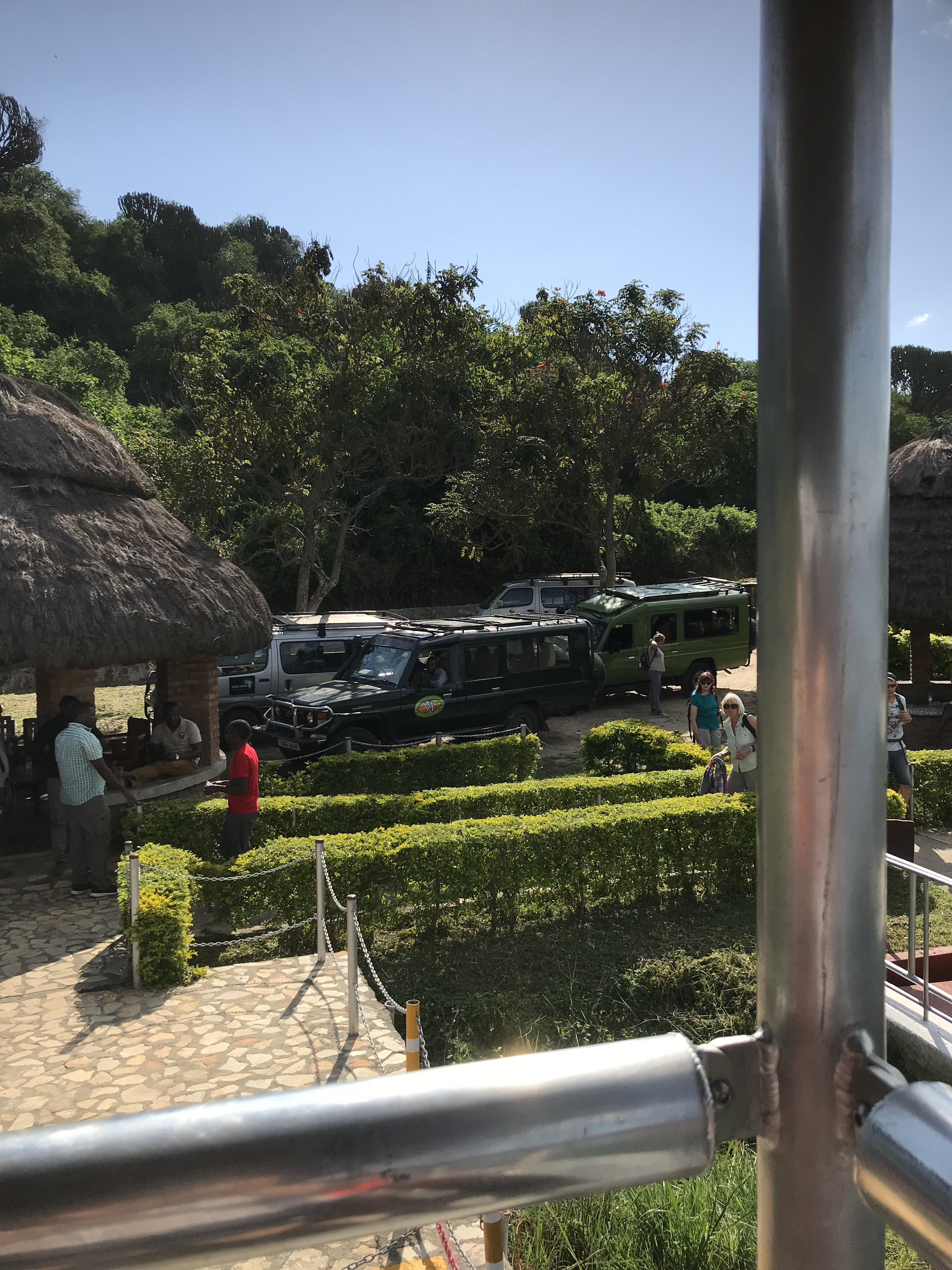
And lots of tourist buses and posh land cruisers. It felt a very different world from Itambira.

But we lived our time looking st these extraordinary animals in their natural environment. I didn’t realise that crocodiles, hippos and buffalo would all be quite happy together Ali f the river bank and that elephants would appear down there early evening to drink

and feed. We were very lucky indeed

At the end of our boat trip we headed out towards Lake Edward ( which looks as big as a sea) just as the fishing boats set off for the night. It was magic though difficult to get the horizon straight on my phone.

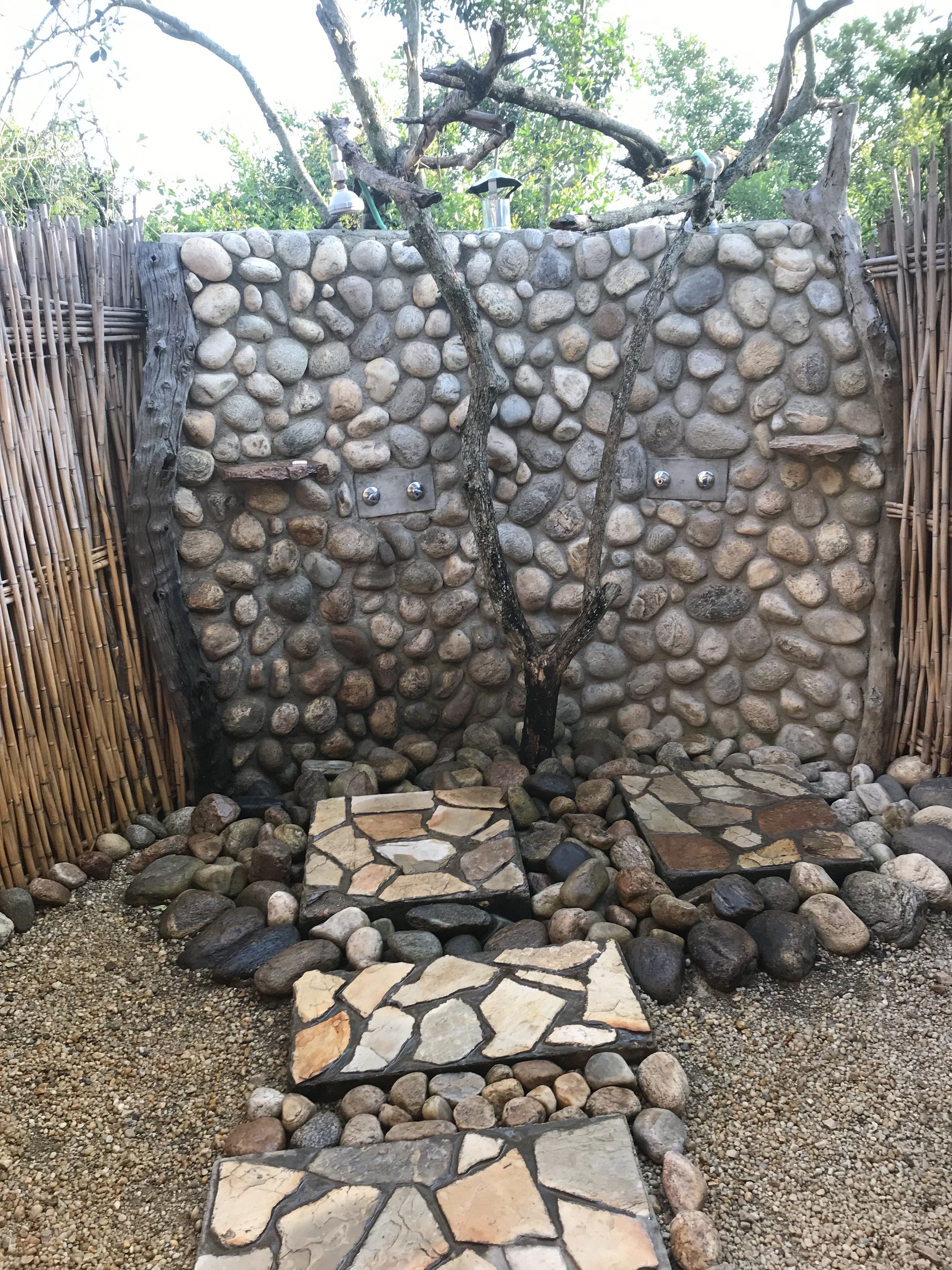
Our stay at Bush Lodge was perfect with a wonderful outdoor shower and, once we had sorted out the hot water, it was perfect.

We could see elephants just across the valley from us and had monkeys in the garden. Each night we had to be escorted to our room due to the proximity of hippos and elephant. Altogether a magical experience – the sunsets were great, the stars very bright and the savanna and it’s animals totally memorable.

To Kisoro

On Thursday morning we left Itambira to go by boat to the very Northern end of the lake where we were to be collected by Naris and the driver, Ivan, who was going to take us to lots of different places over the next 4 days. It was a misty morning and the lake appeared almost milky as the outboard motor purred along.. Hilary boatmen entertained us with the cheerful tale of ‘upside down island’ . . .

As legend has it at one time all the people of this island were holding a celebration but when an old woman arrived they would not allow her to join in. One boy offered her a drink so she departed with him in her canoe. As she was, in truth, a witch she then flipped the island over so that all the people were drowned. No one has ever lived on this island since then as that would be inviting trouble.

After just over an hour in the boat we arrived at Muka where Naris was waiting for us with Ivan our driver for the next few days. He had a very smart vehicle.

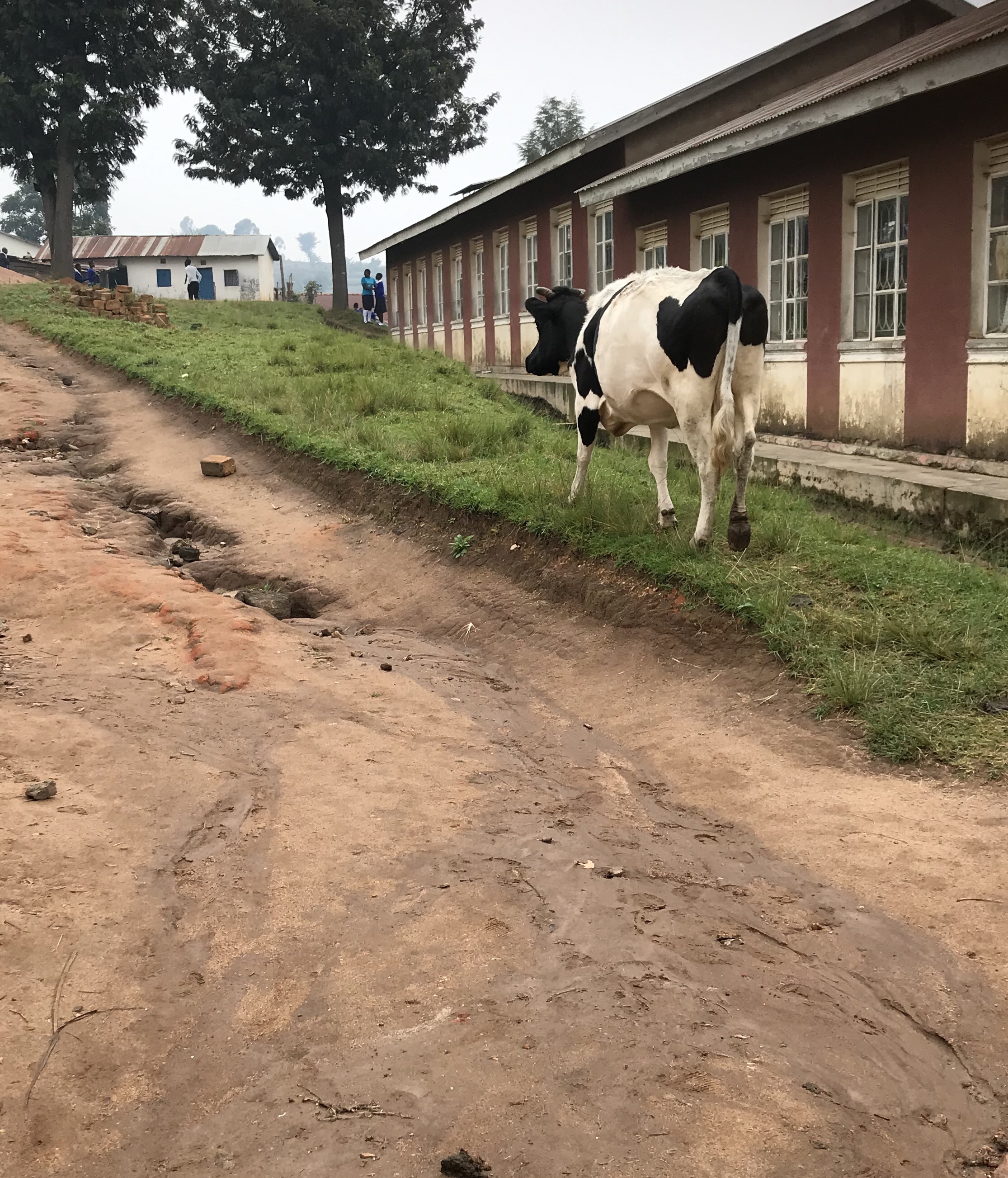
First of all we headed back towards Kabale on the very smart tarmaced highway so that we could visit the high school where Robert, one of Sally’s close friends, is headmaster. We were introduced to lots of staff and pupils and did a sort of triumphal tour round the school. Lots of cows were wandering around with the pupils – they are a great asset providing fresh milk.

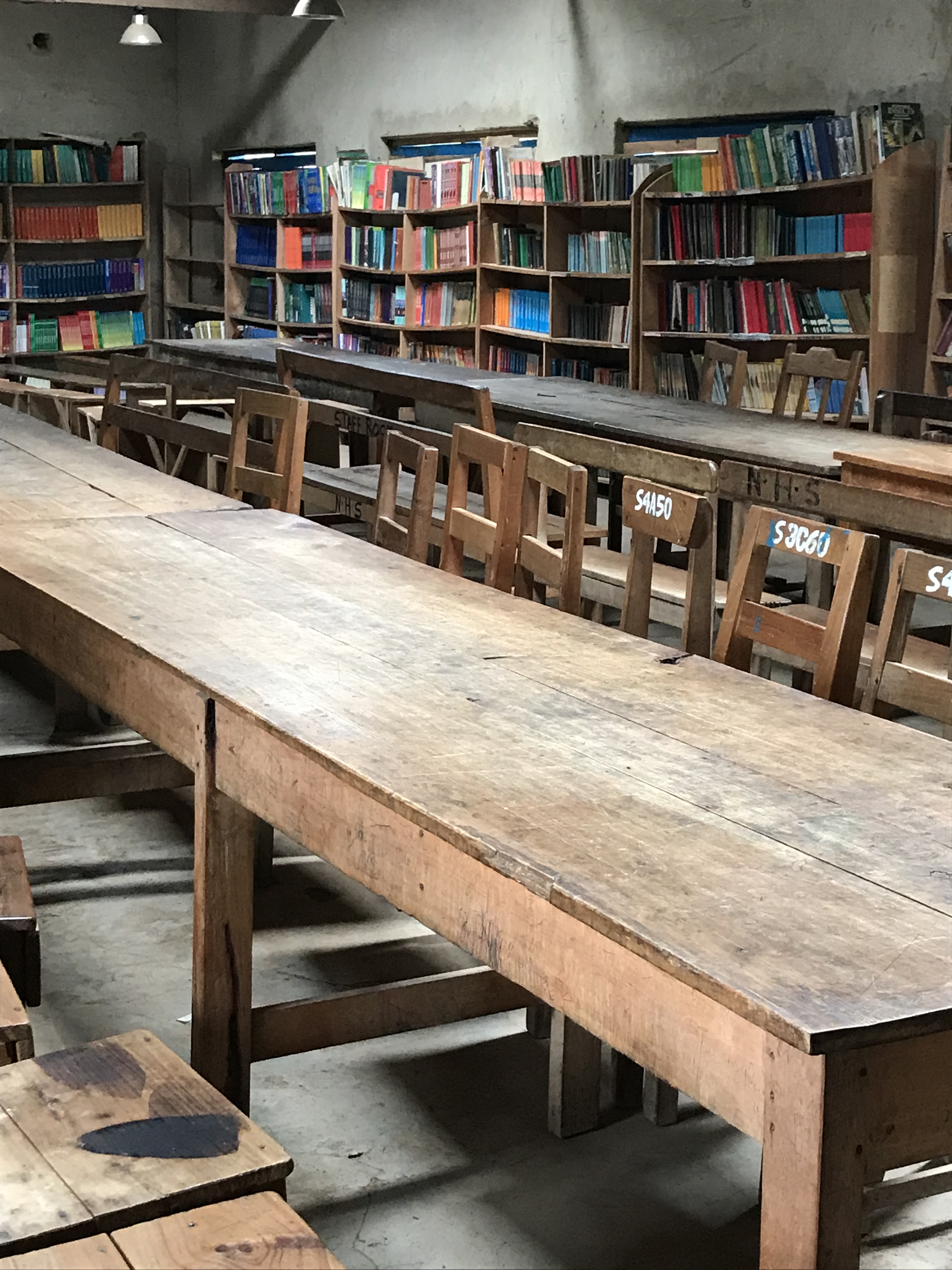
The school looked very well organised and Robert has increased its numbers four times over since he arrived 3 years ago. The staff were very enthusiastic especially the one in charge of the library which was really well stocked.

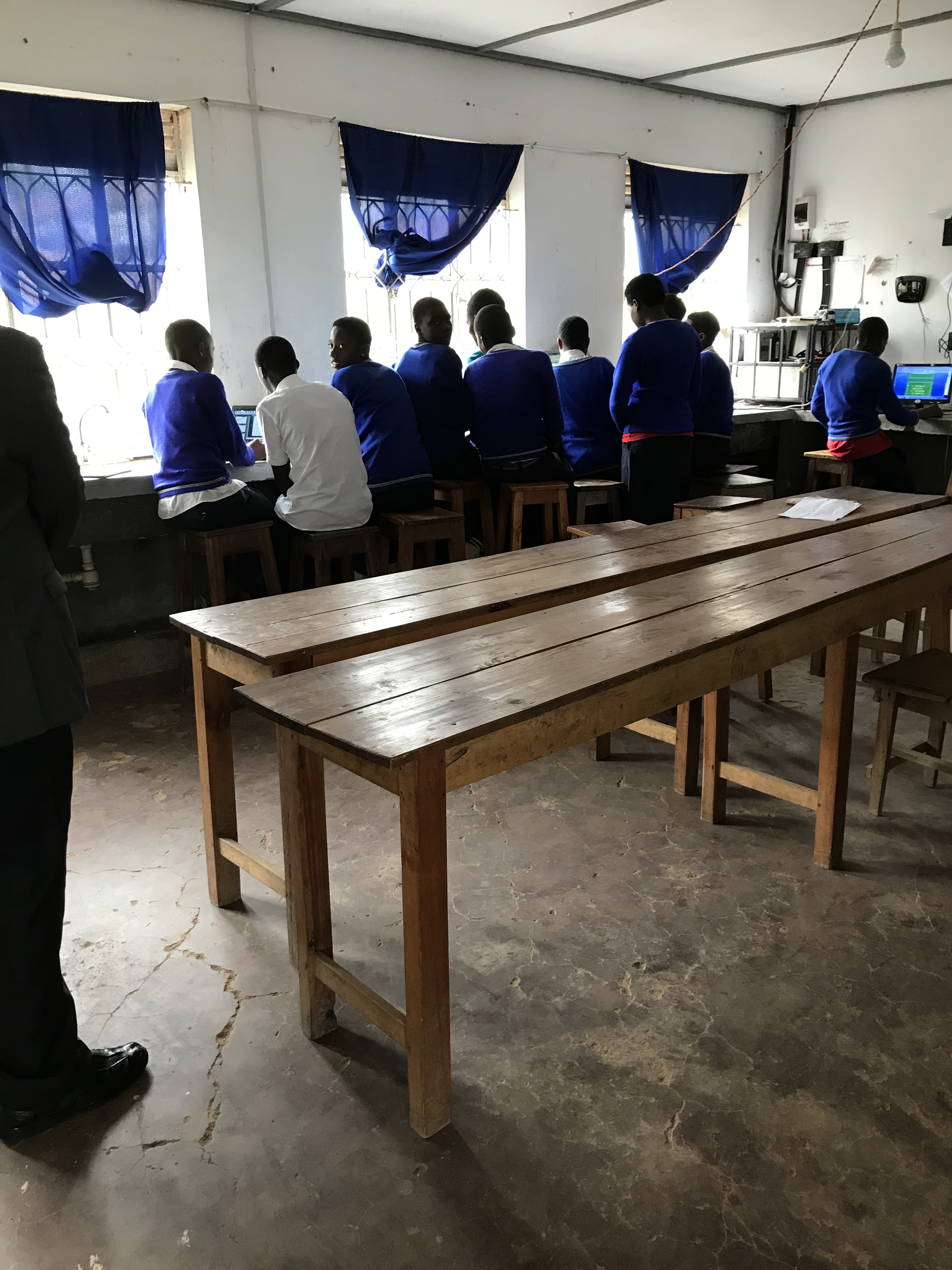
But they only have 8 computers for 500 pupils

These pupils were using them during break.

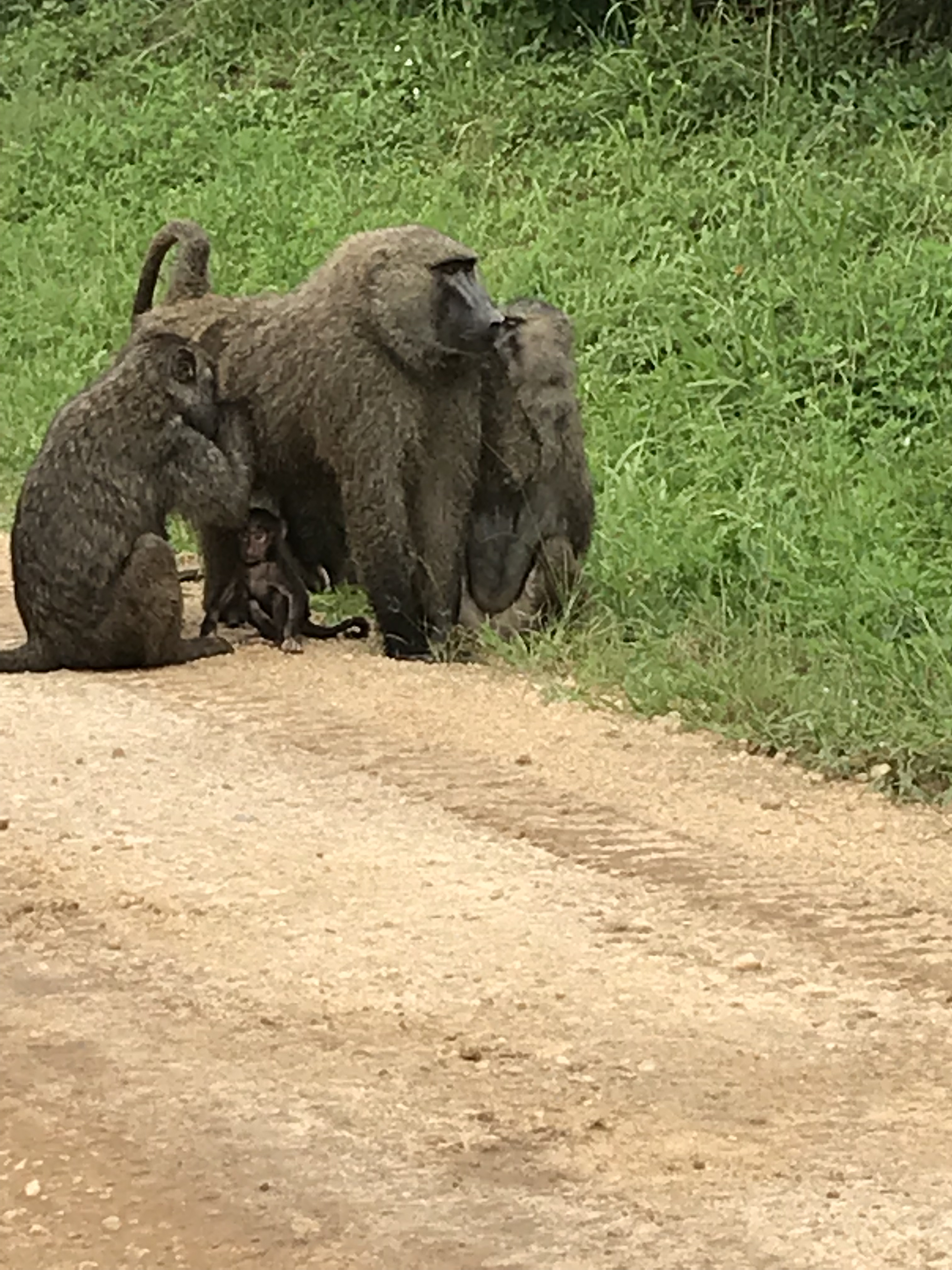
After this our journey continued , past the edge of the Bwindi impenetrable forest where we saw gorillas last time I was here and passing a baboon family on the road.

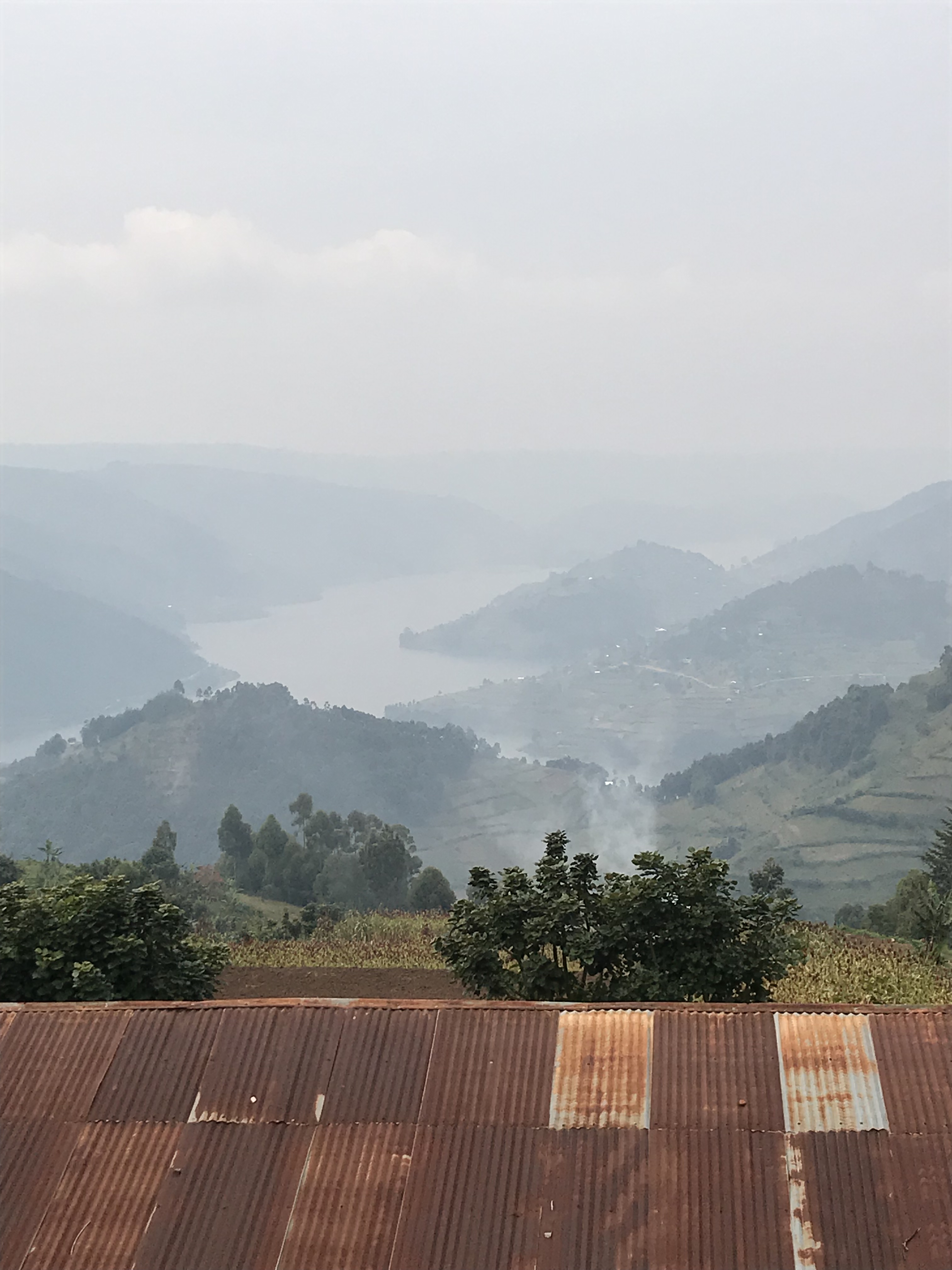
We did get a very good view of Lake Bunyonyi from the road but not in the best weather!

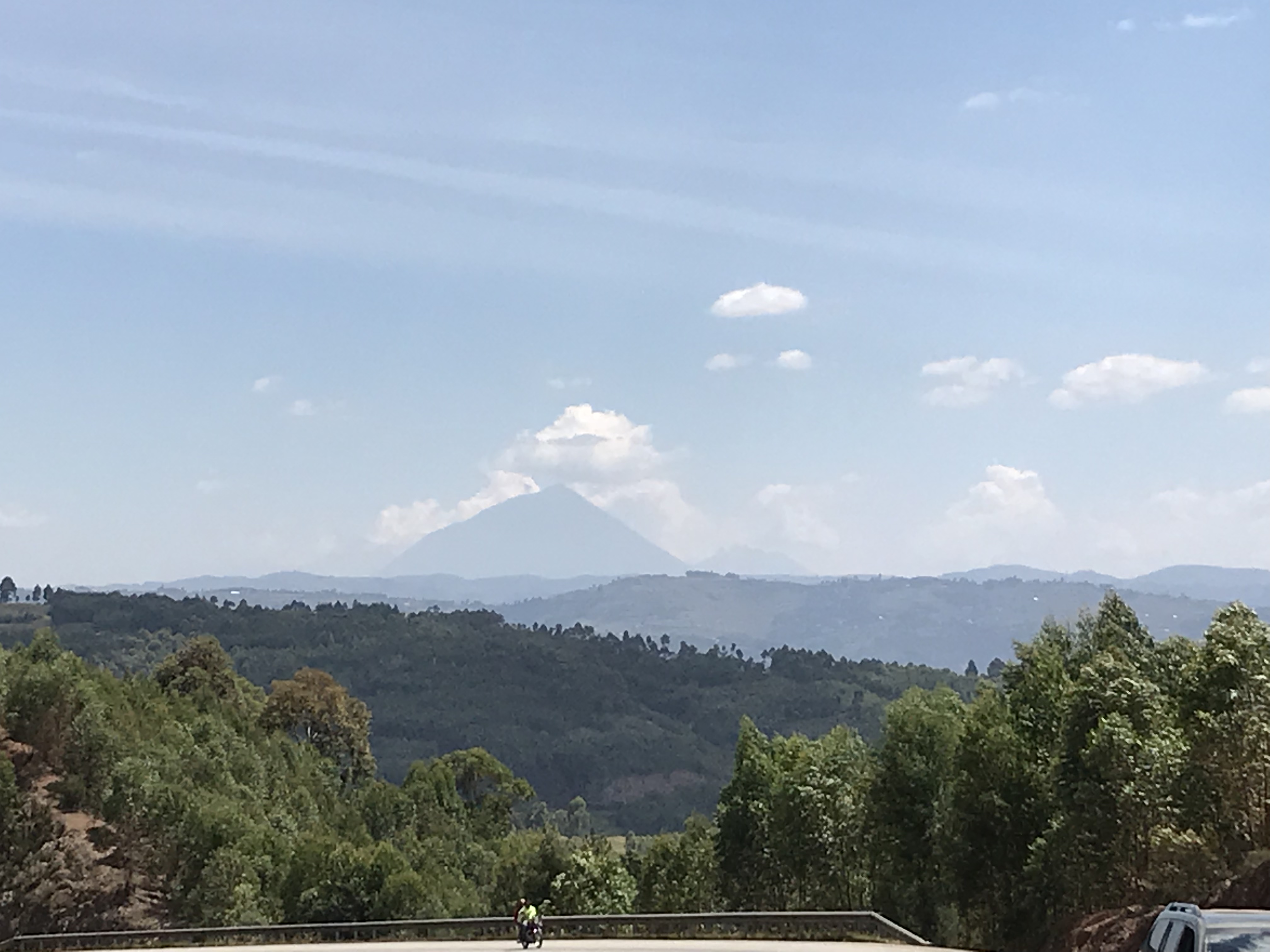
Eventually we reached the edge of the highlands and headed down a very steep slope towards Kisoro which is much more low lying and at the foot of the Virunga chain of volcanoes which continue into the Congo. We should have had a very good view of Muhabura the highest of the volcanoes but it was not to be. However amazingly in our return to Kabale three days later it was clear and I was able to get the perfect shot.

As we approached Kisoro it was clear that Irish potatoes are the dominant cash crop as there were lots of them growing in the fields, in sacks at the side of the road and on lorries.

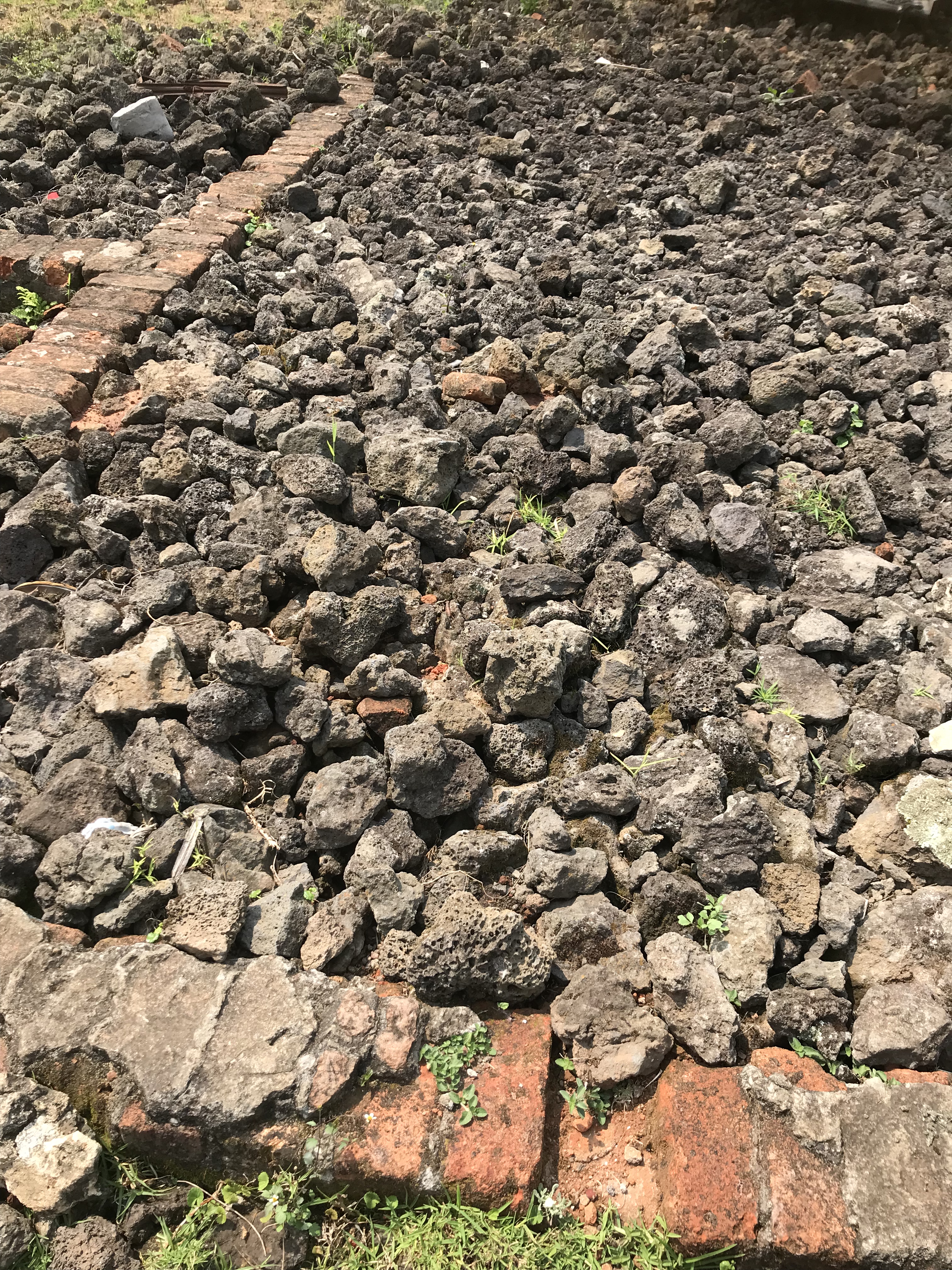
Near Kisoro and in the town the landscape is littered with large piles of volcanic stones. People take them out of their fields and then pile them up to use for building.

These great piles of lava rocks indicate a violent history from these volcanoes though those at this end of the chain are now extinct. At the other end in the Congo Nyiragongo remains highly active with a boiling lava lake.

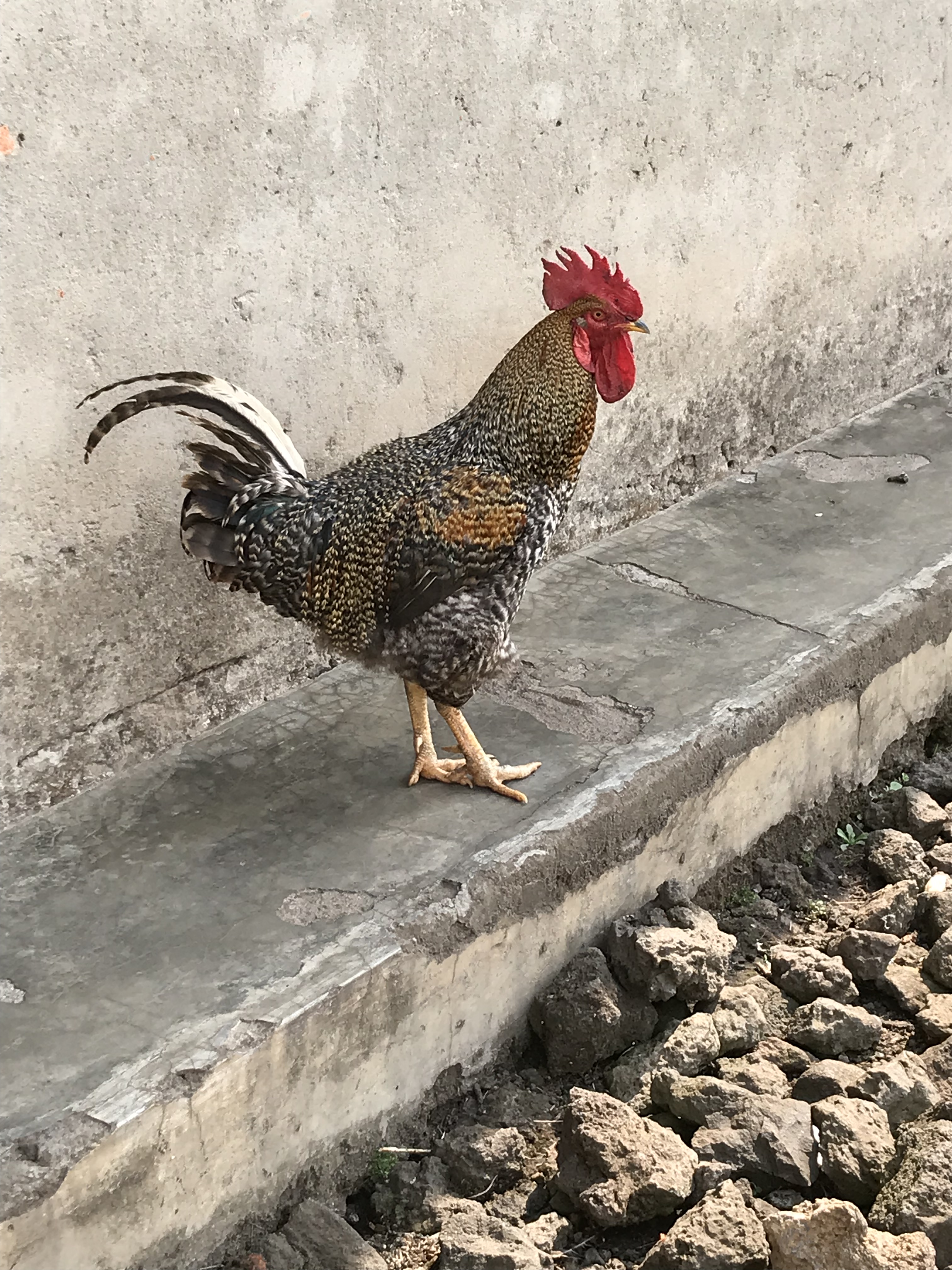
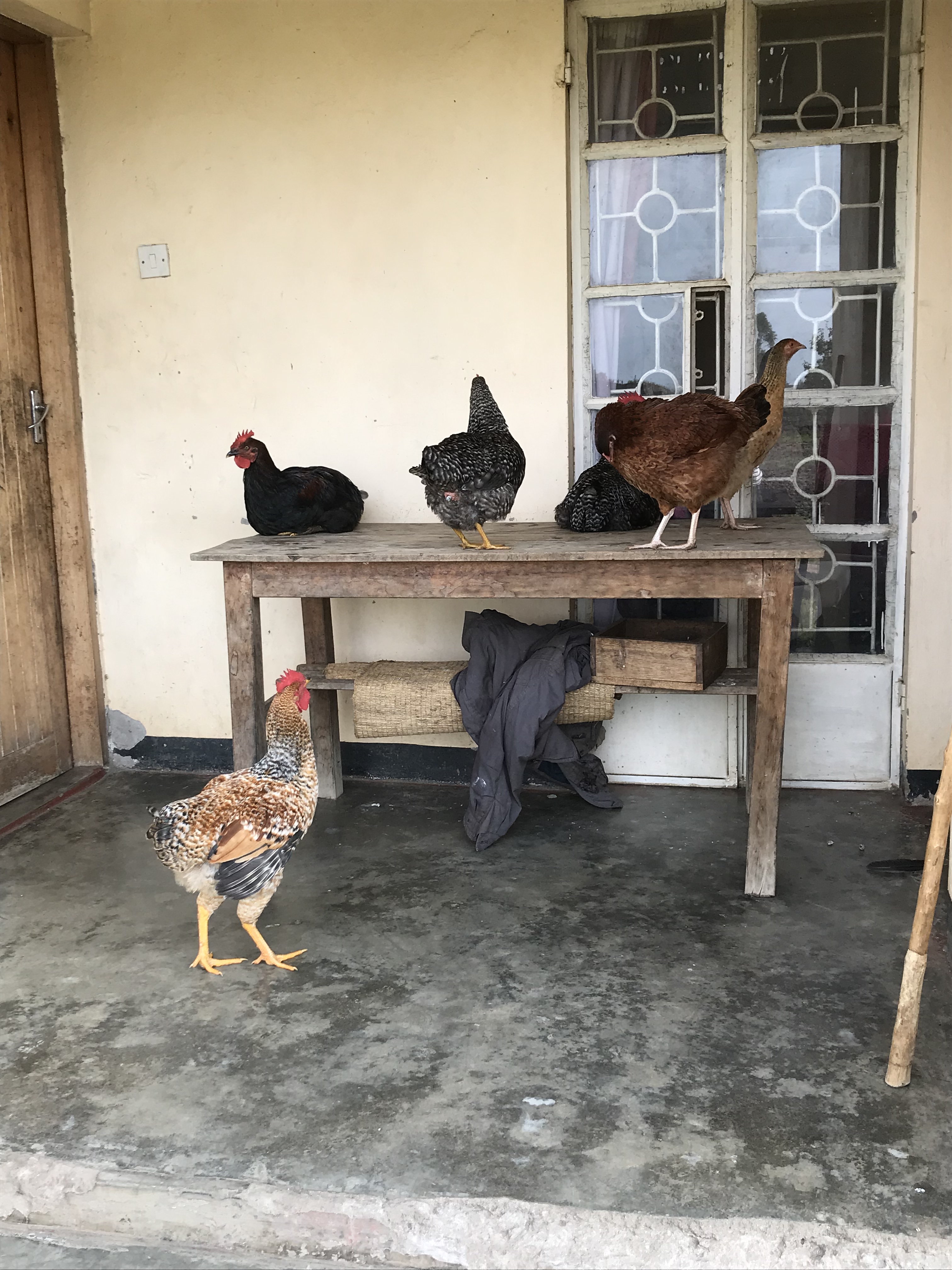
we had lunch with a friend of Sally’s called Joan who now lives alone o. The edge of Kisoro, having been widowed. Joan had a very handsome rooster with a harem of chickens.

After a very filling lunch with Joan and lots of good conversation it was time to leave.

We headed for the Traveller’s Rest hotel in Kisoro and suddenly were in a world of tourists which felt quite strange. We did however have a fantastic short thunderstorm and were treated to a comfy bed and a warm shower.

Training Day

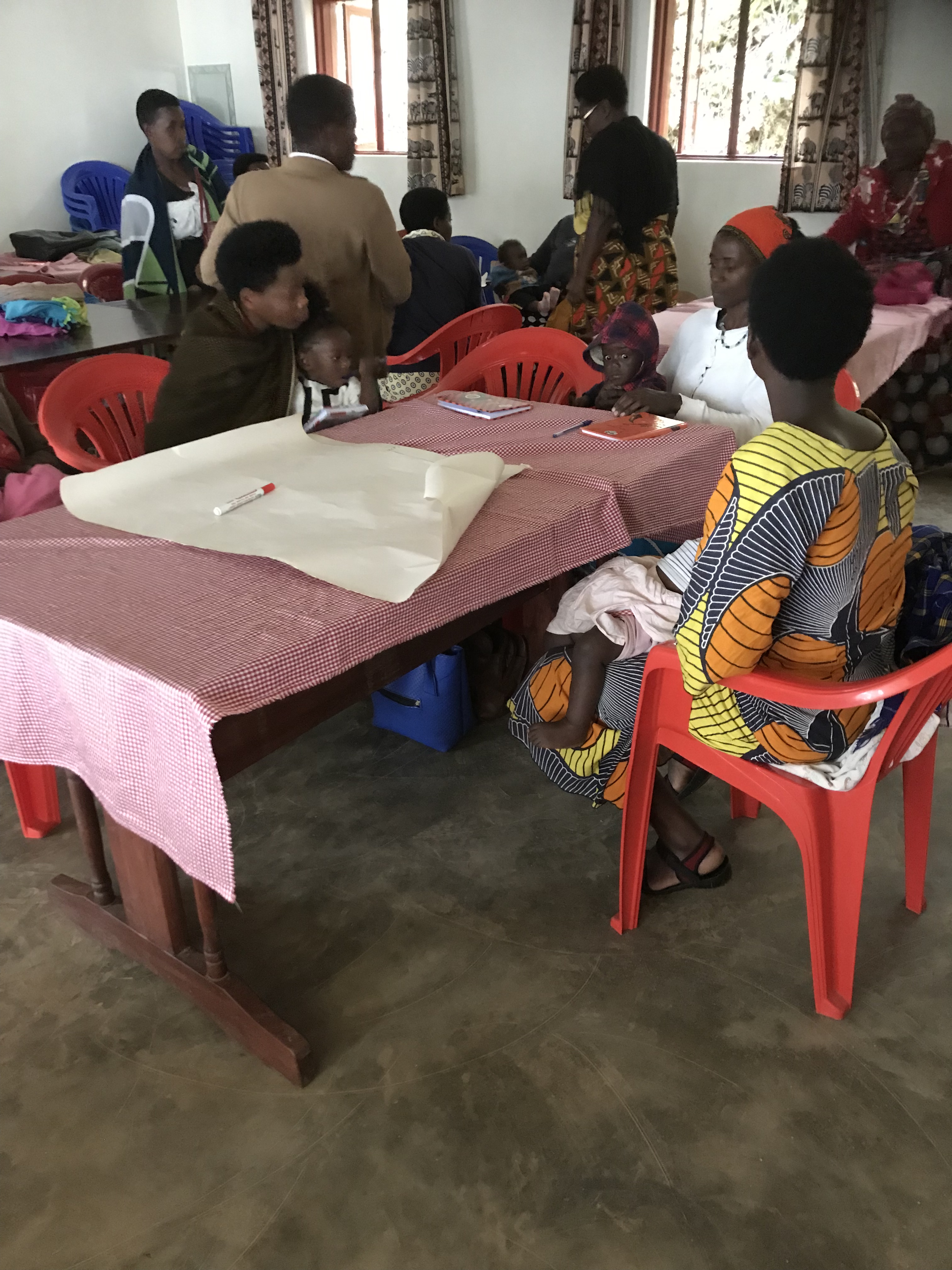
Tuesday was training day for the IISOH project. This means that lots of women from one of the local communities on the other side of the lake come over by boat and have a day being trained on one of Seeds of Hope’s courses. Diana, Naris’s wife is a key person in this training, she speaks the local language and is very assertive with the women and cares very much about improving their lives. This time she also brought a lady called Faith with her who has a lot of experience teaching such groups. Diana is also in charge of making sure everyone gets a really good lunch.

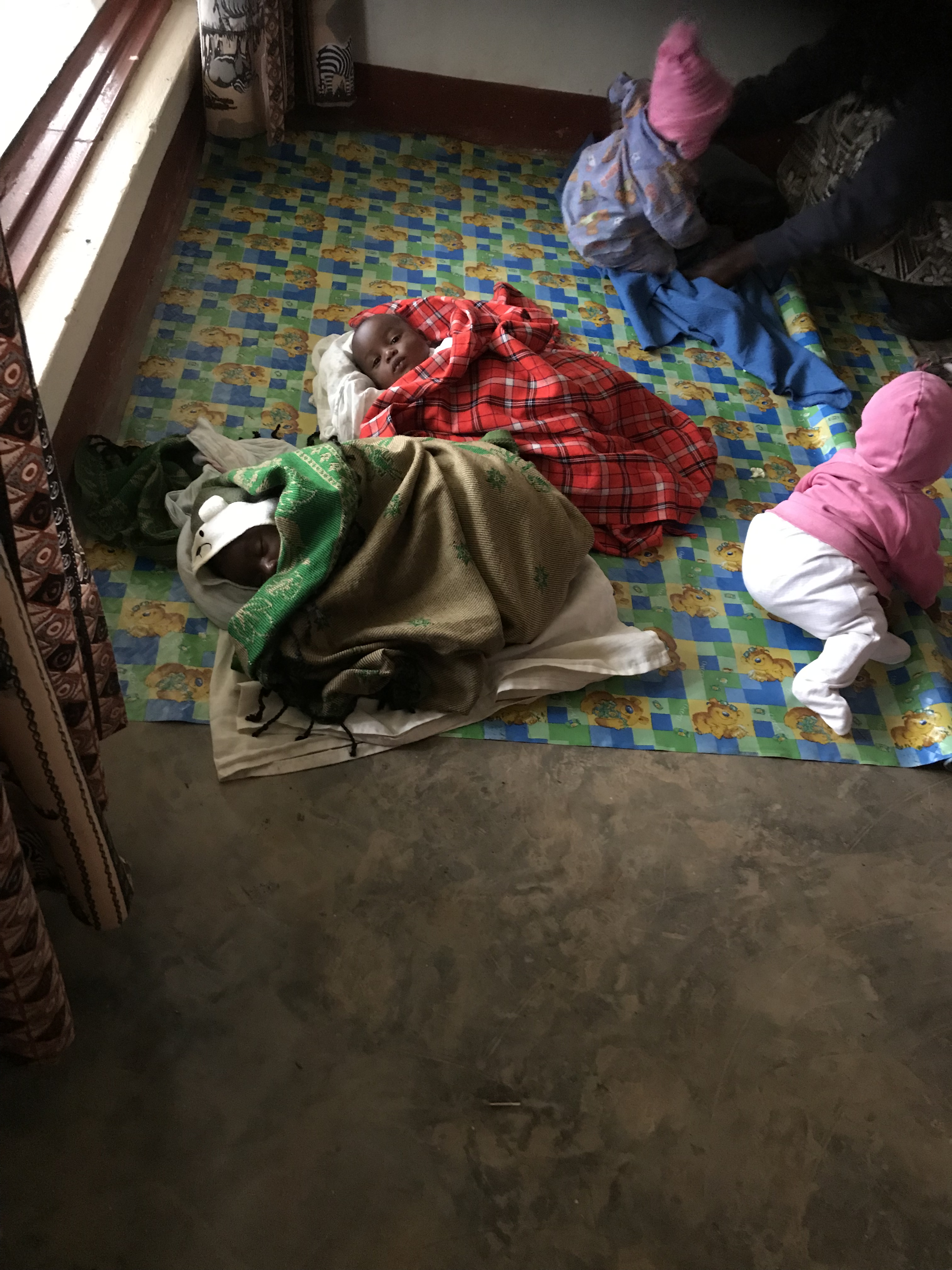
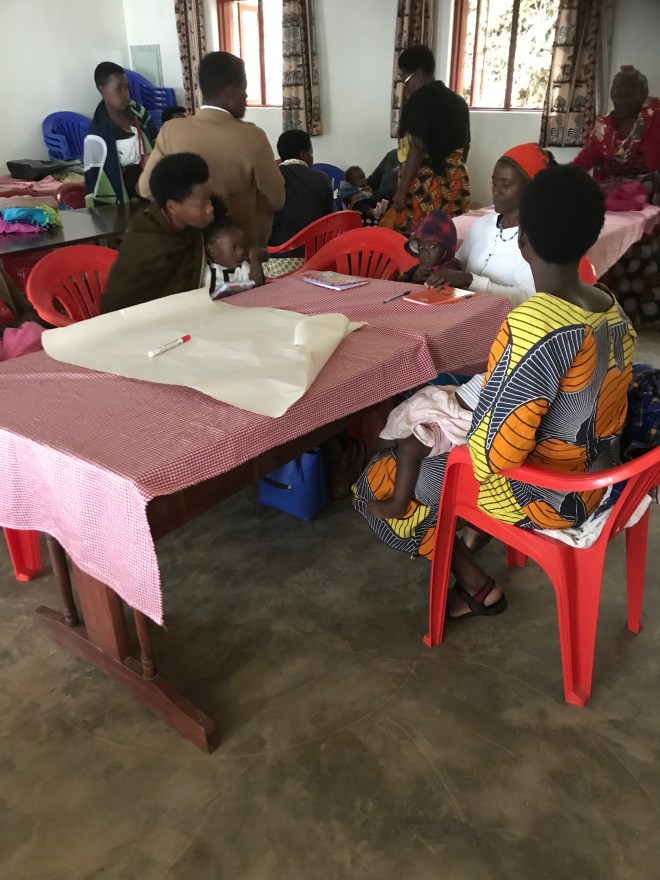
Today’s course was about nutrition and all the women came with their babies/toddlers. Babies never really leave their mother’s side here – they are either nursing, sitting on their knee or being carried on their backs, wrapped in a large piece of cloth which keeps them close and safe. They sleep very well like that. While the teaching was happening some mums did put them down for a snooze in the corner.

To be honest not much sleeping happened! It was a very noisy session. We began with singing for everyone and the babies really liked that. They were less keen on sitting still during the teaching.

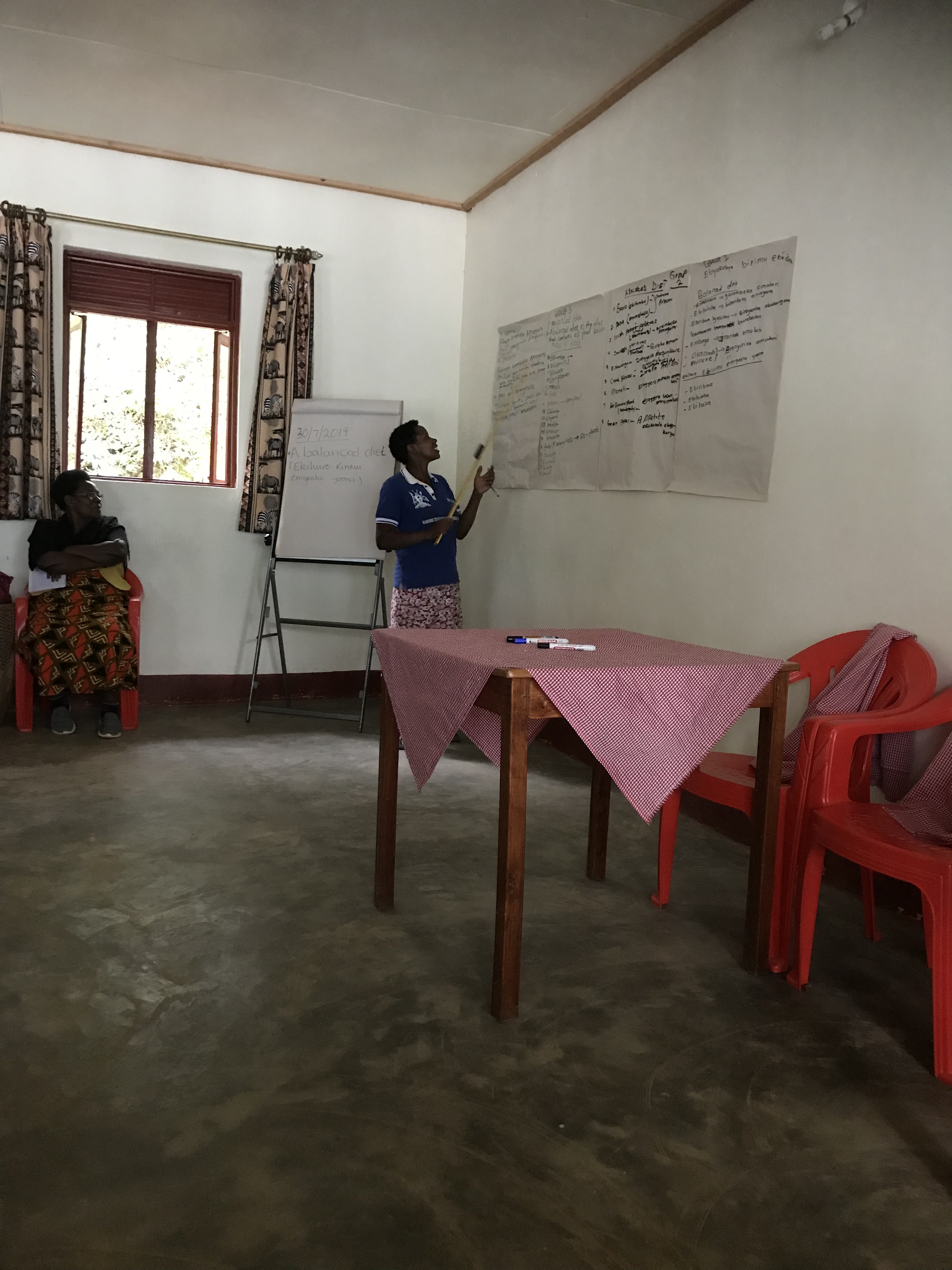
The women discussed food varieties in groups and made lists of different types of food on large sheets of paper.

They clearly understood about protein, vitamins and carbohydrates but they are not always able to give their families the variety of food they need. Protein is a particular problem. They only eat meat such as chicken very occasionally though some families might have a goat which they can milk. The lake does not have large amounts of fish either. But they do grow beans and use them. Diana is encouraging them to grow green leaf vegetables for more vitamins and they eat fruits such as guava, passion fruit and sweet bananas. Once finished Barham ( the assistant training officer) put the sheets of paper up on the wall and a representative for each group spoke about what they had suggested.

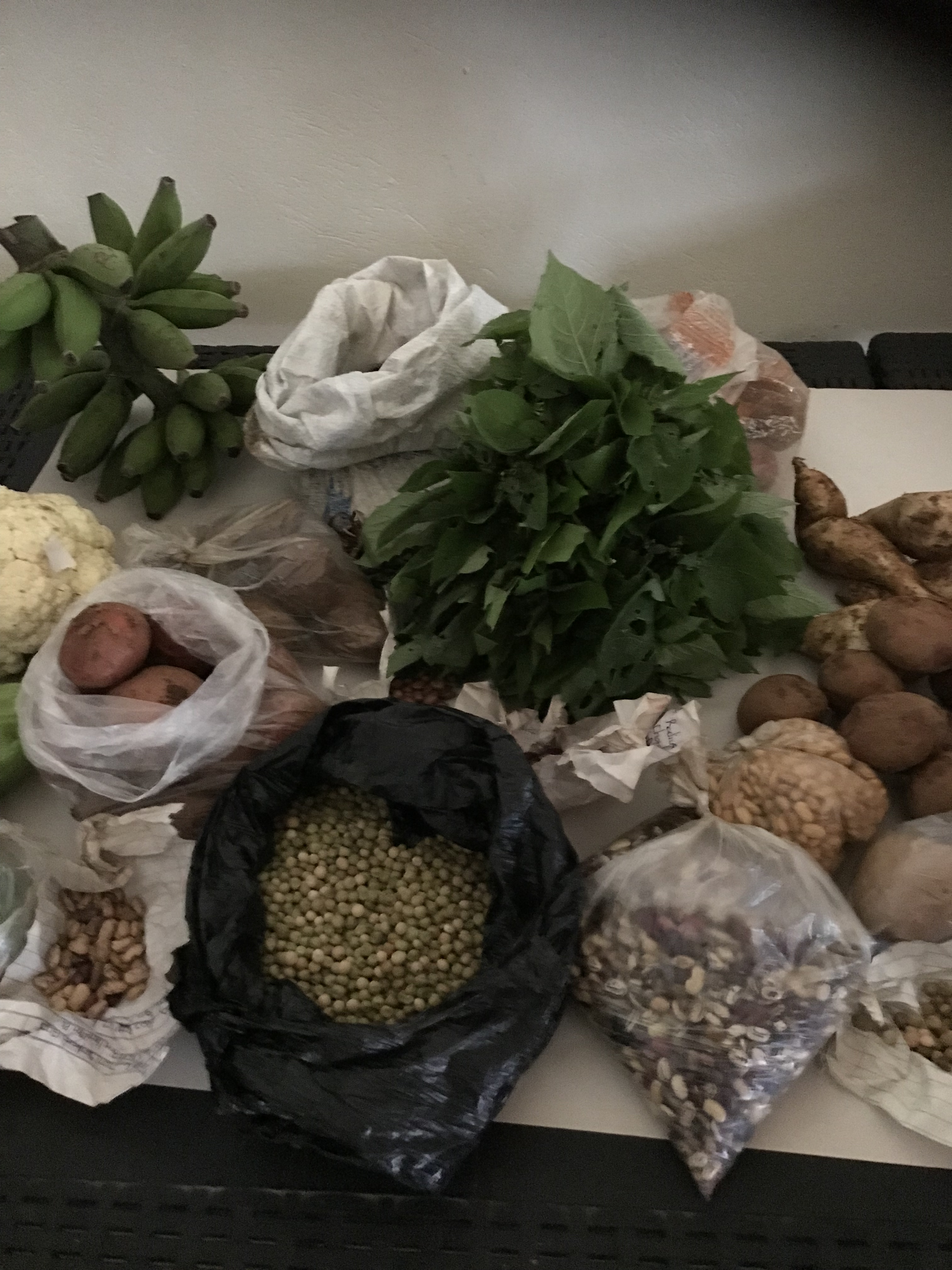
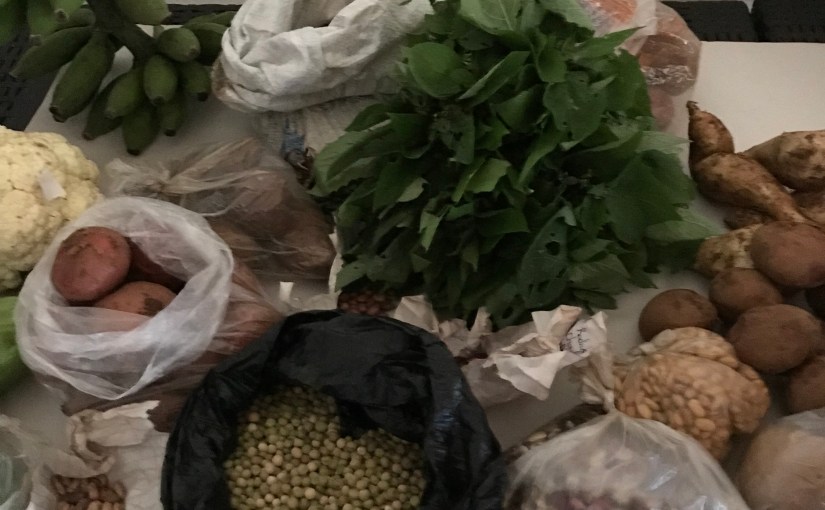
The women had also brought samples of different foods which they had grown and there was quite a large variety, though not if you compare it to the average Western diet.

Matoke is a staple here. It is made with green bananas and has a consistency similar to very thick mashed potatoes. These bananas are savoury not sweet and there are always many many bunches of matoke in the markets and on the back of trucks.

The matoke, once prepared is yellowish. Sweet potatoes are another staple which make up a lot of the diet but neither of these are very high in protein.

it is a tough life here for these young mums who often have to decide to go without in order to feed their children and who sometimes struggle to produce enough milk for their babies. By getting them together like this they begin to support one another with ideas and this can be transformational for them.

Lunch when it arrives is a veritable feat and the women pile up their plates with matoke, sweet potato, yams, meat, peanut sauce and green vegetables. I am amazed how much they eat but they spend their lives doing very physical work in the fields and at home and today is a day when they can really fill themselves up for a change.

At the end of the day they sing their way over the lake to home with many smiles all round. Once more IISOH are making a difference.

The children of Itambira

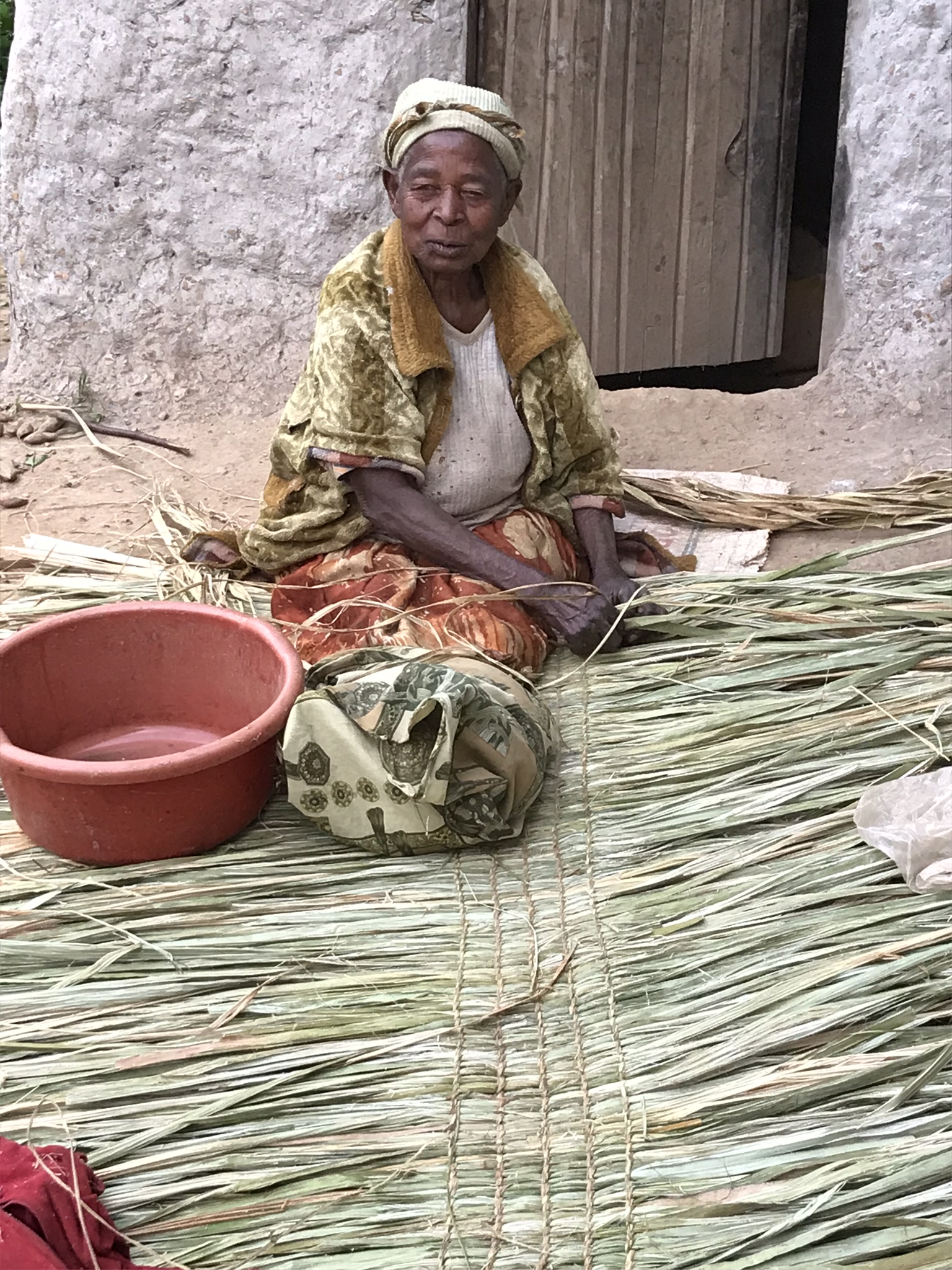
A very small community of people live on Itambira. There are about five families, including three brothers, their wives and children and their mother as well as another family related to Joy who is the oldest person, but a formidable figure who works in the fields all day and sews matting which she sells in the evening.

Joy

Altogether there are about 14 children who range in age from about 12 down to a new baby of about 6 weeks. Not all the children live here permanently or with their parents. Some are here with grandparents as their parents are away working.

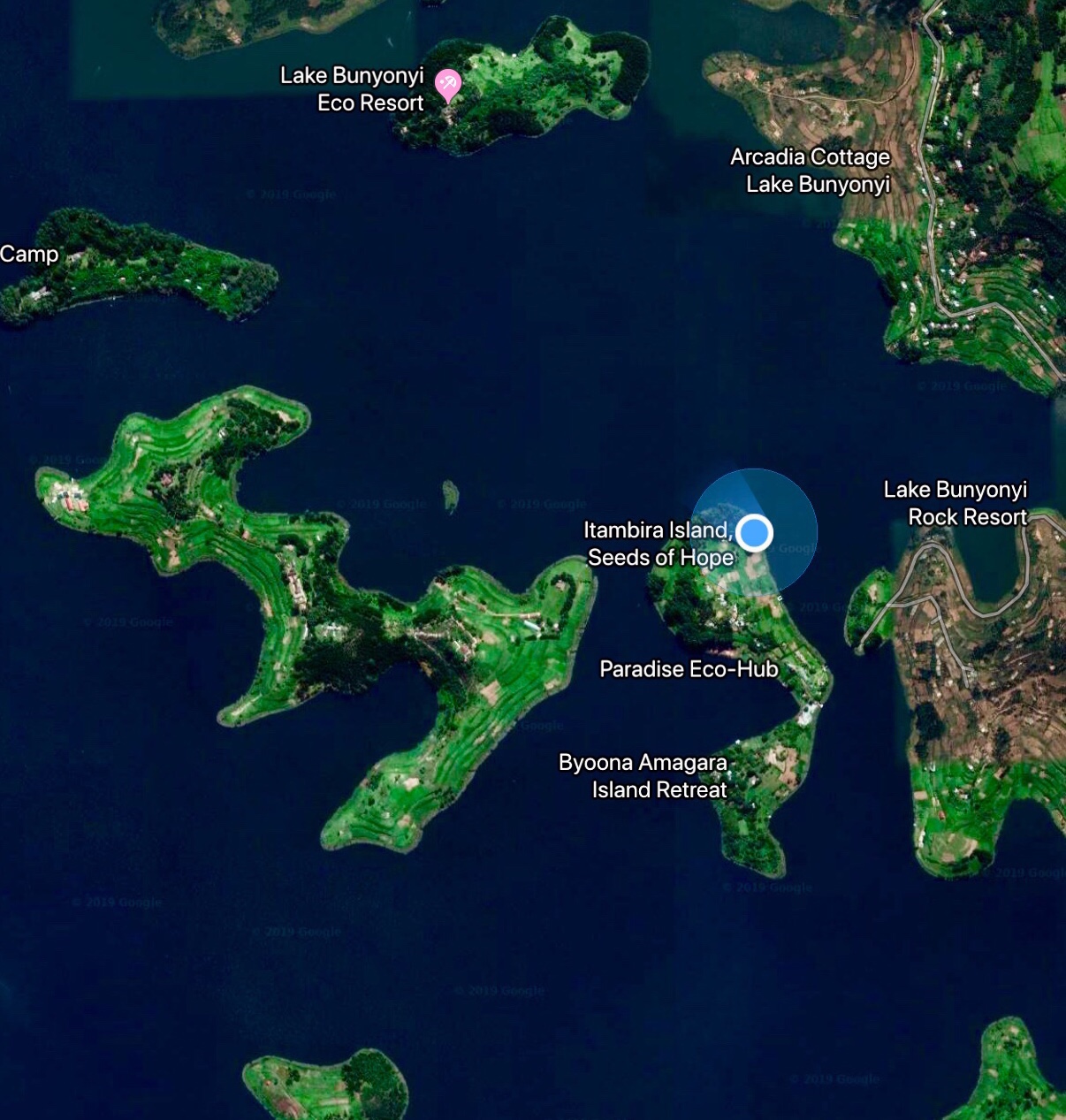
The local people on the island have three tourist resorts here, Seeds of Hope which is the one I am visiting and two others at the other end of the island, one very well established and the other relatively new. Each in its own way tries to get involved in community work. At Byoona Amagara the owner works with children and, in particular is trying to teach them to swim. Most people around Lake Bunyonyi can’t swim which seems ridiculous when they live by the lake. But Sally at IISOH does far more wide reaching and significant work than the other two. As previously mentioned IISOH is helping local people construct water tanks, training local women in a wide variety of life skills and really helping them to achieve a better quality of life.

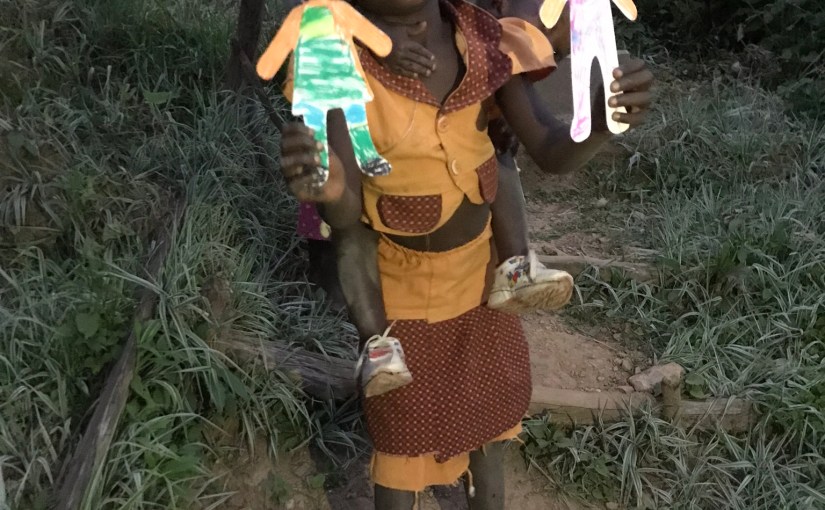
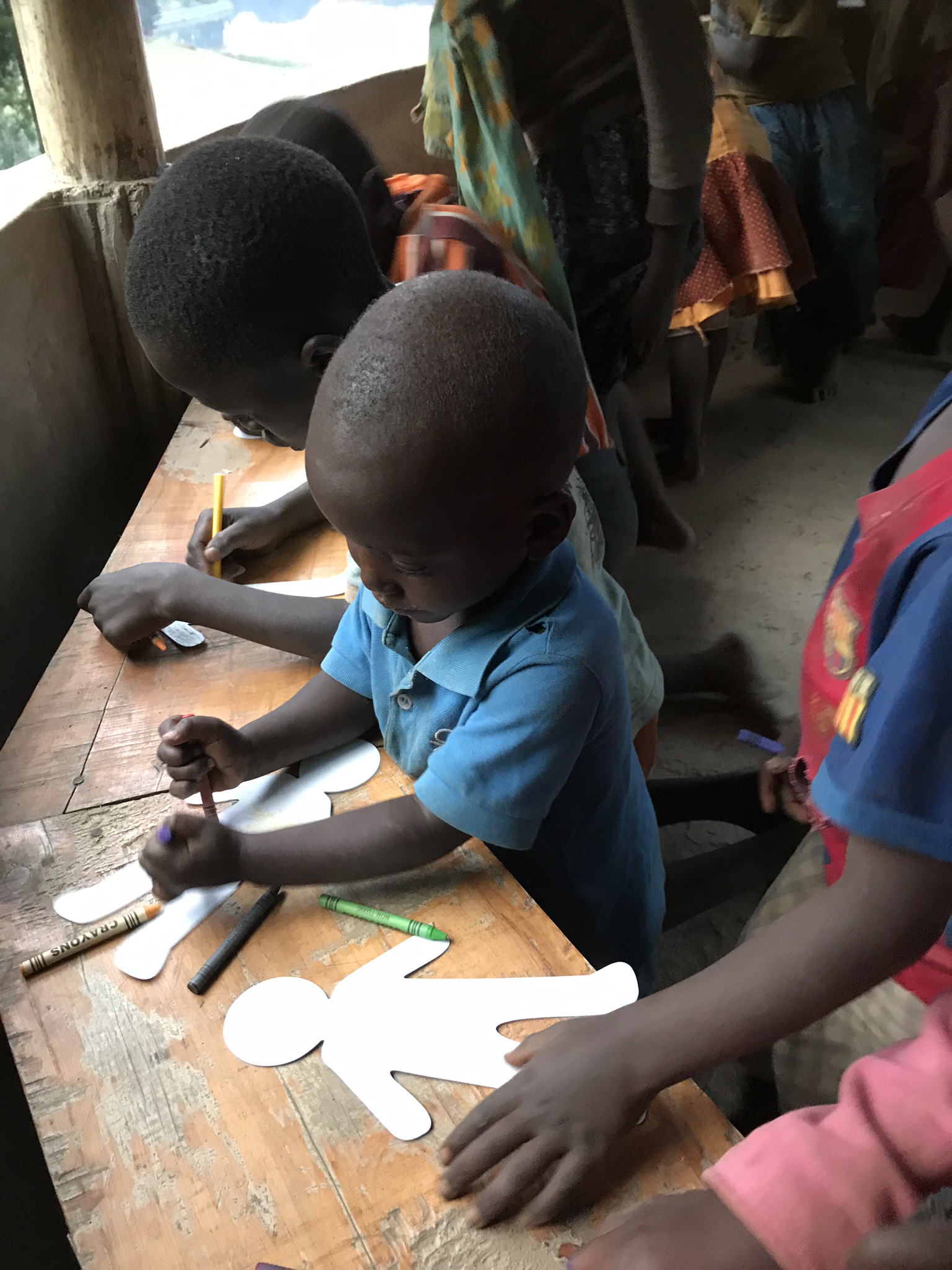
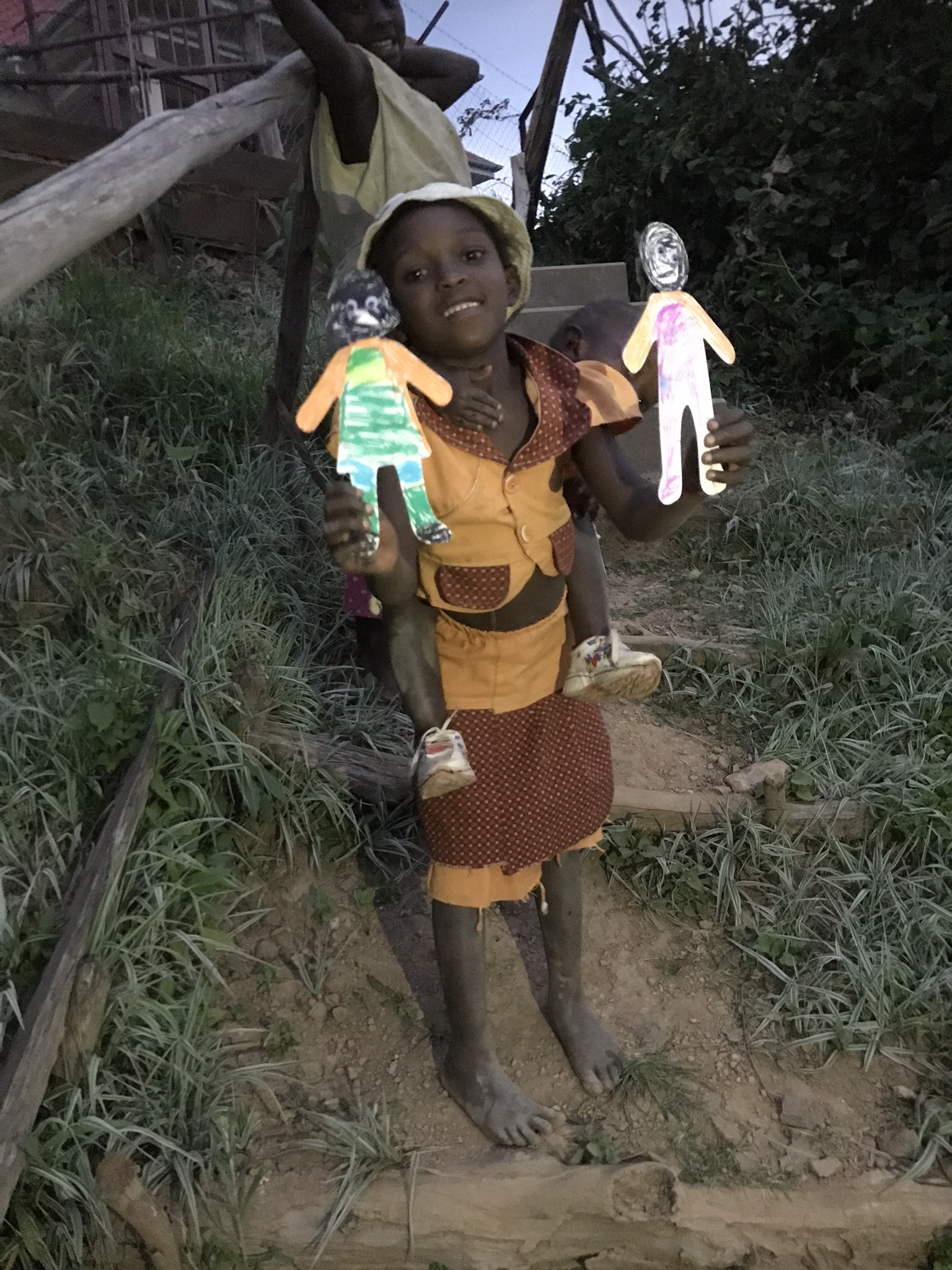
The families on the island hold a special place in Sally’s heart and she really does try to help them out where she can, bringing children’s clothes over from the UK , sorting out chances for them for school and sponsoring individuals if necessary. The children all love her and on many evenings Sally visits them or brings them over to her house next door to do an activity. When they know she is around they start to shriek. ‘ Sally, Sally’ – very loudly so that all of them can gather and enjoy whatever Sally might have to offer. They love balloons, bubbles and lollies as you might expect and they also are happy to sing their songs accompanied by one of them drumming. Yesterday we managed to do a colouring activity with pens and crayons I had brought with me and some simple white card boy and girl figures to colour in. Sally even had winky eyes to stick on, courtesy of Ikea.

Doing the activity reminded me very strongly of running a playgroup with local children out in Papua New Guinea forty years ago. I did it twice a week in my garden in Wabag, made lots of play dough and used all Angus’s toys for the children. I had see- saws made out of planks and slides made out of doors – great fun no inkling of health and safety there! Children have not really changed!

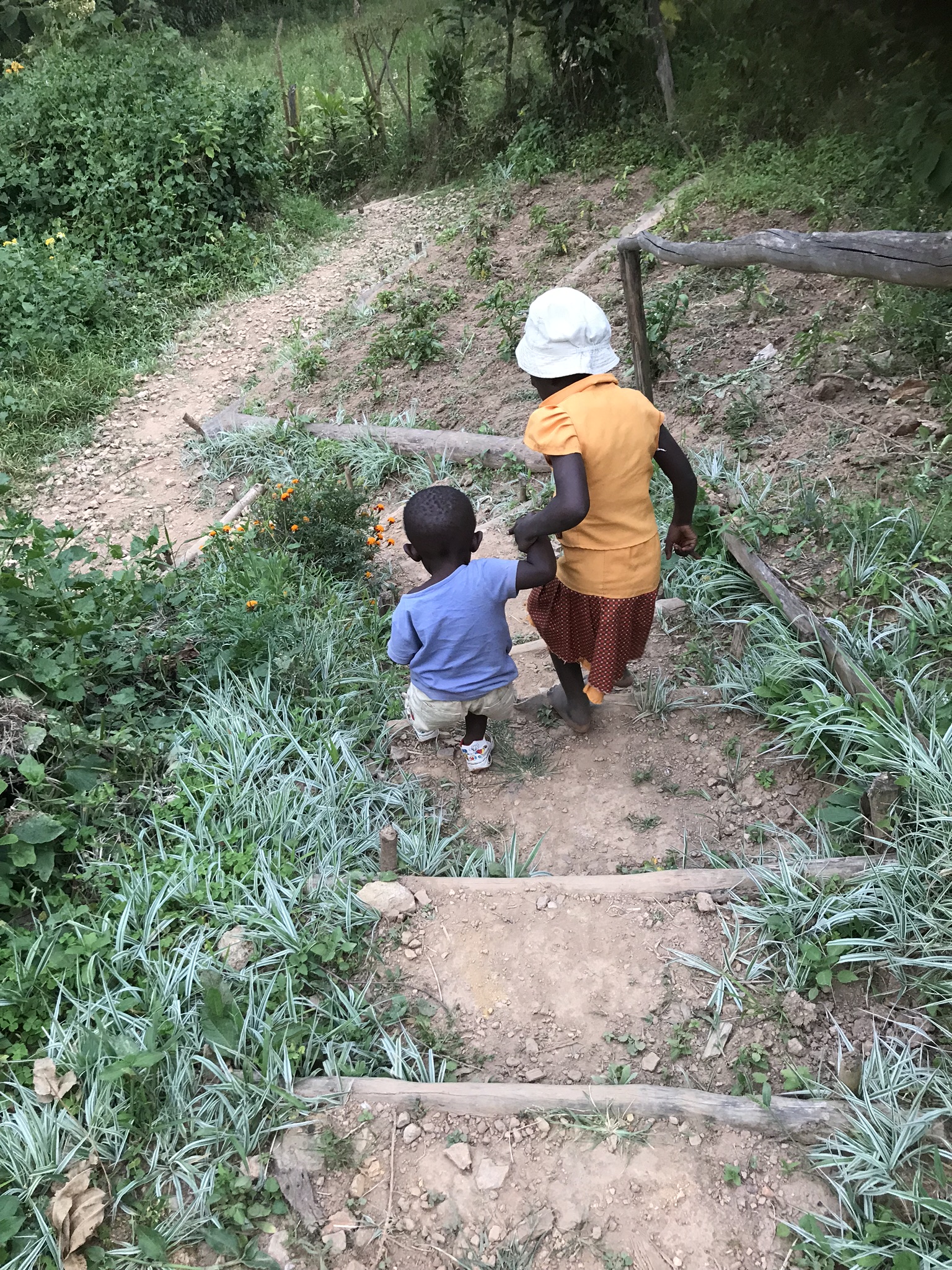
These children have to be very resilient. From an early age they must look after each other so little Edinah who is probably about 6 but only the size of a four year old is already looking after Jordan, her younger brother, helping him down the steeply sloping steps by Sally’s house and then carrying him back up, clutching her figures as well, when it is nearly dark.

Saturday is the day the children have to help by washing clothes: they also fetch water from the lake and collect firewood. Every Sunday they dress in their best clean clothes to go to church but during the week after school they wear old clothes and no shoes. The island is their playground and they know every inch of it and make the most of it. These children have no toys at all and their families have very few possessions. One of the parents may have a mobile phone – these are now the most sought after and prized possession for many families and they do make a difference. For instance, Diana can communicate with local people about the training courses that way.

At church

I have so enjoyed spending time with these children, with Simon who is about 8 and quite naughty but very-enthusiastic, with the older girls like Charlotte, Ruth and Anna who are hugely responsible, and with the toddlers, Jordan and Kevin who were shy at first and then became ever more confident and with Isiah who has the cheekiest smile.

It has been a humbling experience.

A day on the lake

Today (Monday) began very early at 6am in the dark. We began with a quick cup of coffee and a bite of a banana before climbing into the IISOH motor boat, with boatman Hilary at the helm. Our purpose of the early start was to get right down to the far end of one of the lake’s long tentacles as soon as possible after dawn. At every point along the lake where a river enters it large swamps develop of reeds and papyrus and these are famed sites for the many and varied birds for which the lake is famous. It’s name, after all, means ‘the lake of little birds’. I remember coming here three years ago as one of my trip highlights and so am delighted to be able to do this excursion again.

It is very cold in the boat as the light gradually starts to emerge but we were well informed and I have lots of layers on. For at least 40 minutes we seem to be the only living things up and about but then gradually we begin to hear people calling to each other in the houses up the lakeside slopes as well as music from a radio and the odd dug-out canoe appears with a fisherman. I have been amazed all week how easily and far sounds of conversations carry across the lake. Perhaps this is because there are no other sounds. I have not seen or heard a car for 6 days now and the tranquility is overwhelming. Lake Bunyonyi contains very few fish but these fishermen clearly know where to set their nets and are out checking them. At one point Hilary stops the engine and we glide along the edge of the swamp which is chattering with the sound of birds waking up.

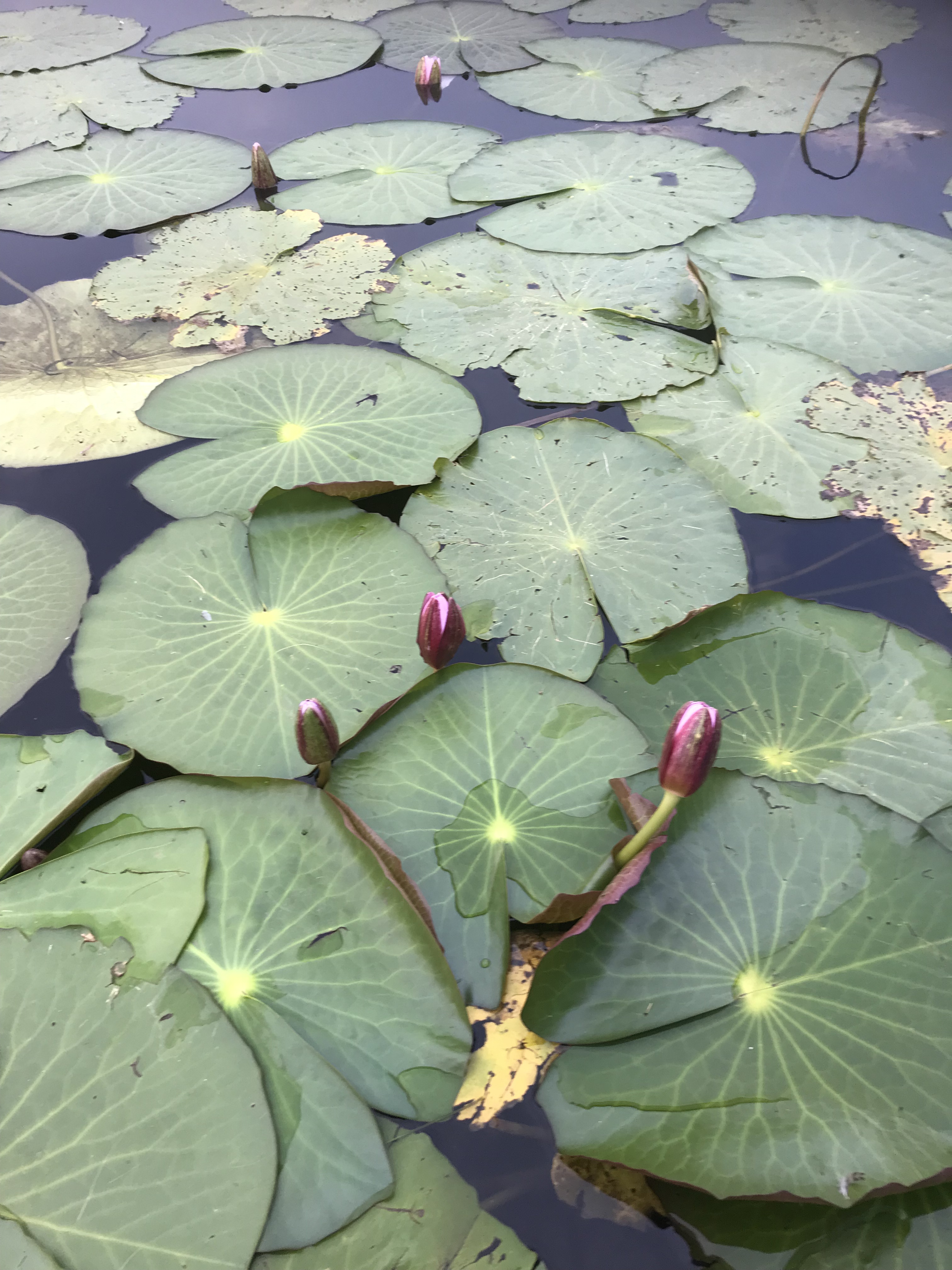
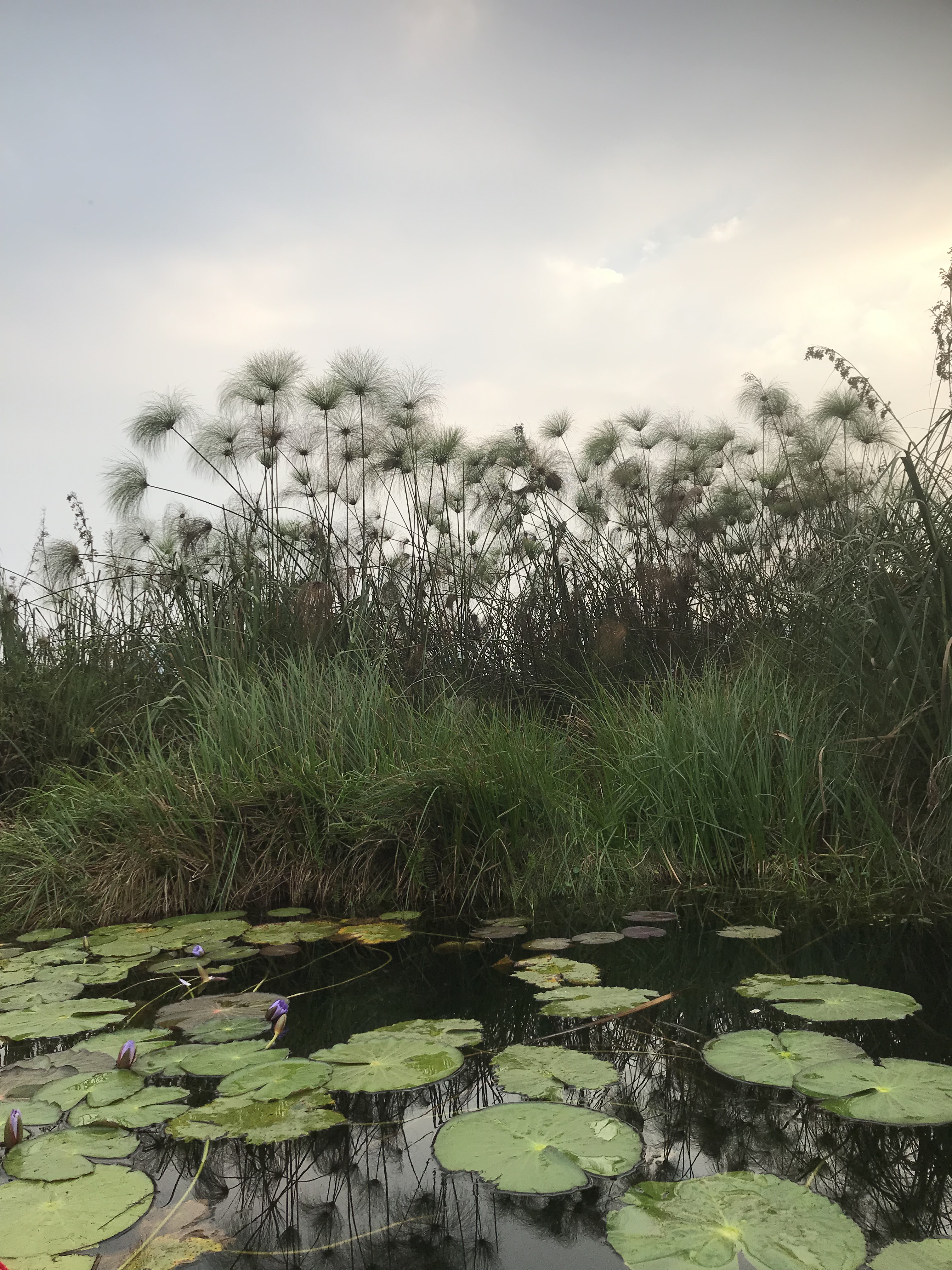
Eventually after a journey of over an hour we arrive at the swamp at the very end of the lake. First of all we come across water lilies floating on the surface of the water – most are still closed, waiting for the sunshine to open them but they are still very beautiful and already it is clear there are many colours, pink, purple and white.

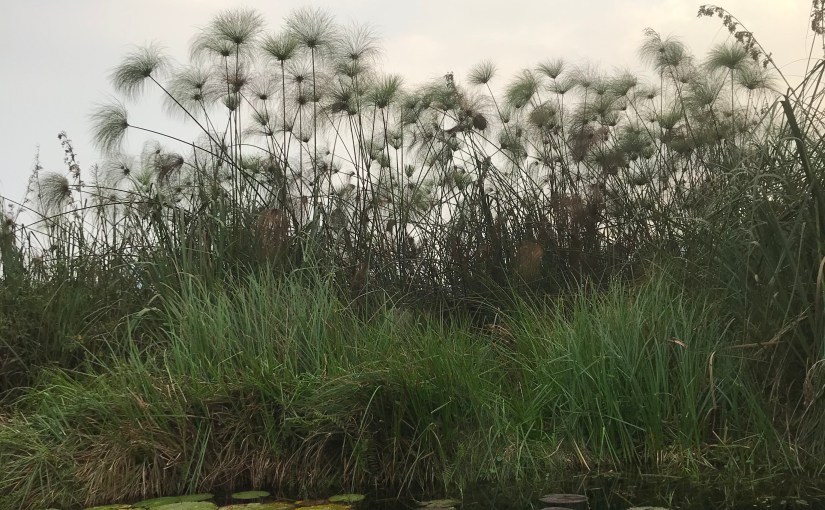
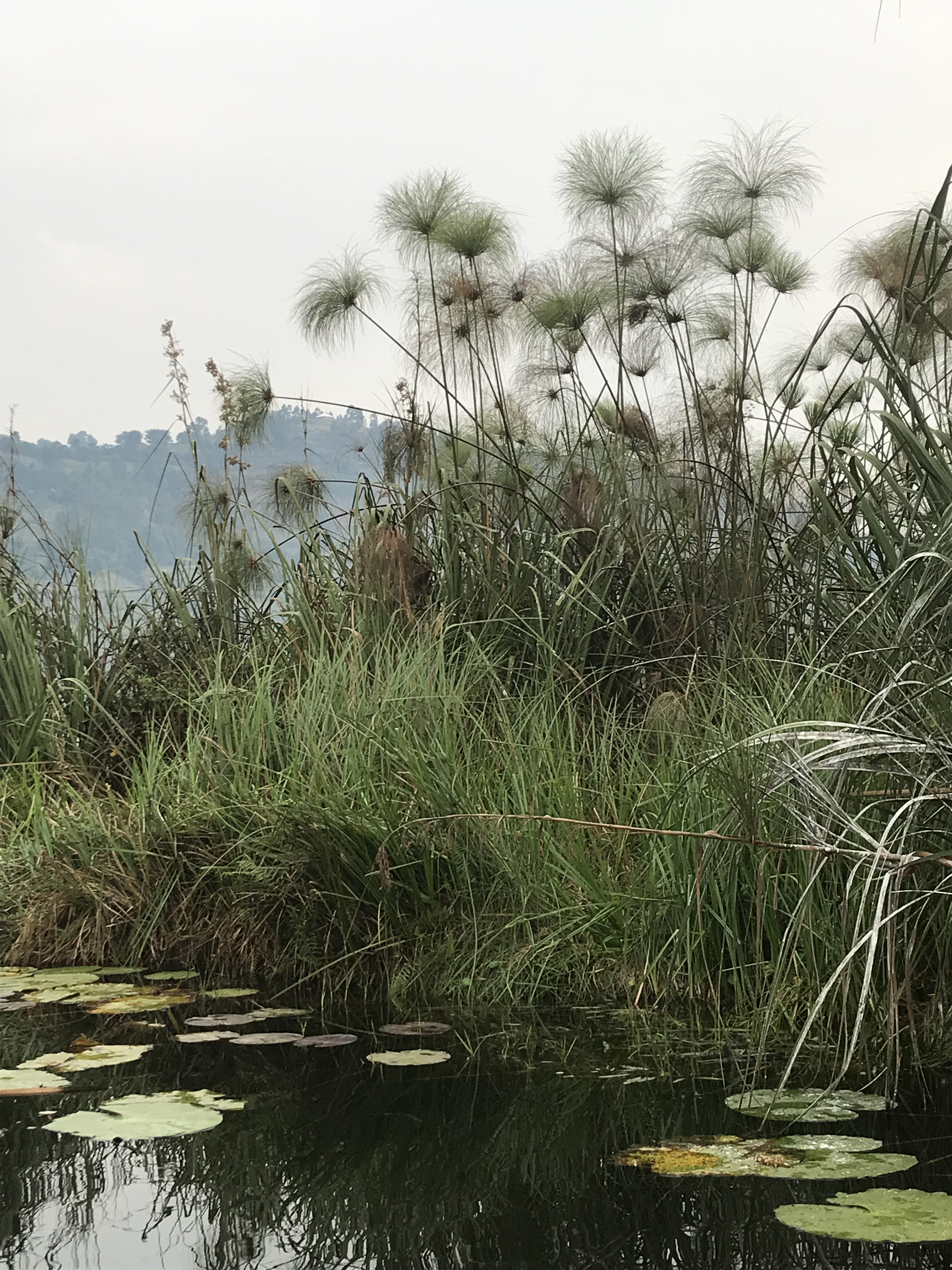
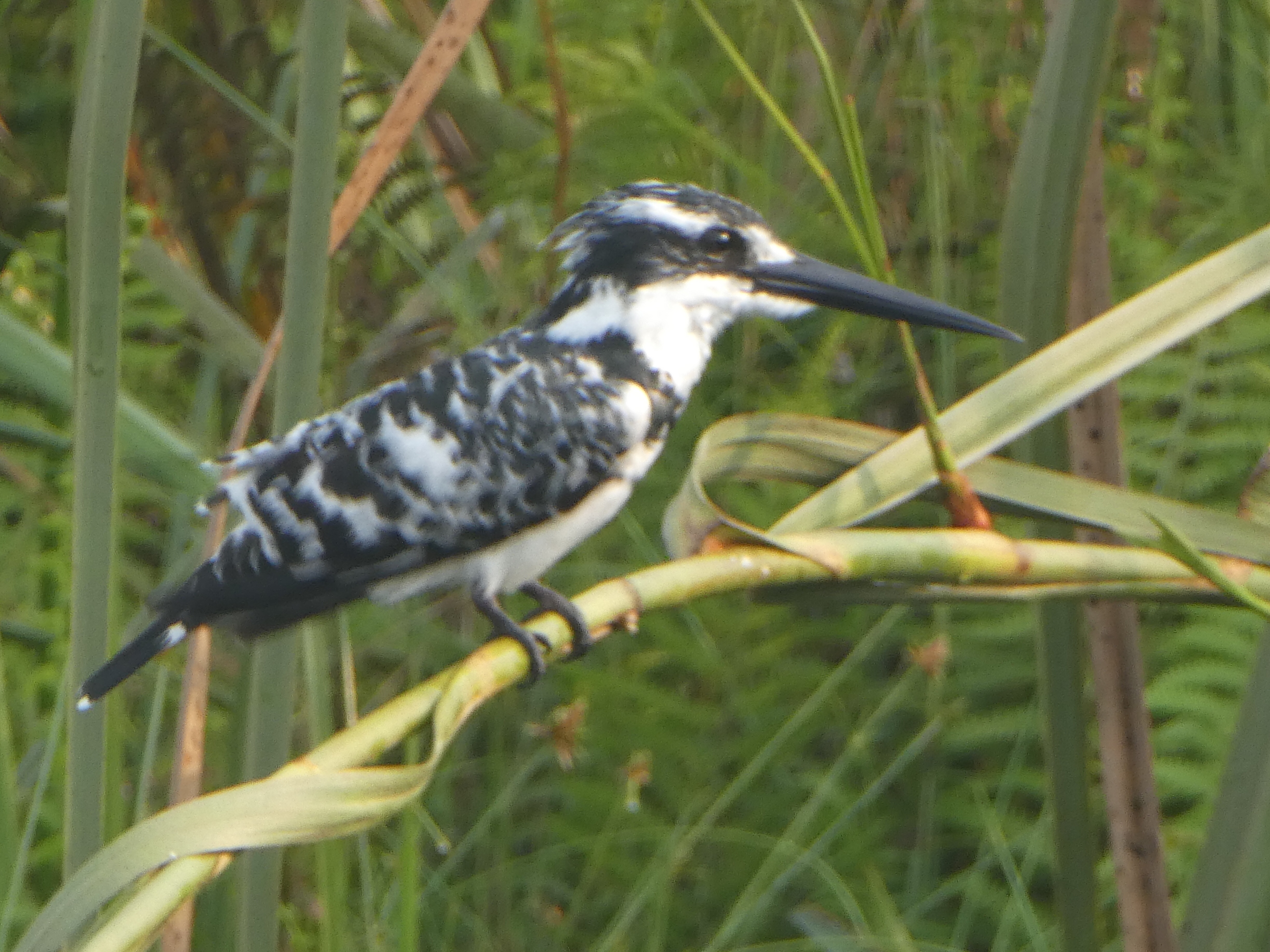
Then the front edge of the swamp is there with a mixture of reeds and large papyrus. I remember them so well from three years ago and absolutely love their large feathery crowns which sway gently as the pied kingfishers land and take off from them.

They are very numerous and extremely efficient at diving for the tiny silverfish in the waters of the lake close to the swamp. We saw lots of different birds including this time, some large ones, a snake eagle that feeds off snakes in the swamp but also off dead fish if he can’t find any snakes and very noisy haddeda ibis who are black and have a very loud and distinctive call. The grey herons are exceptionally graceful in flight and both they and the purple herons can sit stock-still for hours while hunting. Hilary boatman was very knowledgeable and also excellent at spotting all these species despite their effective camouflage. But for me it is still the papyrus which makes the cold early morning journey so worthwhile.

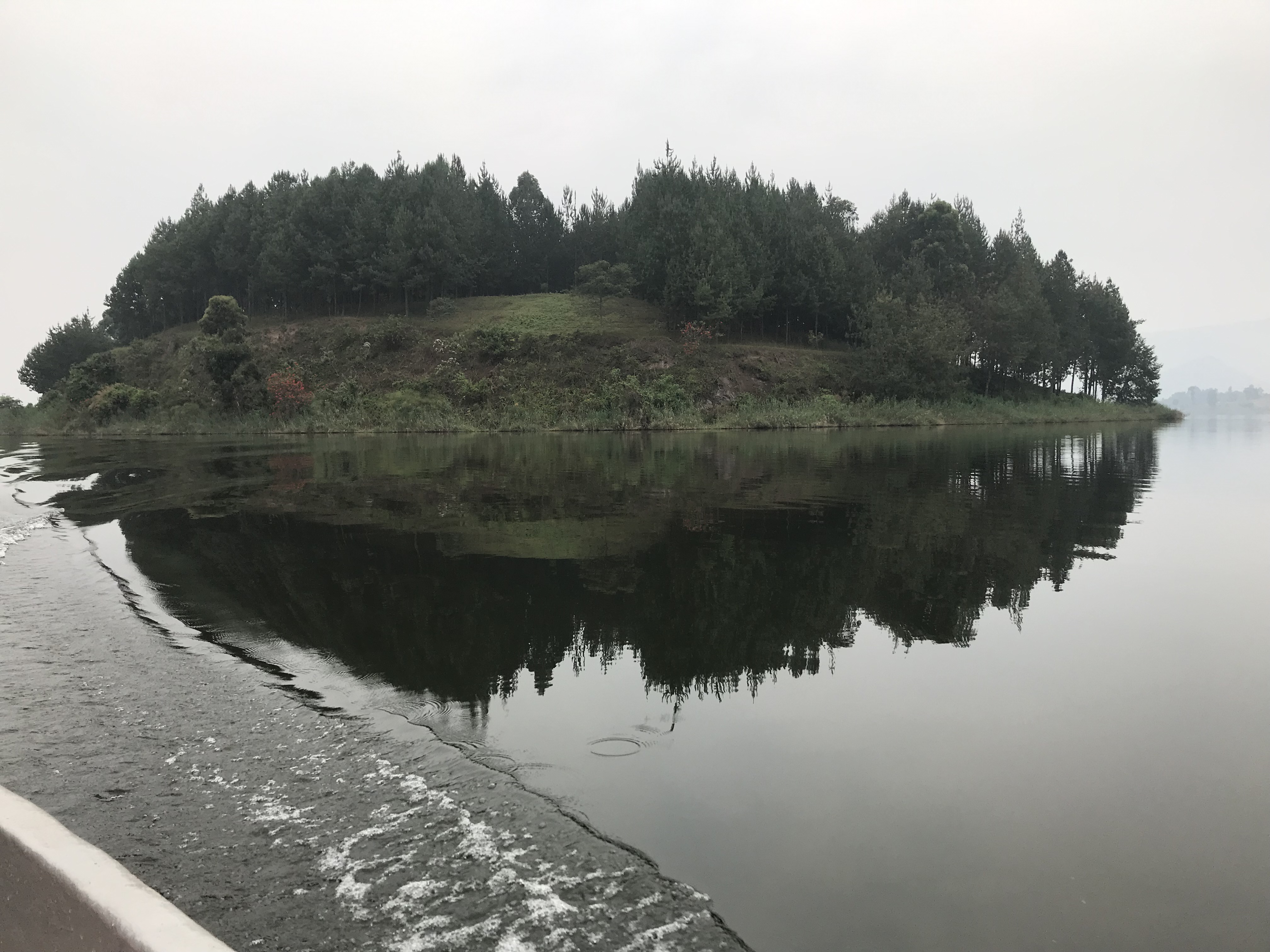
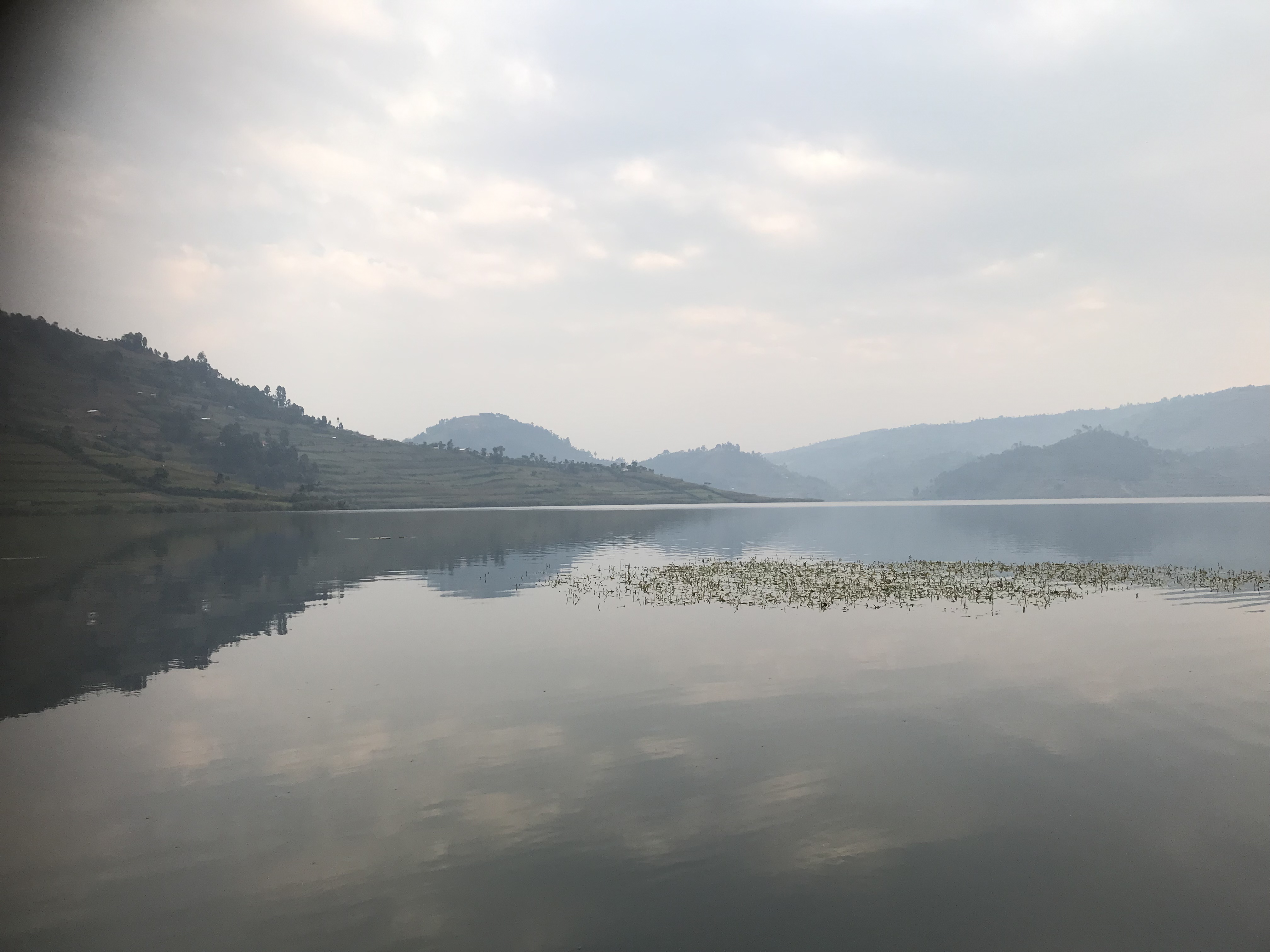
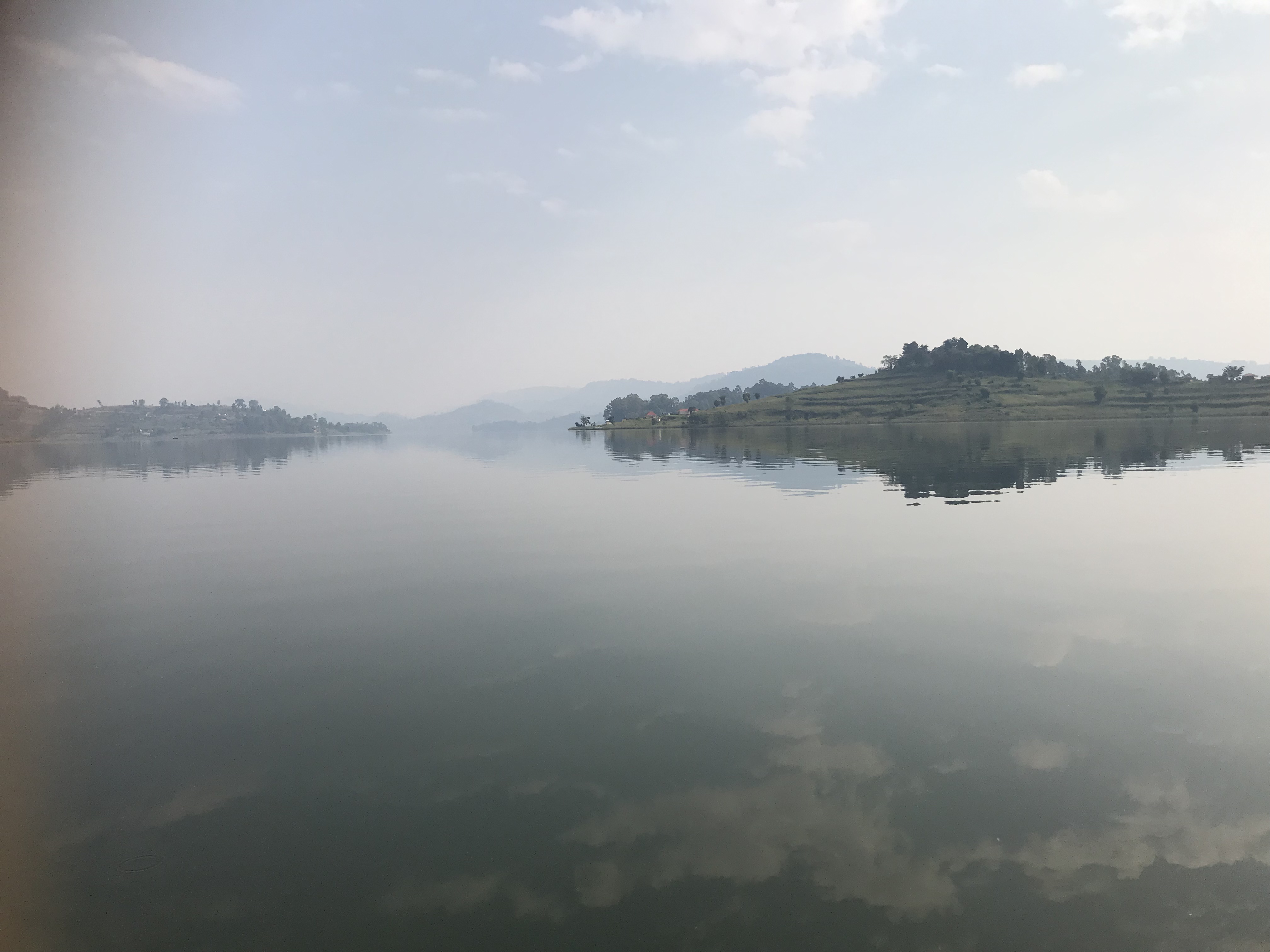
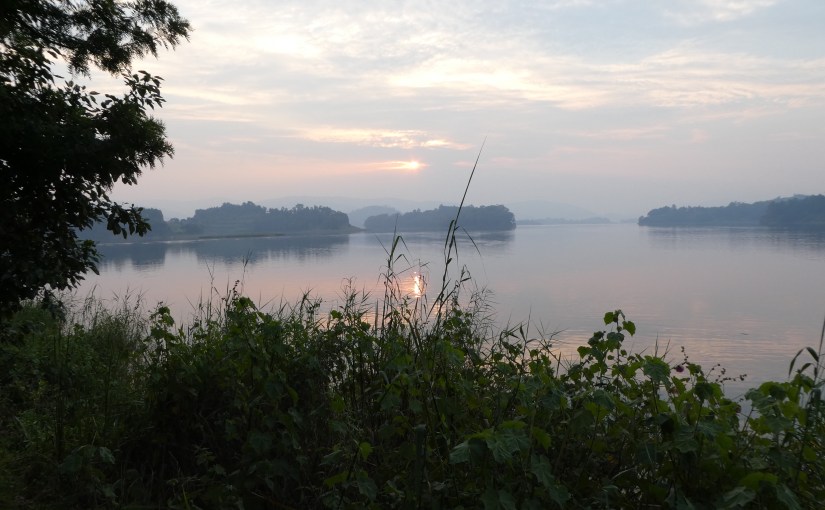
On the way back the lake looked at its finest, glassy smooth and able to produce pure reflections of the land around and the sky above.

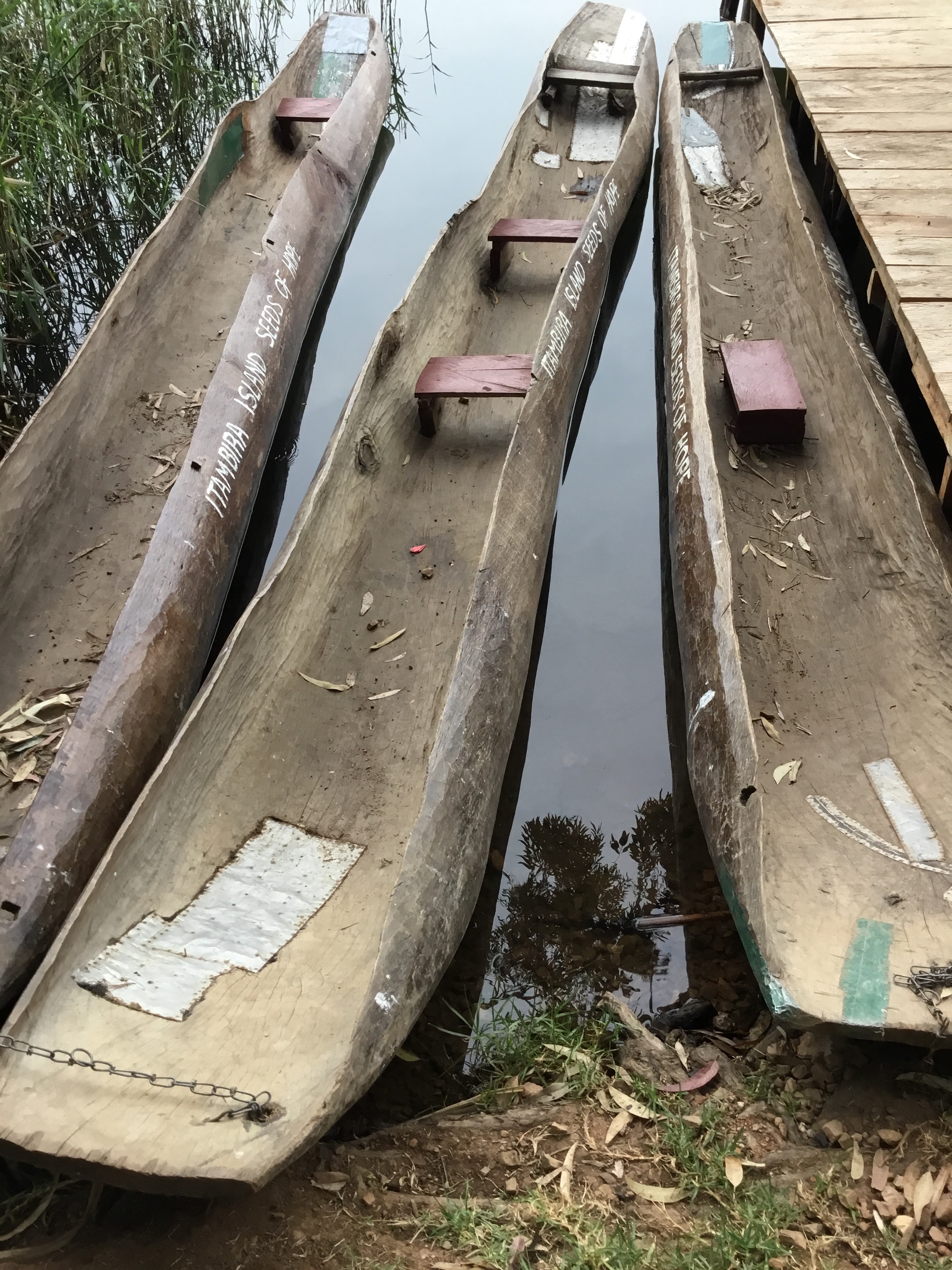
Once we got back we had a late breakfast and a bit of recuperation but spurred on by our early morning jaunt we decided to take a dug-out out ourselves and paddle it. ‘ It couldn’t be that difficult’ we thought! How wrong we were – we proved to be fairly hopeless and simply went round and round in circles however hard we tried. I thought it was lack of co-ordination between us, Sal thought we were applying the wrong principles. Whatever was the truth we had to be taken in hand by Jasper, one of the staff. Once he came on board everything calmed down. We kept paddling but think our efforts were purely cosmetic even though it felt quite hard work. Still we managed, well Jasper managed, a circuit of the island. There are no pictures of this event – too much paddling to take them and too much hysterical laughter!

However here is the canoe – it’s the middle one.

‘Tubehamwe’ – we be together

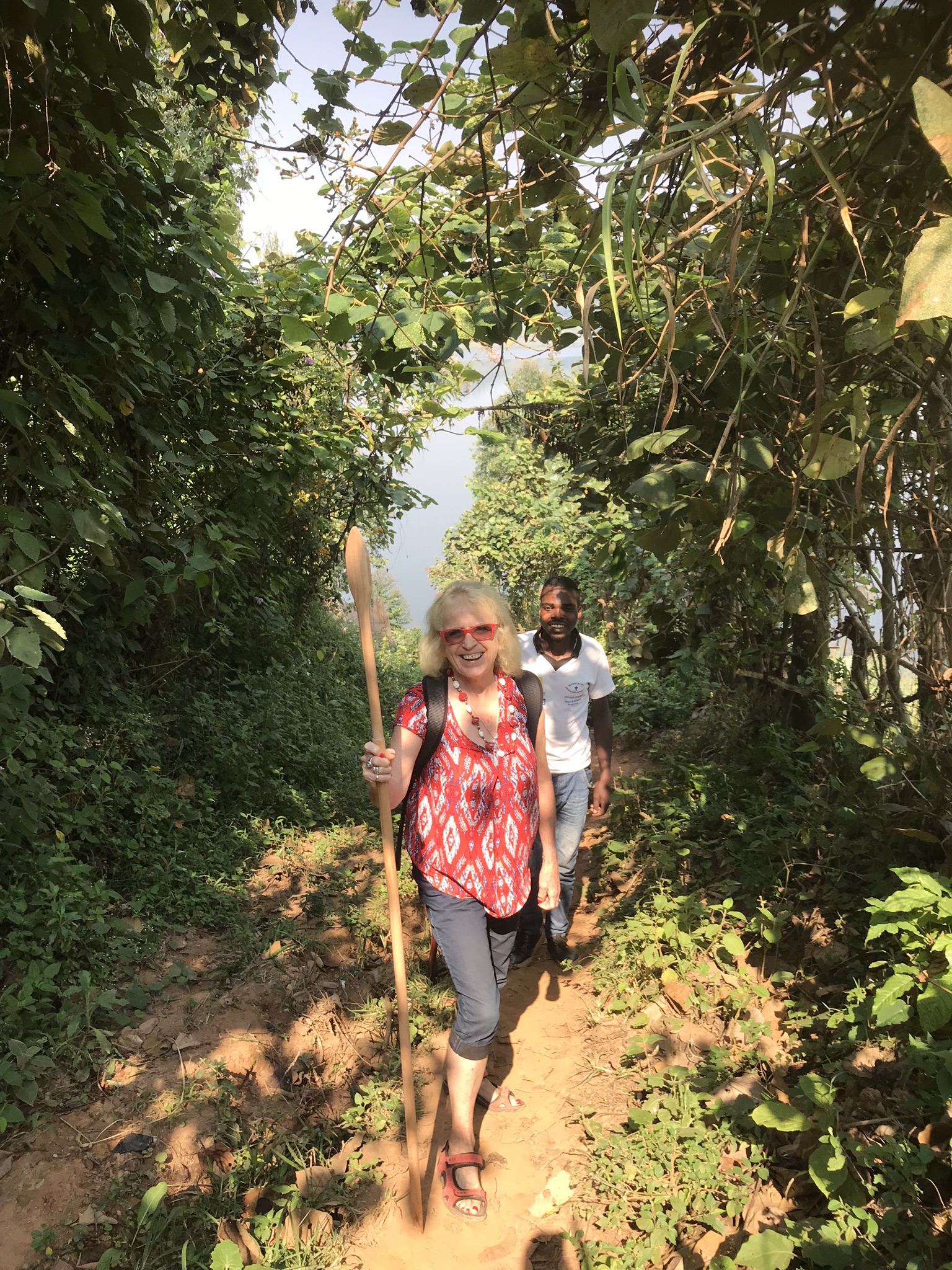
This morning (Saturday) Sally and I crossed the lake in the dugout canoe with Barham, the Itambira Island Seeds of Hope (IISOH) Assistant Training Officer, to visit the group of ladies in Katooma who are supported by IISOH. It was a beautiful morning and Sal and I were provided with sturdy sticks to help us walk up through the bananas and sorghum on the little mud track which is heavily rutted from heavy rain in the wet season.

The views as we climbed up the hills above the lake were stunning. We could see across the lake to our island, Itambira, and beyond to Bushara where we were the other day.

Itambira to the left
Bushara is the forested island

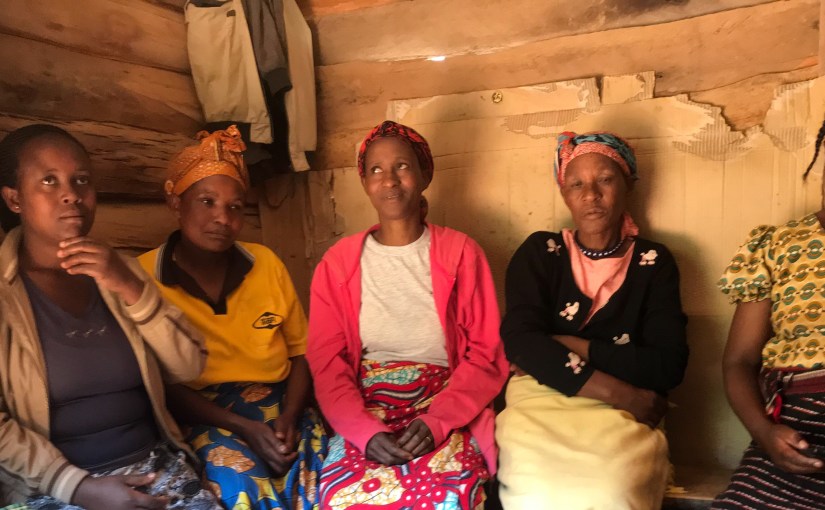
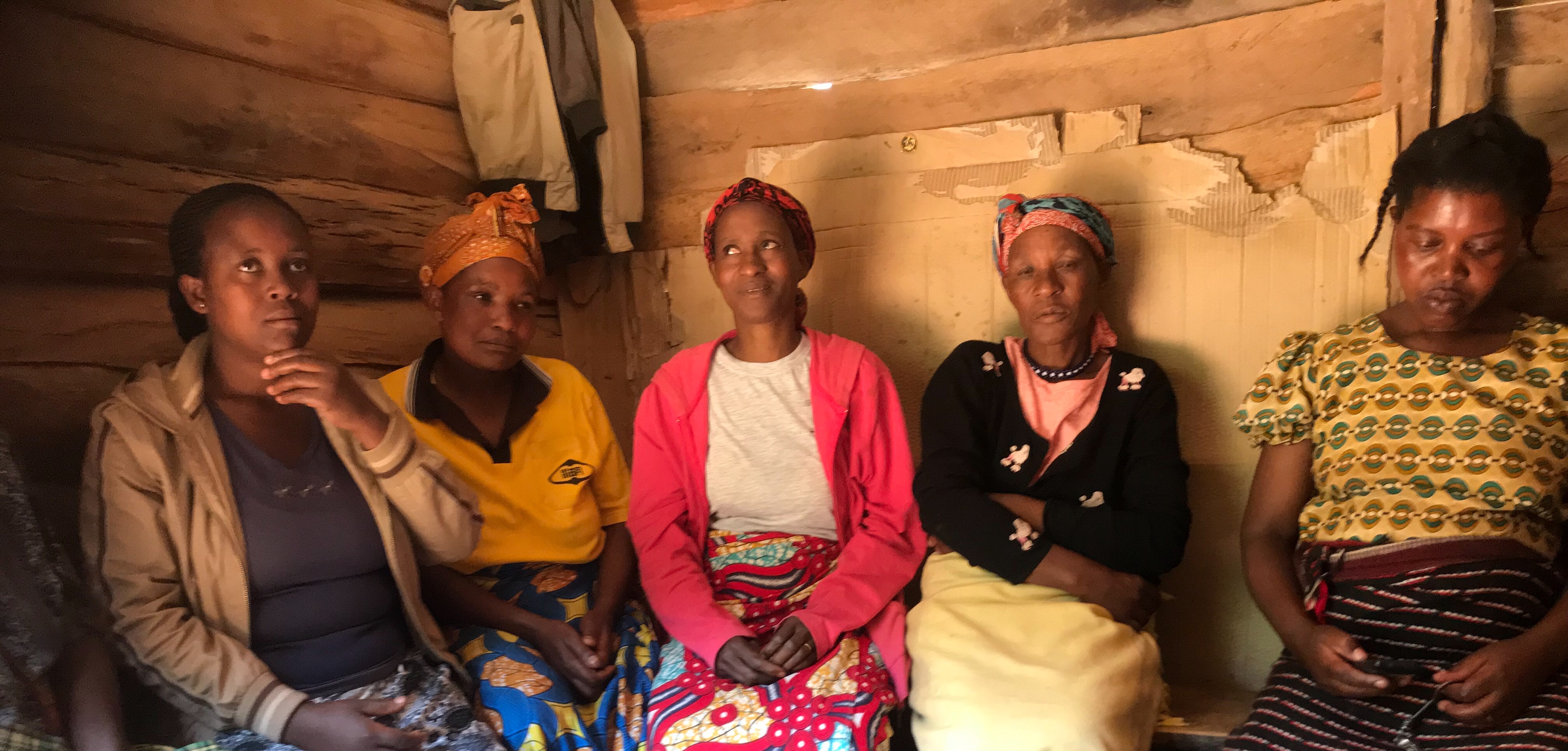
Once we reached the track which runs all the way from the main Kabale road we were greeted by the women who form the Tubehamwe group. Tubehamwe literally means ‘we be together’ and these inspirational women certainly embody that. They live in a poor community which is still largely subsistence based but they are supported in several ways by IISOH and they make the most of all the oppurtunities. IISOH offers training courses for women in the local communities and these women have been trained in making handicrafts which are sold on Itambira and also in the UK as Sally takes a selection back with her. Now they are also running a micro finance co-operative into which they all contribute regularly and which they can use for welfare needs among them and for helping to finance their ideas for improving their lives.

Some of the Tubehamwe women

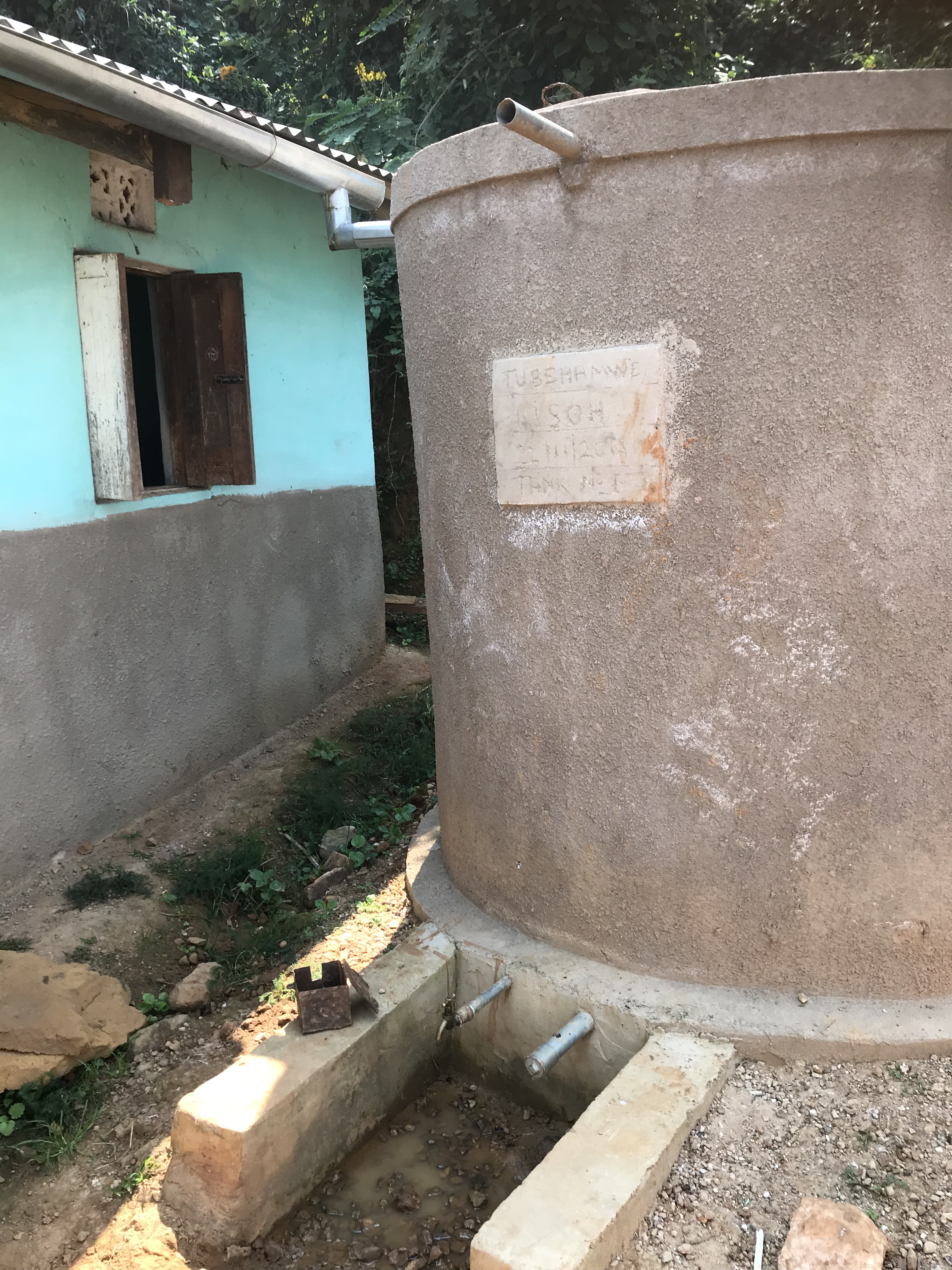
IISOH also funds water tanks for selected households in their partner communities. They always build 4 at once to get economies of scale for the cement and other components and they allocate the recipients of each tank according to need. Thus in the Karoo a community we were visiting one of the tanks has gone to a man who is quite severely disabled. Despite the effects of a muscle wasting disease he still manages to be the community’s miner of all things, from kettles, to shoes to umbrellas. He and his family now enjoy the benefits of stored rainwater which means many things; not having to fetch water in large plastic containers from the lake for the children; clean rain water to drink; much time saved which means the family can eat by 6pm in the evening rather than about 9pm as previously. IISOH provides all the kit for the water tanks but the co munitions must contribute by helping to build. Usually a number of people are trained and then can build more than o e by using the skills they have learned.

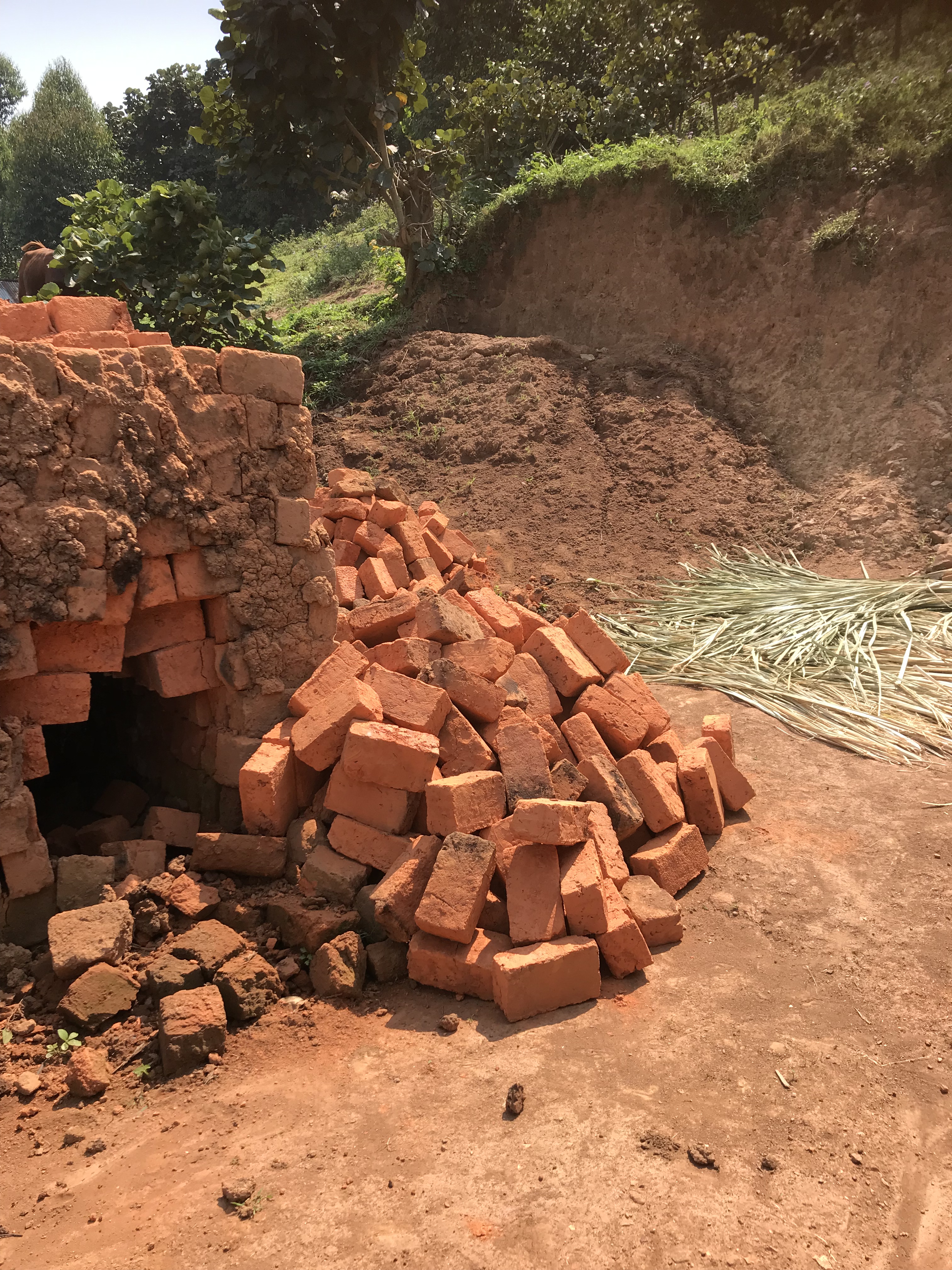
Whist in the village we also saw how the people make bricks from the red earth, first mixing red earth and water by trampling, then putting it into the simple brick mould, leaving it to dry and then creating a brick structure over a fire to bake the bricks hard. They are then removed from the tower and are ready to use to build houses.

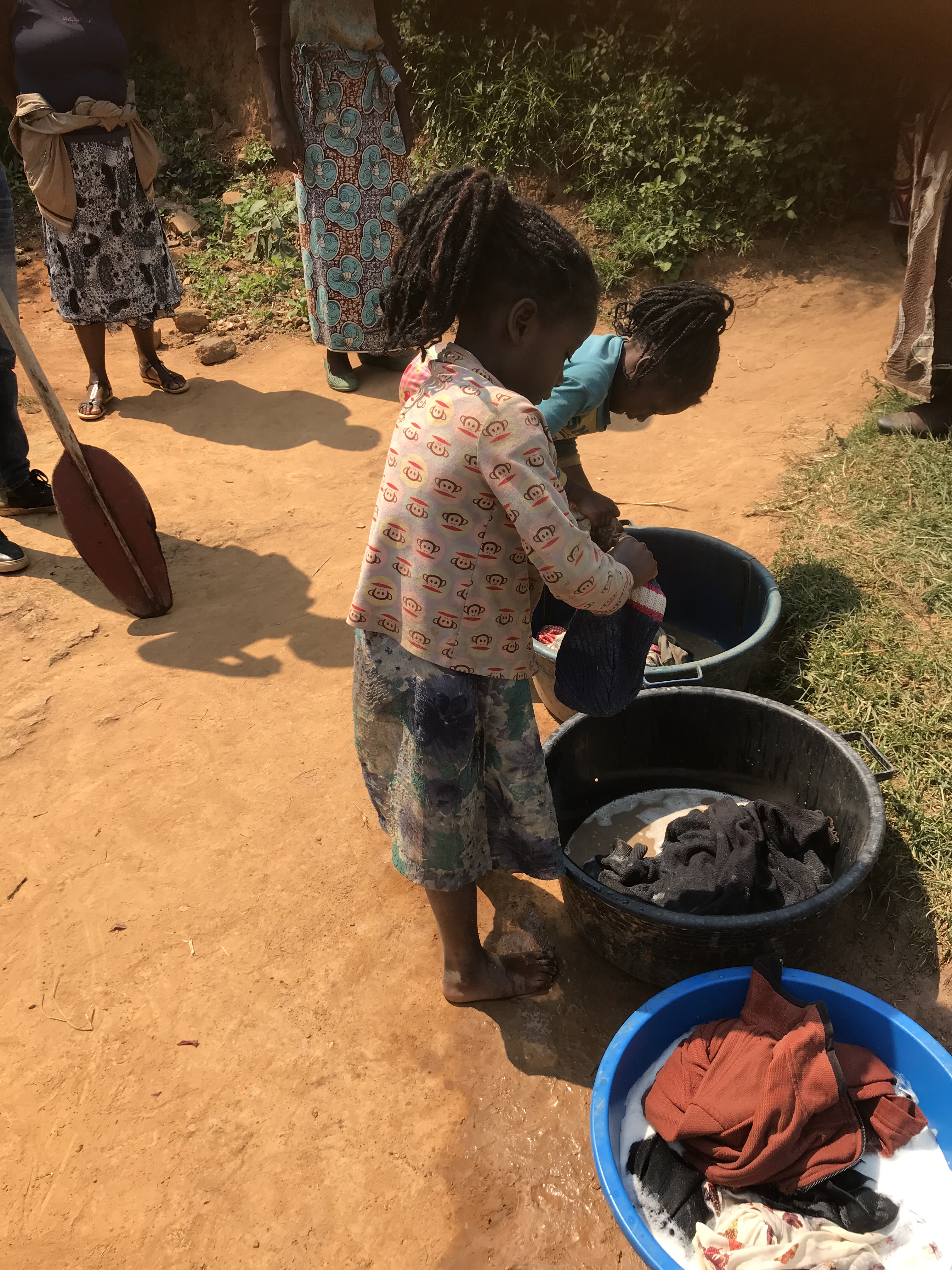
As we walked around the village the women came with us, proud to show us the progress they are making in small but steady ways. It was a humbling experience but one that shows that this local small scale approach to improving people’s lives which IISOH uses is making a difference. Everyone in these communities has a part to play. Every Saturday morning it is the children who do the washing – it was good to see that they hadn’t had to fetch the water first.

Lake Bunyonyi, Itambira and Bushara

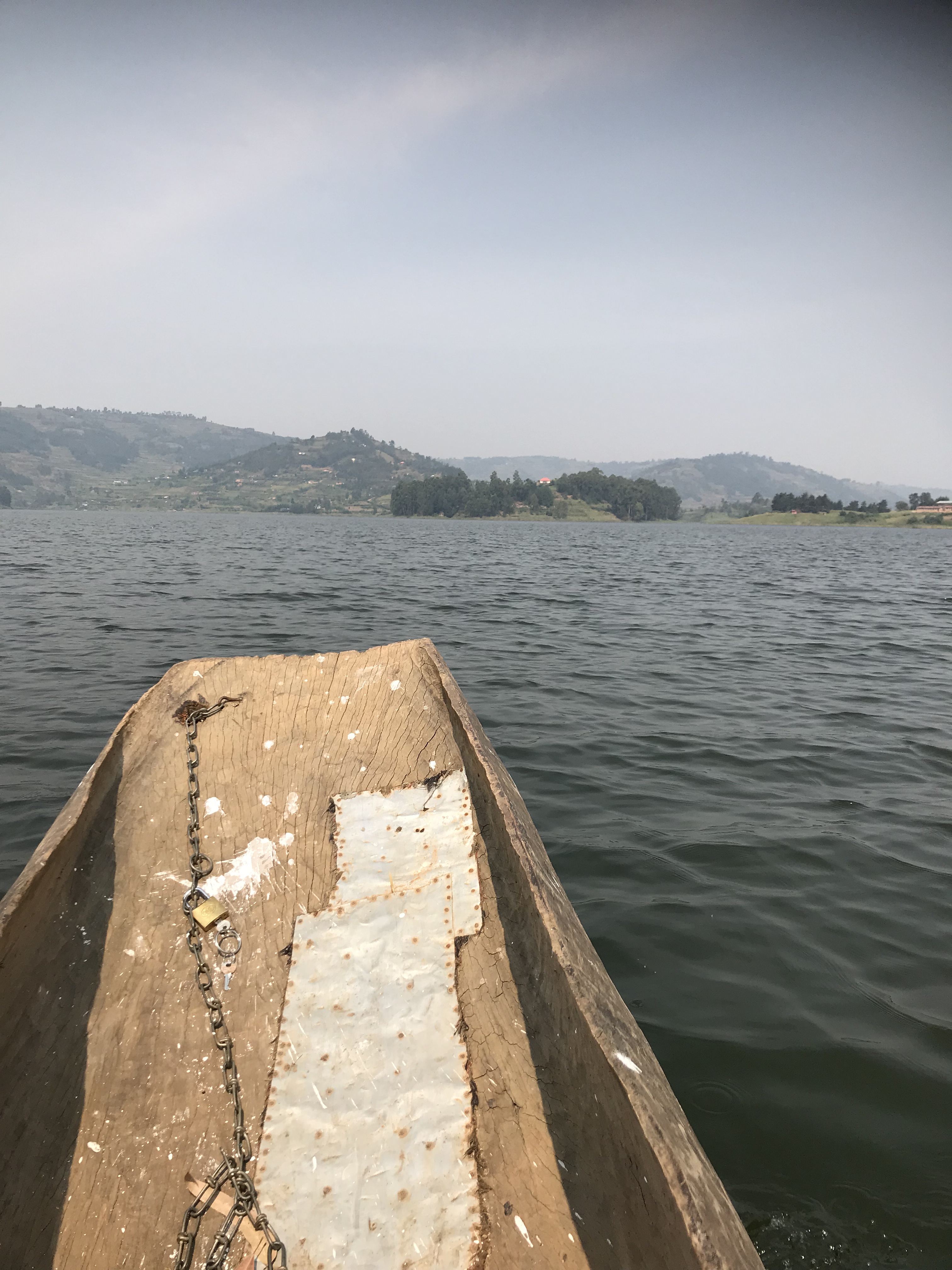
Today we were taken by dugout canoe to one of the other islands on the lake, Bushara. Geofred, who helps to manage the tourist lodge on Itambira,  took us – he paddled hard for an hour each way while we sat on our little wooden stools slotted into the bottom of the boat and admired the view. The water felt warm to the touch when I dribbled my fingers in it.

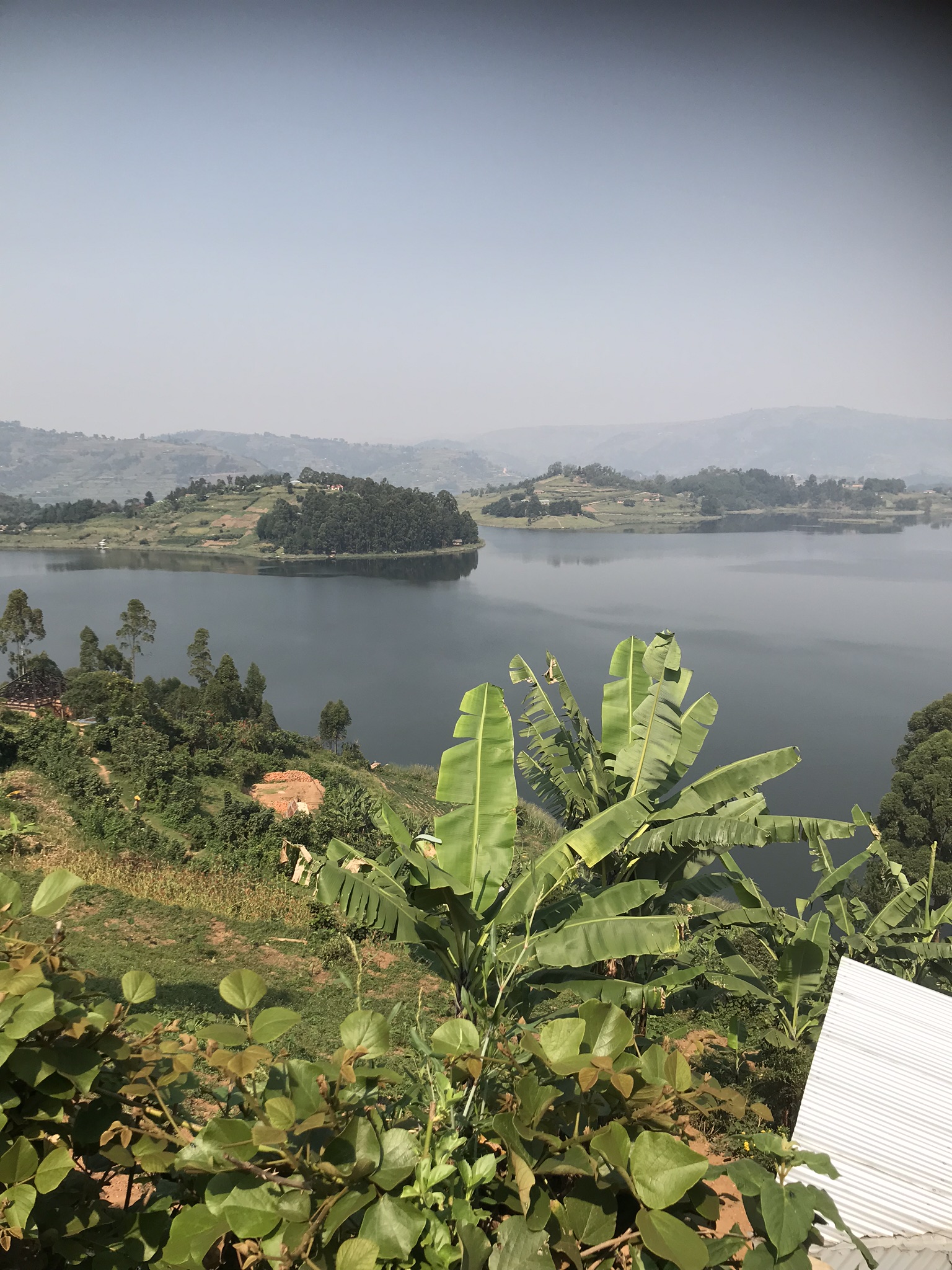
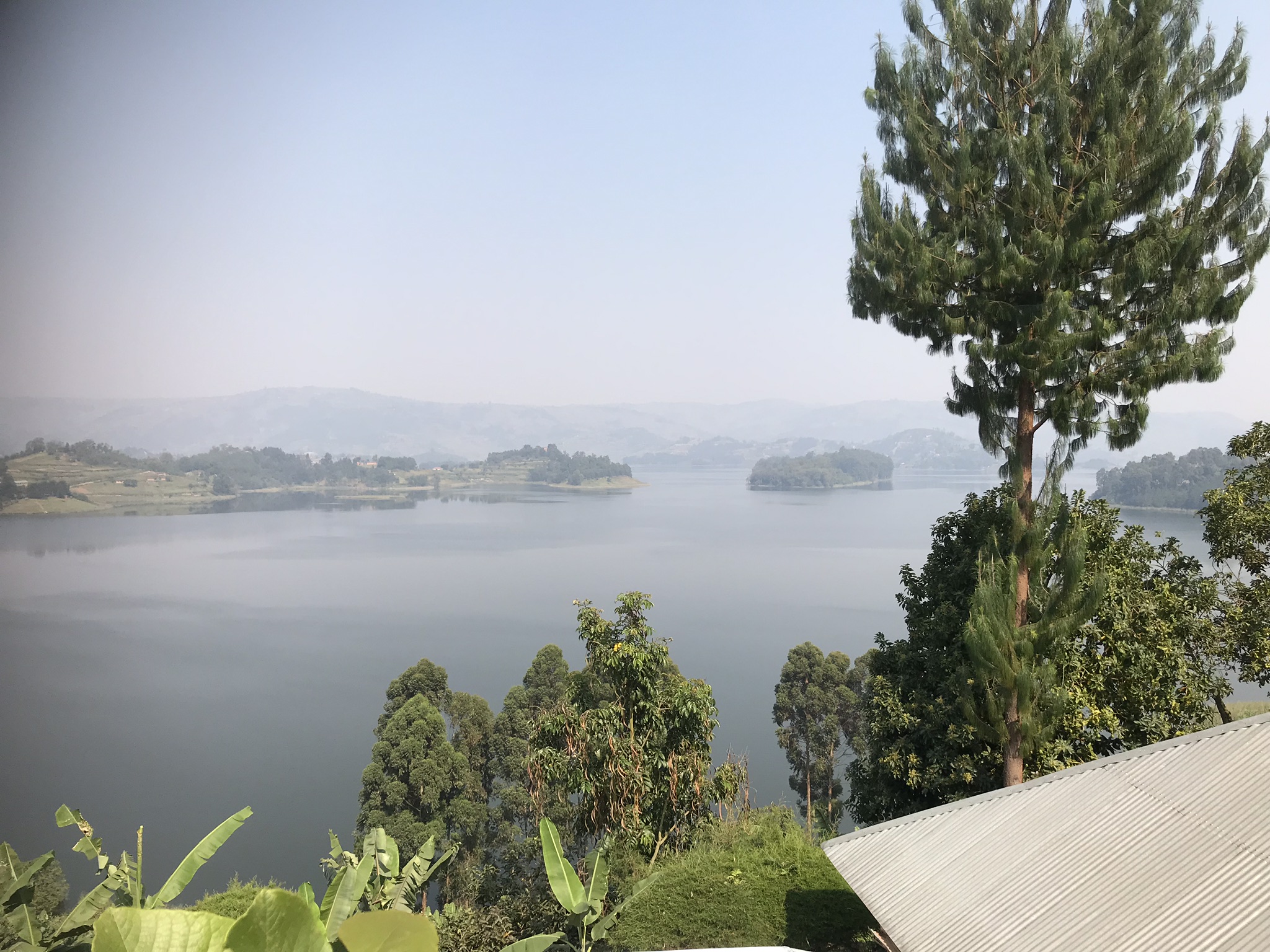
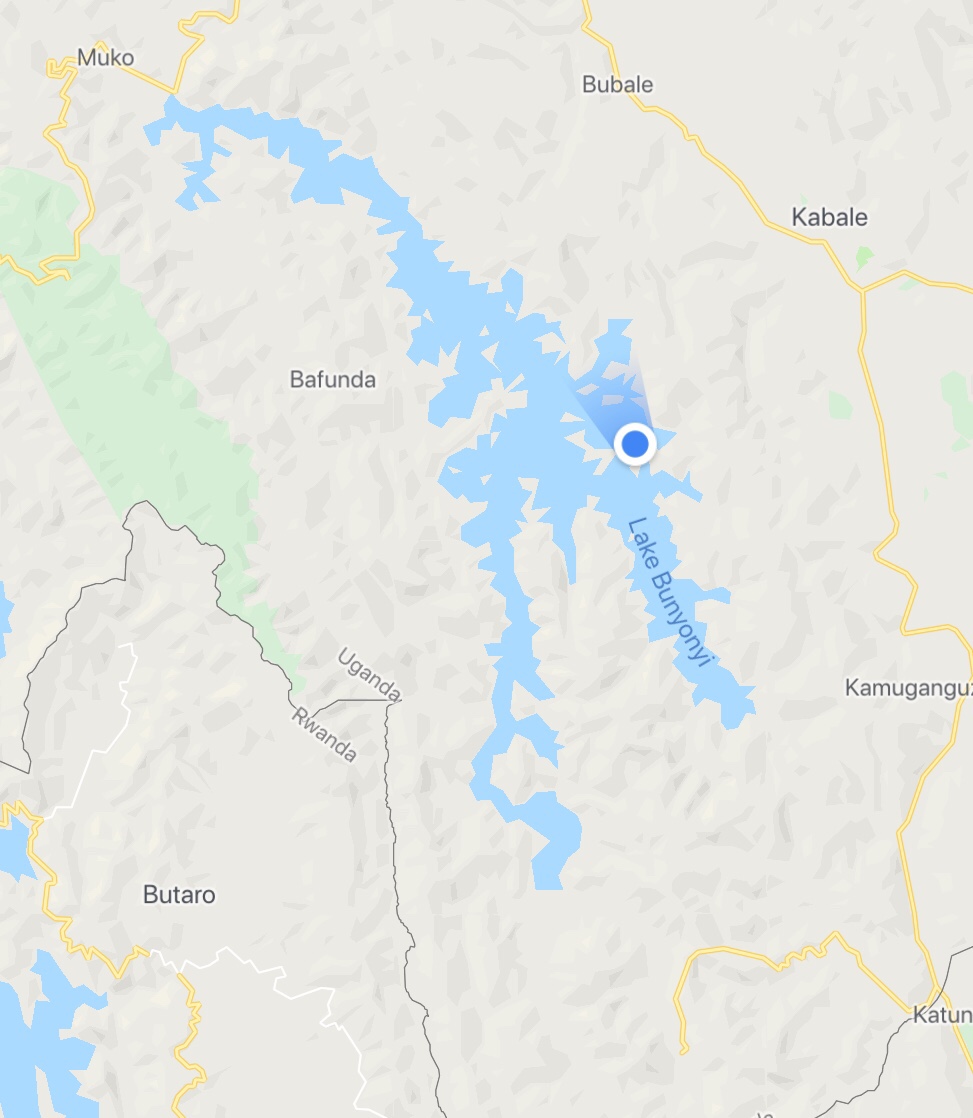
Lake Itambira is a large fresh water lake in the very South- West of Uganda, close to the border with Rwanda. Formed by the historic drowning of river valleys it is the second deepest lake in Africa, after Lake Tanganyika and the fifth deepest in the world. It’s shape is rather octopus-like with two long tentacle-like limbs to the South and lots of islands in its middle section, of which Itambira, where we are, is one.

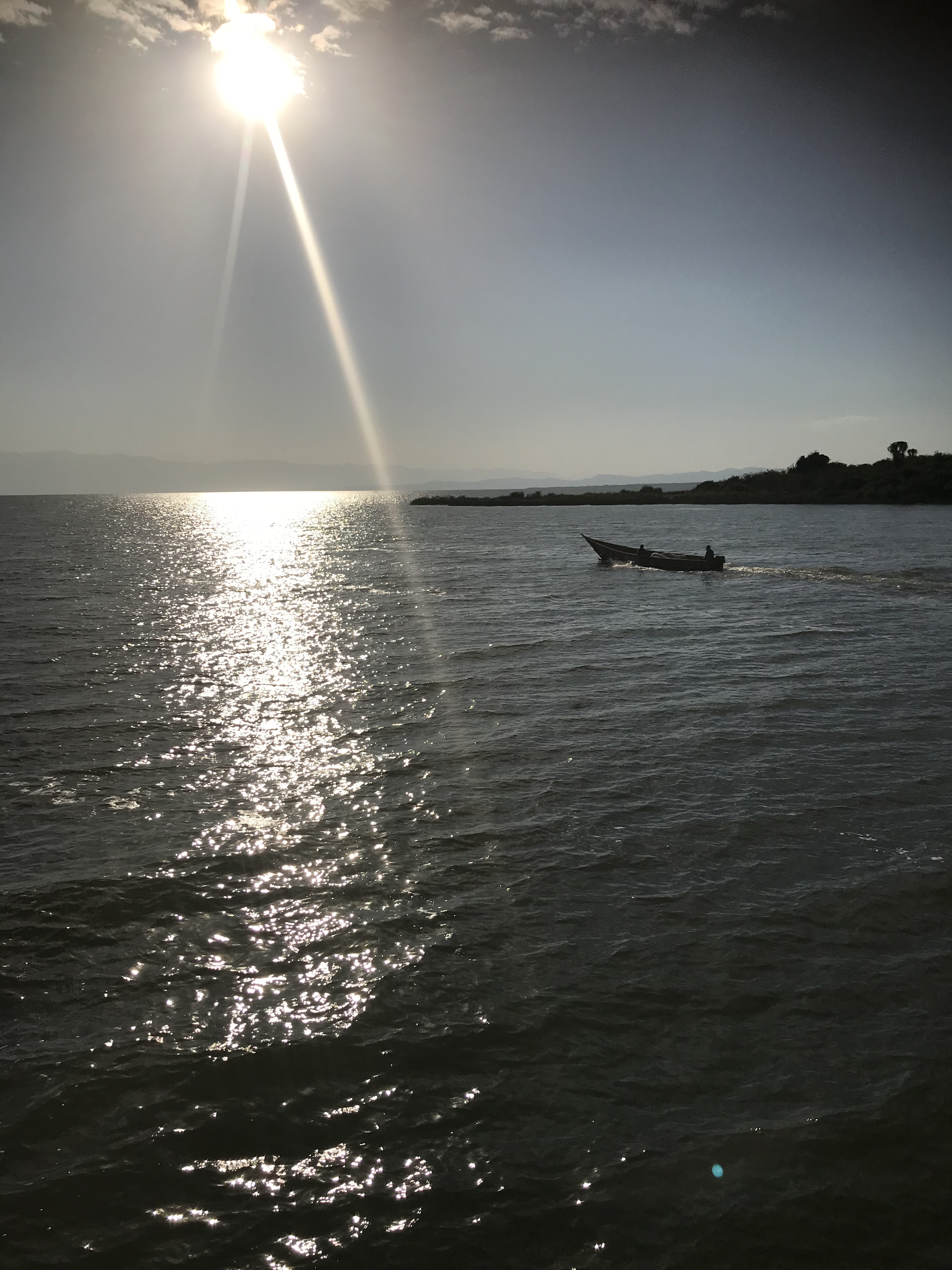
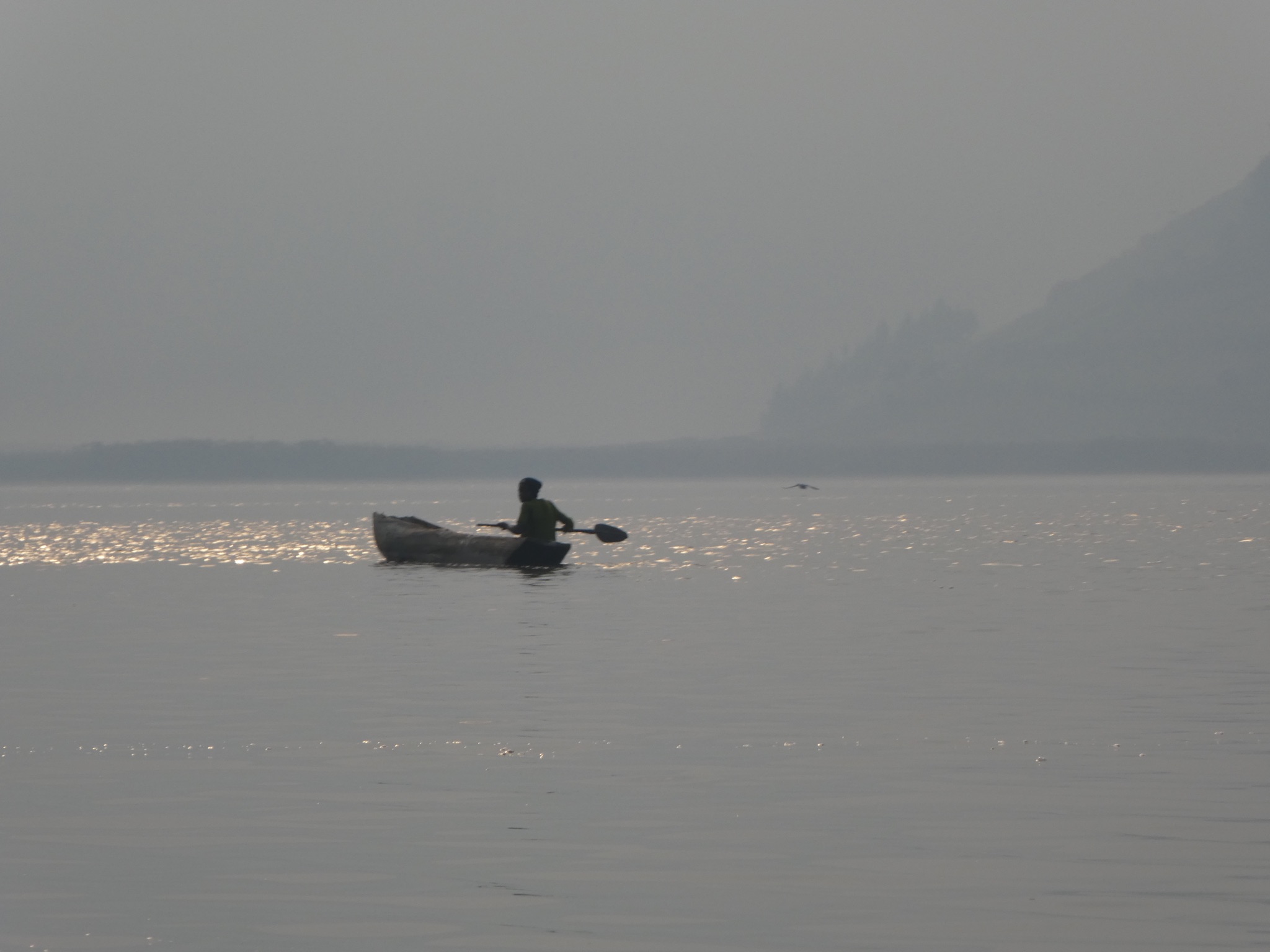
This morning the lake was dead calm and opalescent under the early morning mist. Dug- out canoes criss -cross to and fro between the islands. Close up they look mundane with a paddler, one or two passengers and some cargo, possibly sacks of sorghum, which is now being harvested, or charcoal. But from a distance they are magical little shapes silhouetted on the water with just a slight slip-steam behind. They make the view across the lake even more perfect as they draw your eye towards them, as in a painting.

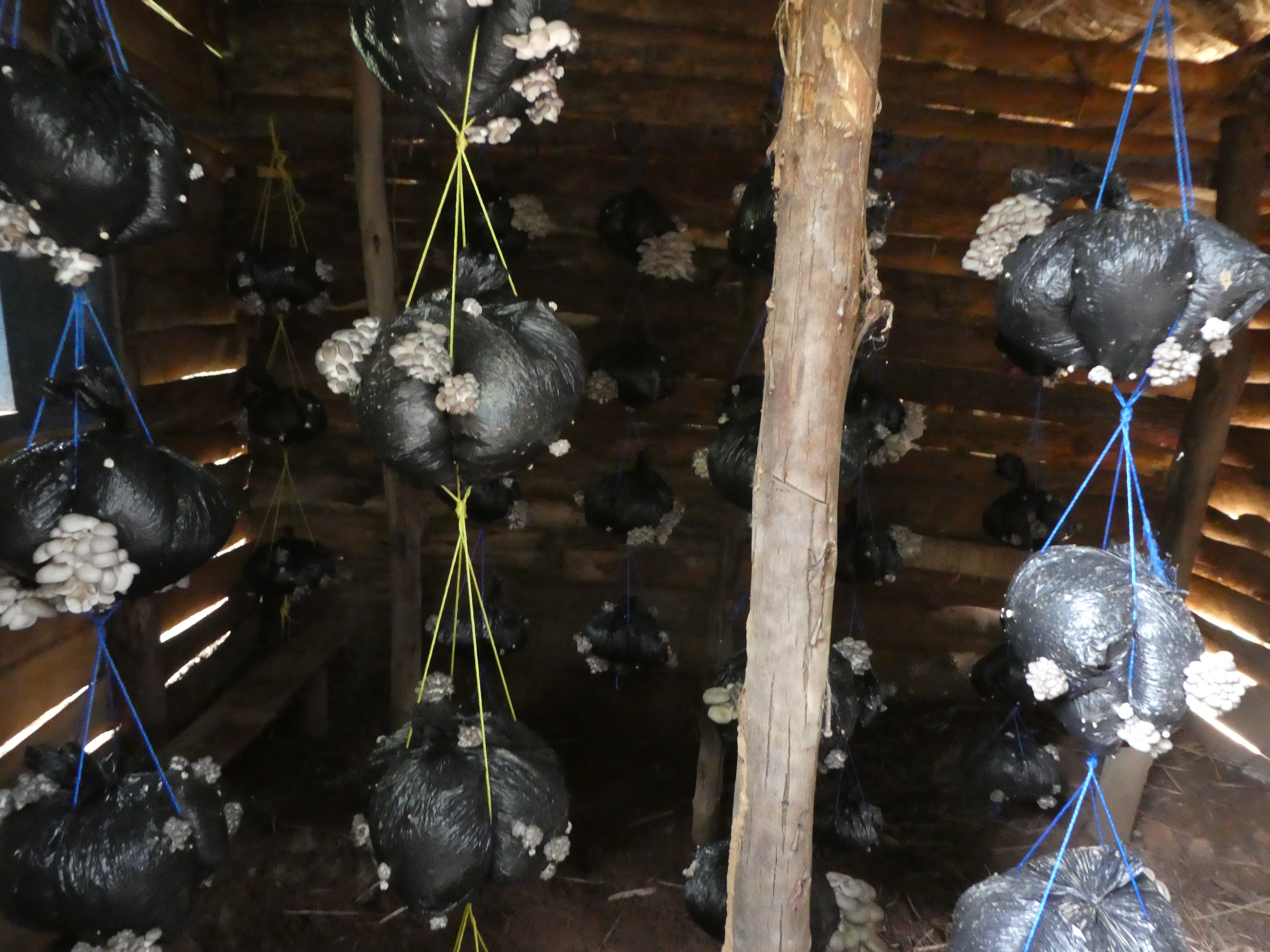
Itambira is my home this week. It is the headquarters of Itambira Island Seeds of Hope, the charity which Sally and her Ugandan friends, Naris and Diana, run. The tourist lodge here exists in order to finance the community work for several rural parishes around the lake ( more of that later). When I came three years ago the main parts of the lodge for visitors were already in place, lots of small tree houses dotted around the site, a large conference room used for training local people and a lovely restaurant with a swimming jetty. Now Sally also has her own house at the top of the hill called Mutuku House (red house) – it has a striking red roof. The gardens have also grown lots and there are many more flowers..the whole site is looking very well cared for; they are growing almost all the vegetables they need, including mushrooms, grown in plastic bags containing the spore mix, in the dark of a hut. The mushrooms just gradually appear as if my magic and can be harvested continually if hanging new bags is done on a rolling programme.

Mushrooms!

Mushroom growing is one of the many projects encouraged by Seeds of Hope in the local community. They are both very nutritious and a good cash crop. A few nights ago we discovered how delicious they are when Hilary, the chef, cooked us delicious mushroom soup for supper. A team of 8 people run the business, maintain the site and its buildings and look after the guests. They are committed to the project and work hard. Sally and Naris do the strategic planning and one of the employees, Barham, who has a degree in development studies is also involved in working with the local communities.

Today our canoe trip was to Bushara, the island which has the oldest, most established tourist lodge on it. This was originally begun in the 1980s by the Anglican diocese who own the island. Bushara is a beautiful island with its original forrest still intact, huge numbers of birds of many varieties and lovely walks around its perimeter and through the forest. The tourist lodge uses tents a bit like glamping. We met Evas who has worked there for 14 years and was very pleased to see Sally.

Once home at Itambira we were able to consume some red juice on Sally,s balcony and watch the sun beginning to set before it disappeared behind a cloud. It was a perfect warm evening.

Eerily quiet border

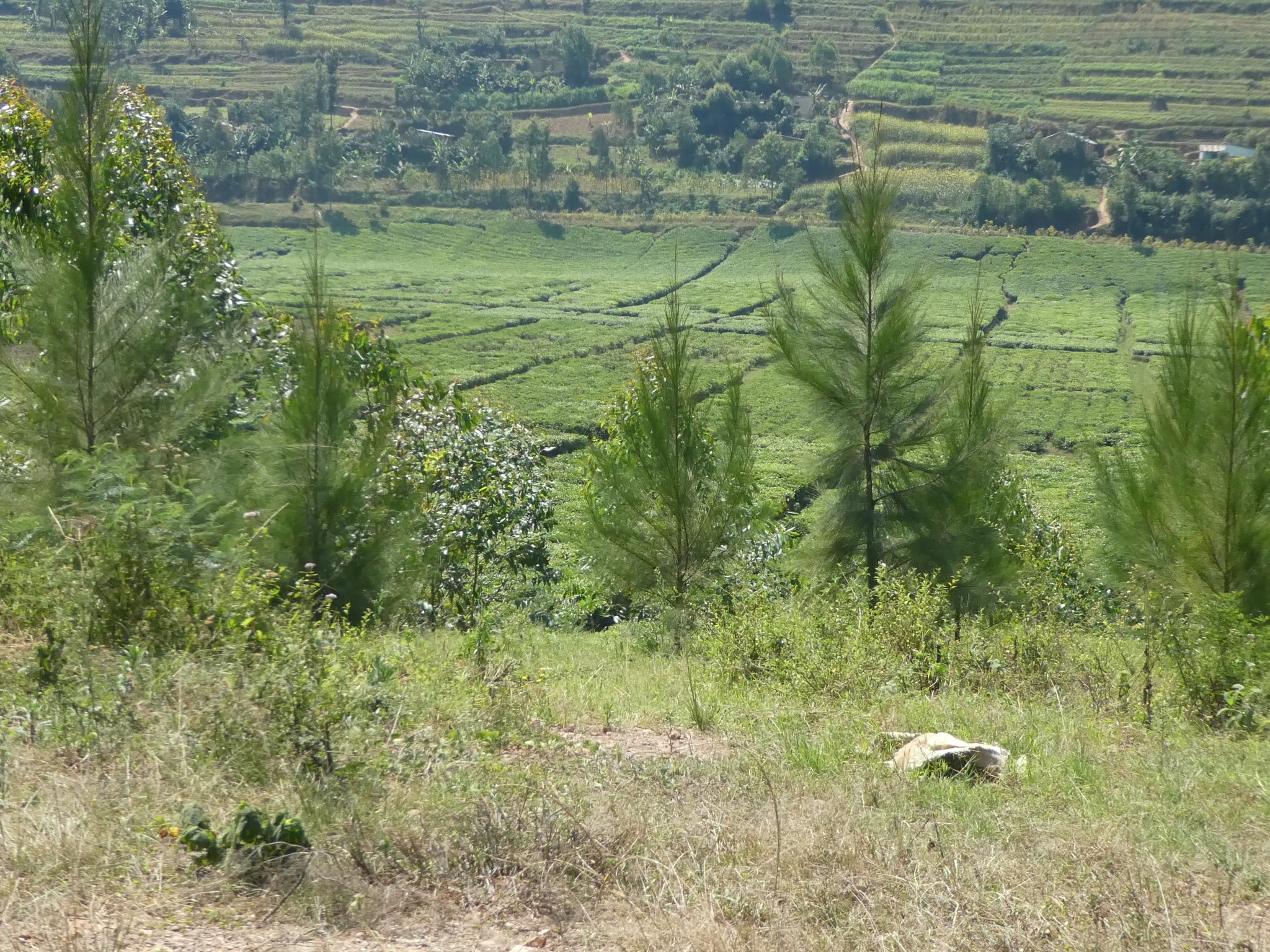
Today Sal and I travelled from Kigali in Rwanda to Kabale in the very South f Uganda. I have done this journey. before and much of it was very familiar; lots of steep valley sides, mostly wooded, and a very flat, wide valley floor, first of all planted with rice but, as we gained height towards the border, replaced by tea.

Local people clearly make the most of the fertile alluvial soils on the valley floor. People were picking tea and along the road there were also people carrying sacks full of the leaves. They, and those carrying milk churns on bicycles, were particularly noticeable today as the road was completely empty of any other traffic at all. This is the main road between Uganda and Rwanda and its normally full of lorries travelling huge distances across Africa – but not at present.

About four months ago President Kagame of Rwanda closed the border here. He did this because he claims that dissidents from Rwanda had been regrouping in Uganda and encouraging other Rwandans to join their cause. Now Rwandans are not allowed to cross the border at all and Ugandans are choosing not to go to Rwanda either. This is having an enormous impact on those communities who live near the border and those businesses who depend on border trade. We traveled in a car belonging to the Cross Country company who take people to and Uganda and. Now they have no customers apart from people like us who are not subject to the closure. Their fleet of cars sits forlornly in the bus station in Kigali – no travellers, no trade, no income.

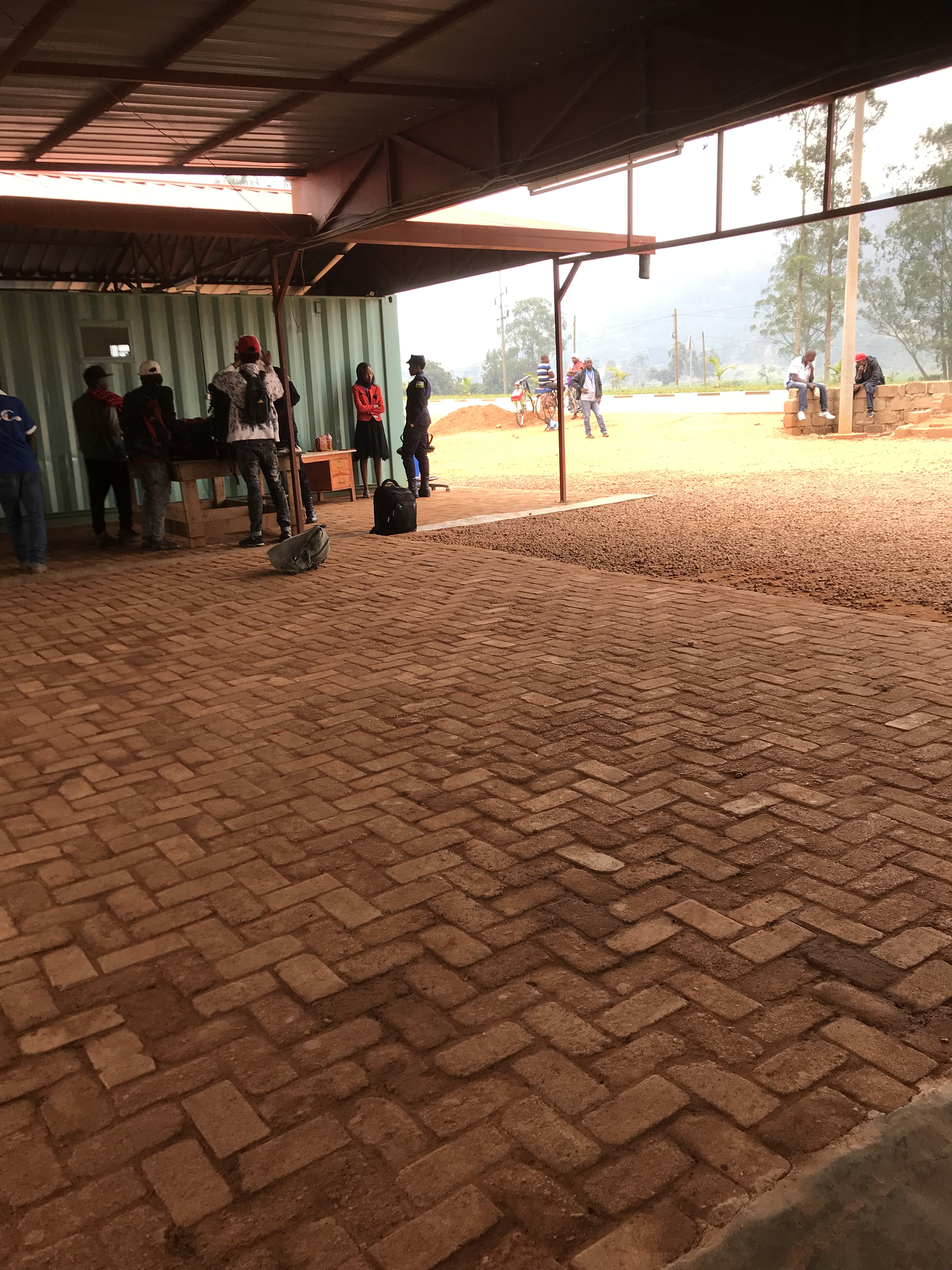
When you get to a border such as this it is usually a really iconic scene. It is hugely busy with coaches, lorries, large numbers if people, hanging around and queuing to get visas and have passports checked; lots of goats and the odd cow, lots of local trying to sell you things, change your money, beggars asking for help, police looking either officious or even downright threatening. It is in short a colourful, chaotic and vibrant scene. There are mothers trying to control their wayward children, people trying to organise their luggage and endless checks of buses and trucks in both directions.

Today the border is not like that at all. We saw one bus and no lorries, no queues of people waiting and the only policeman on the Ugandan side was studiously reading a paper whilst half reclining on his chair. Most people in the vicinity looked resigned to boredom but they must also be desperate as their means of livelihood has all but been removed. There are no people to buy food, change money or purchase all their goods. It was a sorry sight.

Who knows how quickly this situation can be resolved? Rwandans largely believe the government’s view that some Rwandans who travel to Uganda have been being coerced into joining rebel groups or even tortured. Ugandans do not believe any if this and blame Rwanda. They choose not to travel to Rwanda. The respective presidents met recently with the president of Angola acting as a mediator and there was a claim that the issue had been resolved but that is not as it appears on the ground.

Meanwhile ordinary people on both sides if the border suffer.

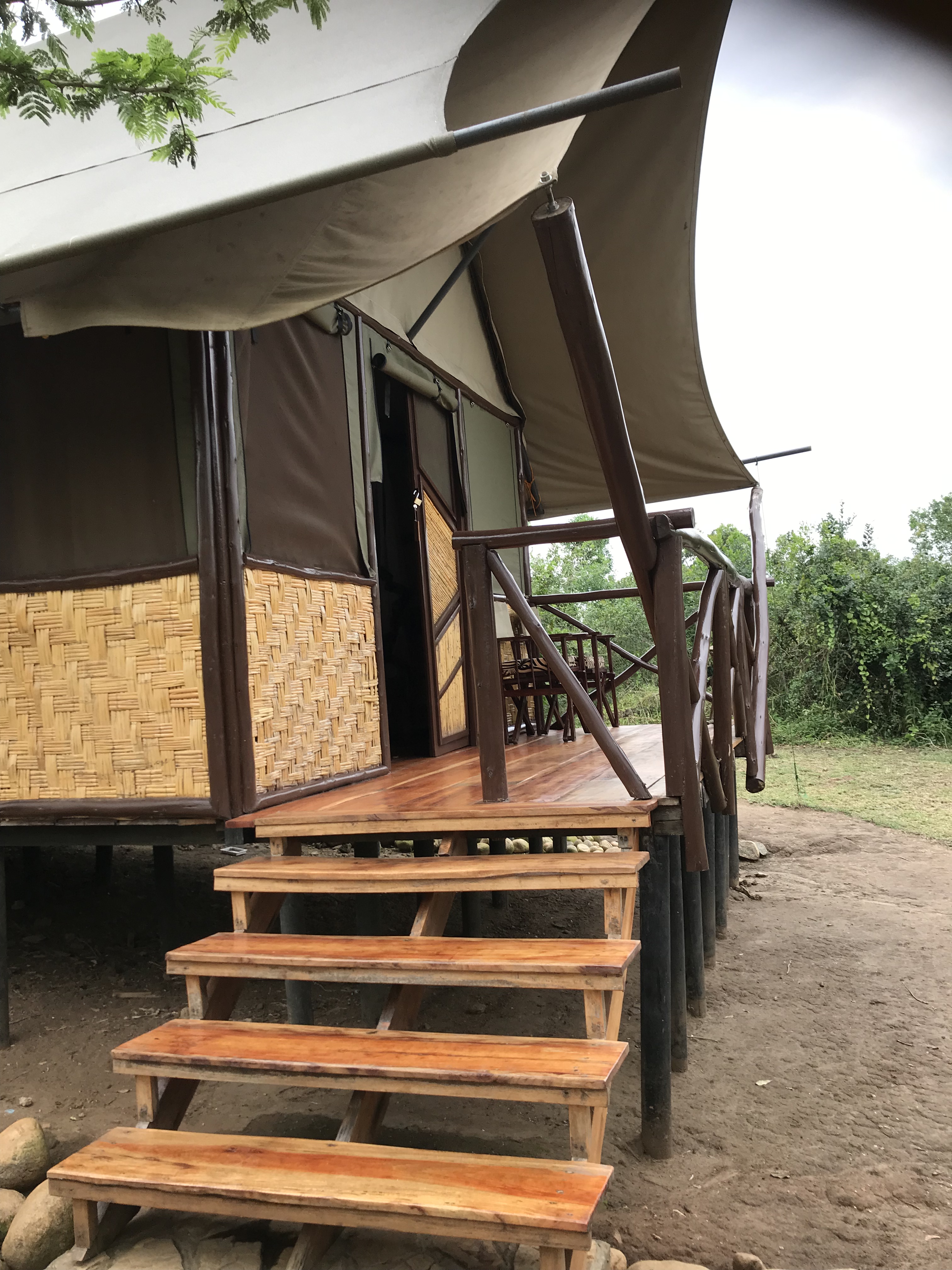
Sal and I quickly acquired the necessary stamps in our passports and were waved through past the very British road sign saying ‘Keep Left’ (Rwanda was originally a Belgian colony and so drives on the right). Very quickly we arrived in Kabale and had lunch with our great friend, Diana, and the on to Lake Bunyonyi in the quiet late afternoon light.. just as we turned the corner to see the lake the sun broke through the high cloud and glinted in the trees. It was a beautiful evening in which to travel by boat to Itambira, the small island where Sal now lives for almost half of every year in the tourist lodge called Itambira Seeds of Hope. It feels like arriving home, even for me. We are warmly greeted by the team here and I can settle into my little tree house on the lake shore – home for the next wee